https://orcid.org/0000-0003-3661-0022






La resistencia antimicrobiana representa uno de los mayores desafíos científicos y sanitarios del siglo XXI. El incremento sostenido de microorganismos capaces de evadir la acción de los tratamientos convencionales ha convertido un recurso que revolucionó la medicina moderna en una herramienta cuya eficacia enfrenta una amenaza sin precedentes. En este contexto, comprender los mecanismos biológicos que sustentan la resistencia bacteriana constituye una necesidad estratégica para la investigación, el diagnóstico clínico y la salud pública.
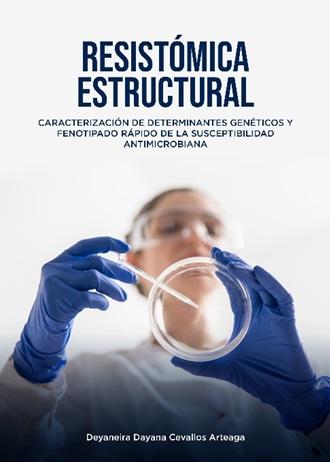
La Resistómica Estructural: Caracterización de Determinantes Genéticos y Fenotipado rápido de la Susceptibilidad Antimicrobiana representa una visión de conjunto que se aleja de la descripción habitual de los genes de resistencia para centrarse en la estructura dinámica del resistoma como objeto de estudio, el rol del mobiloma, la transferencia horizontal de los genes y las complejas interacciones moleculares que favorecen la continua adaptación de los patógenos, que están bajo la presión selectiva de los antimicrobianos.
Una de los principales aportes de esta obra radica en la articulación de saberes de diferentes disciplinas, tal como la microbiología clínica, la biología molecular, la genómica, la bioinformática, la epidemiología y la inteligencia artificial, que permiten ofrecer un panorama de las herramientas que están modificando el diagnóstico microbiológico actual. Tecnologías como la secuenciación de genoma completo (WGS), la espectrometría de masas MALDI-TOF o los modelos predictivos basados en deep learning son parte de una nueva década de estrategias con orientaciones en la medicina de precisión.
A lo largo de los capítulos, el libro presenta un análisis exhaustivo de los procesos que explican la emergencia y diseminación de la resistencia, desde la dinámica de las porinas y las bombas de eflujo hasta la plasticidad genética conferida por plásmidos, integrones, transposones y bacteriófagos, Estos mecanismos son considerados como elementos Inter vinculados dentro de una red evolutiva bastante compleja que pone de manifiesto la necesidad de enfoques integrados de vigilancia, prevención e intervención bajo la perspectiva One Health.
Otro aspecto destacable reside en el sólido respaldo bibliográfico que sustenta el contenido. La incorporación de evidencia científica reciente permite reflejar el estado actual del conocimiento y proporcionar una base confiable para investigadores, docentes, profesionales del laboratorio clínico, microbiólogos, infectólogos y estudiantes de las ciencias de la salud interesados en profundizar en las nuevas fronteras del diagnóstico microbiológico.
Más allá del interés técnico, el documento invita reflexionar sobre la responsabilidad colectiva que conlleva el enfrentamiento de la resistencia antimicrobiana. Comprender el resistoma es una tarea que va más allá de los hospitales, siendo necesario reconocer la interdependencia que existe entre la salud humana, animal, ambiental y la contribución el desarrollo de sistemas de vigilancia de la genómica que sean capaces de anticipar la aparición de nuevos mecanismos de resistencia antes que supongan un compromiso a las opciones terapéuticas disponibles.
Esta obra constituye una valiosa contribución al fortalecimiento del conocimiento científico en un campo de extraordinaria relevancia global. Su contenido establece un puente entre la investigación de frontera y la práctica clínica, al ofrecer herramientas conceptuales y metodológicas que enriquecen la formación académica y respaldan la toma de decisiones fundamentadas en evidencia.
Este libro se posiciona, por su profundidad analítica, actualidad científica y modo de abordarlo desde diferentes ramas del conocimiento, como una obra de referencia para investigadores, profesionales de la salud, docentes y estudiantes que quieren comprender la complejidad de la resistencia antimicrobiana y los avances que están definiendo el diagnóstico microbiológico en la era de la medicina de la precisión.
Alcock, B. P., Huynh, W., Chalil, R., Smith, K. W., Raphenya, A. R., Wlodarski, M. A., Edalatmand, A., Petkau, A., Syed, S. A., Tsang, K. K., Baker, S. J. C., Dave, M., McCarthy, M. C., Mukiri, K. M., Nasir, J. A., Golbon, B., Imtiaz, H., Jiang, X., Kaur, K., … McArthur, A. G. (2023). CARD 2023: Expanded curation, support for machine learning, and resistome prediction at the Comprehensive Antibiotic Resistance Database. Nucleic Acids Research, 51(D1), D690-D699. https://doi.org/10.1093/nar/gkac920
Ardila, C. M., Jiménez-Arbeláez, G. A., & Vivares-Builes, A. M. (2023). The Potential Clinical Applications of a Microfluidic Lab-on-a-Chip for the Identification and Antibiotic Susceptibility Testing of Enterococcus faecalis-Associated Endodontic Infections: A Systematic Review. Dentistry Journal, 12(1), 5. https://doi.org/10.3390/dj12010005
Bilal, H., Khan, M. N., Khan, S., Shafiq, M., Fang, W., Khan, R. U., Rahman, M. U., Li, X., Lv, Q.-L., & Xu, B. (2025). The role of artificial intelligence and machine learning in predicting and combating antimicrobial resistance. Computational and Structural Biotechnology Journal, 27, 423-439. https://doi.org/10.1016/j.csbj.2025.01.006
Boussios, S., Devo, P., Goodall, I. C. A., Sirlantzis, K., Ghose, A., Shinde, S. D., Papadopoulos, V., Sanchez, E., Rassy, E., & Ovsepian, S. V. (2023). Exosomes in the Diagnosis and Treatment of Renal Cell Cancer. International Journal of Molecular Sciences, 24(18), 14356. https://doi.org/10.3390/ijms241814356
Choi, Y.-K., Jayanti, R. P., Uyen, N. T. H., Cho, Y.-S., & Shin, J.-G. (2025). Web-based automated therapeutic drug monitoring application for precision medicine in tuberculosis management. Translational and Clinical Pharmacology, 33(2), 51. https://doi.org/10.12793/tcp.2025.33.e9
Denk-Lobnig, M., & Wood, K. B. (2023). Antibiotic resistance in bacterial communities. Current Opinion in Microbiology, 74, 102306. https://doi.org/10.1016/j.mib.2023.102306
Elbehiry, A., Marzouk, E., & Abalkhail, A. (2025). Antimicrobial resistance at a turning point: Microbial drivers, one health, and global futures. Frontiers in Microbiology, 16, 1698809. https://doi.org/10.3389/fmicb.2025.1698809
Elshobary, M. E., Badawy, N. K., Ashraf, Y., Zatioun, A. A., Masriya, H. H., Ammar, M. M., Mohamed, N. A., Mourad, S., & Assy, A. M. (2025). Combating Antibiotic Resistance: Mechanisms, Multidrug-Resistant Pathogens, and Novel Therapeutic Approaches: An Updated Review. Pharmaceuticals, 18(3), 402. https://doi.org/10.3390/ph18030402
Esposito, S., Campana, B. R., Seferi, H., Cinti, E., & Argentiero, A. (2025). Digital Twins in Pediatric Infectious Diseases: Virtual Models for Personalized Management. Journal of Personalized Medicine, 15(11), 514. https://doi.org/10.3390/jpm15110514
Feduniw, S., Zeber-Lubecka, N., Pruc, M., Gaca, Z., Szarpak, Ł., & Ciebiera, M. (2025). Does the Vaginal Microbiota Influence the Incidence of the Preterm Premature Rupture of Membranes? Journal of Clinical Medicine, 14(18), 6577. https://doi.org/10.3390/jcm14186577
Feng, Y., Lu, X., Zhao, J., Li, H., Xu, J., Li, Z., Wang, M., Peng, Y., Tian, T., Yuan, G., Zhang, Y., Liu, J., Zhang, M., Zhu La, A. L. T., Qu, G., Mu, Y., Guo, W., Wu, Y., Zhang, Y., … Kan, B. (2025). Regional antimicrobial resistance gene flow among the One Health sectors in China. Microbiome, 13(1), 3. https://doi.org/10.1186/s40168-024-01983-x
Franklin, A. M., Weller, D. L., Durso, L. M., Bagley, M., Davis, B. C., Frye, J. G., Grim, C. J., Ibekwe, A. M., Jahne, M. A., Keely, S. P., Kraft, A. L., McConn, B. R., Mitchell, R. M., Ottesen, A. R., Sharma, M., Strain, E. A., Tadesse, D. A., Tate, H., Wells, J. E., … Garland, J. L. (2024). A one health approach for monitoring antimicrobial resistance: Developing a national freshwater pilot effort. Frontiers in Water, 6, 1359109. https://doi.org/10.3389/frwa.2024.1359109
Gauba, A., & Rahman, K. M. (2023). Evaluation of Antibiotic Resistance Mechanisms in Gram-Negative Bacteria. Antibiotics, 12(11), 1590. https://doi.org/10.3390/antibiotics12111590
Graf, M., Sarkar, A., Svensson, C.-M., Munser, A.-S., Schröder, S., Müller, E., Hengoju, S., Figge, M. T., & Rosenbaum, M. A. (2025). Multiplexed, rapid phenotypic antibiotic susceptibility testing based on angle-resolved light scattering imaging of microfluidic droplets. Journal of Advanced Research, S2090123225007519. https://doi.org/10.1016/j.jare.2025.09.047
Grobeisen-Duque, O., Mora-Vargas, C. D., Villavicencio-Carrisoza, O., Flores-Villanueva, J., Martinez-Salazar, M. G., Flores-Herrera, H., Leon-Juarez, M., Zaga-Clavellina, V., Cerna-Cortes, J. F., Rivera-Gutierrez, S., Rosas-Balan, A., Aguilera-Arreola, Ma. G., & Helguera-Repetto, A. C. (2025). Association of substance use and vaginal infection with UTI in adolescent pregnant patients: A retrospective study. BMC Pregnancy and Childbirth, 25(1), 1189. https://doi.org/10.1186/s12884-025-08364-8
Guerrero-Flores, S., Contreras-Peruyero, H., Ibarra-Rodríguez, J. M., Lovaco-Flores, J. A., Nieto-de La Rosa, F. S., Fontove-Herrera, F., & Sélem-Mojica, N. (2025). Topological data analysis captures horizontal gene transfer in antimicrobial resistance gene families among clinically relevant bacteria. Frontiers in Microbiology, 16, 1461293. https://doi.org/10.3389/fmicb.2025.1461293
Hala, S., Malaikah, M., Huang, J., Bahitham, W., Fallatah, O., Zakri, S., Antony, C. P., Alshehri, M., Ghazzali, R. N., Ben-Rached, F., Alsahafi, A., Alsaedi, A., AlAhmadi, G., Kaaki, M., Alazmi, M., AlhajHussein, B., Yaseen, M., Zowawi, H. M., Alghoribi, M. F., … Pain, A. (2024). The emergence of highly resistant and hypervirulent Klebsiella pneumoniae CC14 clone in a tertiary hospital over 8 years. Genome Medicine, 16(1), 58. https://doi.org/10.1186/s13073-024-01332-5
Hasan, G. M., Mohammad, T., Shamsi, A., Sohal, S. S., & Hassan, Md. I. (2025). Applications of Genome Sequencing in Infectious Diseases: From Pathogen Identification to Precision Medicine. Pharmaceuticals, 18(11), 1687. https://doi.org/10.3390/ph18111687
Hattab, S., Ma, A. H., Tariq, Z., Vega Prado, I., Drobish, I., Lee, R., & Yee, R. (2024). Rapid Phenotypic and Genotypic Antimicrobial Susceptibility Testing Approaches for Use in the Clinical Laboratory. Antibiotics, 13(8), 786. https://doi.org/10.3390/antibiotics13080786
Hwengwere, K., Paramel Nair, H., Hughes, K. A., Peck, L. S., Clark, M. S., & Walker, C. A. (2022). Antimicrobial resistance in Antarctica: Is it still a pristine environment? Microbiome, 10(1), 71. https://doi.org/10.1186/s40168-022-01250-x
Iskandar, K., Molinier, L., Hallit, S., Sartelli, M., Hardcastle, T. C., Haque, M., Lugova, H., Dhingra, S., Sharma, P., Islam, S., Mohammed, I., Naina Mohamed, I., Hanna, P. A., Hajj, S. E., Jamaluddin, N. A. H., Salameh, P., & Roques, C. (2021). Surveillance of antimicrobial resistance in low- and middle-income countries: A scattered picture. Antimicrobial Resistance and Infection Control, 10(1), 63. https://doi.org/10.1186/s13756-021-00931-w
Jaiswal, U., Arun, A., Singh, A. P., Choudhury, S., Prabhu, S. N., & Gangwar, N. (2022). Imipenem Induced Transcriptional Modulation of Multidrug Efflux Pumps and Porin Genes in Carbapenem Resistant Escherichia coli Isolates of Animal Origin. Indian Journal of Animal Research, (Of). https://doi.org/10.18805/IJAR.B-4880
Jia, H., Li, X., Zhuang, Y., Wu, Y., Shi, S., Sun, Q., He, F., Liang, S., Wang, J., Draz, M. S., Xie, X., Zhang, J., Yang, Q., & Ruan, Z. (2024). Neural network-based predictions of antimicrobial resistance phenotypes in multidrug-resistant Acinetobacter baumannii from whole genome sequencing and gene expression. Antimicrobial Agents and Chemotherapy, 68(12), e01446-24. https://doi.org/10.1128/aac.01446-24
Korczak, L., Majewski, P., Iwaniuk, D., Sacha, P., Matulewicz, M., Wieczorek, P., Majewska, P., Wieczorek, A., Radziwon, P., & Tryniszewska, E. (2024). Molecular mechanisms of tigecycline-resistance among Enterobacterales. Frontiers in Cellular and Infection Microbiology, 14, 1289396. https://doi.org/10.3389/fcimb.2024.1289396
Li, C., McCrone, S., Warrick, J. W., Andes, D. R., Hite, Z., Volk, C. F., Rose, W. E., & Beebe, D. J. (2023). Under-oil open microfluidic systems for rapid phenotypic antimicrobial susceptibility testing. Lab on a Chip, 23(8), 2005-2015. https://doi.org/10.1039/D3LC00066D
Li, Y., Cui, X., Yang, X., Liu, G., & Zhang, J. (2024). Artificial intelligence in predicting pathogenic microorganisms’ antimicrobial resistance: Challenges, progress, and prospects. Frontiers in Cellular and Infection Microbiology, 14, 1482186. https://doi.org/10.3389/fcimb.2024.1482186
Li, Z., Yang, Y., Wang, X., Yang, N., He, L., Wang, J., Ping, F., Xu, L., Zhang, H., Li, W., & Li, Y. (2024). Comparative analysis of atherosclerotic cardiovascular disease burden between ages 20–54 and over 55 years: Insights from the Global Burden of Disease Study 2019. BMC Medicine, 22(1), 303. https://doi.org/10.1186/s12916-024-03527-4
Liu, Y., Wang, Z., Jian, Z., Liu, P., Li, Y., Qin, F., Yan, Q., & Liu, W. (2025). Nosocomial transmission, adaption and clinical outcomes of carbapenem-resistant hypervirulent Klebsiella pneumoniae. BMC Microbiology, 25(1), 376. https://doi.org/10.1186/s12866-025-04096-z
Luna-De-Alba, A., Flores-Treviño, S., Camacho-Ortiz, A., Contreras-Cordero, J. F., & Bocanegra-Ibarias, P. (2024). Genetic Characterization of Multidrug-Resistant Acinetobacter baumannii and Synergy Assessment of Antimicrobial Combinations. Antibiotics, 13(11), 1079. https://doi.org/10.3390/antibiotics13111079
Matzaras, R., Biros, D., Sakkou, S. F., Lymperatou, D., Filippas-Ntekouan, S., Prokopidou, A., Konstantopoulou, R., Samanidou, V., Athanasiou, L., Christou, A., Adamidis, P.-S., Koutsogianni, A. D., Liamis, G., Milionis, H., Florentin, M., & Christaki, E. (2025). Risk Factors Associated with Community-Onset Infections Due to Multidrug-Resistant Organisms. Antibiotics, 14(11), 1073. https://doi.org/10.3390/antibiotics14111073
Michaelis, C., & Grohmann, E. (2023). Horizontal Gene Transfer of Antibiotic Resistance Genes in Biofilms. Antibiotics, 12(2), 328. https://doi.org/10.3390/antibiotics12020328
Nasrollahian, S., Graham, J. P., & Halaji, M. (2024). A review of the mechanisms that confer antibiotic resistance in pathotypes of E. coli. Frontiers in Cellular and Infection Microbiology, 14, 1387497. https://doi.org/10.3389/fcimb.2024.1387497
Pauwels, I., Versporten, A., Ashiru-Oredope, D., Costa, S. F., Maldonado, H., Porto, A. P. M., Mehtar, S., Goossens, H., Anthierens, S., & Vlieghe, E. (2025). Implementation of hospital antimicrobial stewardship programmes in low- and middle-income countries: A qualitative study from a multi-professional perspective in the Global-PPS network. Antimicrobial Resistance & Infection Control, 14(1), 26. https://doi.org/10.1186/s13756-025-01541-6
Pérez-Ibave, D. C., Burciaga-Flores, C. H., García-Mejía, X., Alcorta-Nuñez, F., Solis-Coronado, O., Escamilla, M. G., Vidal-Gutiérrez, O., & Garza-Rodríguez, M. L. (2025). Hallmarks of Bacterial Vaginosis. Diagnostics, 15(9), 1090. https://doi.org/10.3390/diagnostics15091090
Peri, A. M., Chatfield, M. D., Ling, W., Furuya-Kanamori, L., Harris, P. N. A., & Paterson, D. L. (2024). Rapid Diagnostic Tests and Antimicrobial Stewardship Programs for the Management of Bloodstream Infection: What Is Their Relative Contribution to Improving Clinical Outcomes? A Systematic Review and Network Meta-analysis. Clinical Infectious Diseases, 79(2), 502-515. https://doi.org/10.1093/cid/ciae234
Sultana, S., Wagatsuma, Y., Sharmin, R., Ahmed, D., Chowdhury, A. H., Haque, A., Ahmed, T., Brüssow, H., & Sarker, S. A. (2025). Effects of fructo-oligosaccharides on genitourinary tract infections and birth outcomes in pregnant women: A randomized controlled trial in Bangladesh. Tropical Medicine and Health, 53(1), 106. https://doi.org/10.1186/s41182-025-00788-4
Tamami Tualombo, S. B., Yauri Bucheli, M. F., & Alcocer Negrete, I. D. R. (2025). Antimicrobial resistance in clinical Gram-negative bacilli: Phenotypic and genotypic characterization in Ecuador. BioNatura Journal: Ibero-American Journal of Biotechnology and Life Sciences, 2(3), 17. https://doi.org/10.70099/BJ/2025.02.03.13
Thai, T. D., Nithimongkolchai, N., Kaewseekhao, B., Samarnjit, J., Sukkasem, C., Wonglakorn, L., Sirichoat, A., Nithichanon, A., & Faksri, K. (2025). MALDI-TOF mass spectrometry discriminates drug-susceptible and -resistant strains in Mycobacterium abscessus. PLOS ONE, 20(3), e0319809. https://doi.org/10.1371/journal.pone.0319809
Vitale, S. G., Ferrari, F., Ciebiera, M., Zgliczyńska, M., Rapisarda, A. M. C., Vecchio, G. M., Pino, A., Angelico, G., Knafel, A., Riemma, G., De Franciscis, P., & Cianci, S. (2021). The Role of Genital Tract Microbiome in Fertility: A Systematic Review. International Journal of Molecular Sciences, 23(1), 180. https://doi.org/10.3390/ijms23010180
Wang, R., Zhang, A., Sun, S., Yin, G., Wu, X., Ding, Q., Wang, Q., Chen, F., Wang, S., Van Dorp, L., Zhang, Y., Jin, L., Wang, X., Balloux, F., & Wang, H. (2024). Increase in antioxidant capacity associated with the successful subclone of hypervirulent carbapenem-resistant Klebsiella pneumoniae ST11-KL64. Nature Communications, 15(1), 67. https://doi.org/10.1038/s41467-023-44351-3
Wang, Y., Li, Q., Bi, L., Wang, B., Lv, T., & Zhang, P. (2025). Global trends in the burden of ischemic heart disease based on the global burden of disease study 2021: The role of metabolic risk factors. BMC Public Health, 25(1), 310. https://doi.org/10.1186/s12889-025-21588-9
Wang, Y., Zhao, L., Li, Z., Xi, Y., Pan, Y., Zhao, G., & Zhang, L. (2025). A generative artificial intelligence approach for the discovery of antimicrobial peptides against multidrug-resistant bacteria. Nature Microbiology, 10(11), 2997-3012. https://doi.org/10.1038/s41564-025-02114-4
Wu, W., Huang, J., & Xu, Z. (2024). Antibiotic influx and efflux in Pseudomonas aeruginosa: Regulation and therapeutic implications. Microbial Biotechnology, 17(5), e14487. https://doi.org/10.1111/1751-7915.14487
Wu, Y., Gu, L., & Huang, X. (2025). MiR-143-5p serves as a diagnostic biomarker in patients with sepsis and regulates sepsis-induced inflammation and cardiac dysfunction. Hereditas, 163(1), 12. https://doi.org/10.1186/s41065-025-00623-0
Xing, Z., Jiang, H., Liu, X., Chai, Q., Xin, Z., Zhu, C., Bao, Y., Chen, H., Gao, H., & Ma, D. (2024). Integrating DNA/RNA microbe detection and host response for accurate diagnosis, treatment and prognosis of childhood infectious meningitis and encephalitis. Journal of Translational Medicine, 22(1), 583. https://doi.org/10.1186/s12967-024-05370-w
Zhang, C., Peng, J., Liu, Z., & Zhou, Q. (2023). Kidney Involvement in Autoinflammatory Diseases. Kidney Diseases, 9(3), 157-172. https://doi.org/10.1159/000529917
Zhang, J., Gao, L., Zhu, C., Jin, J., Song, C., Dong, H., Li, Z., Wang, Z., Chen, Y., Yang, Z., Tan, Y., & Wang, L. (2022). Clinical value of metagenomic next-generation sequencing by Illumina and Nanopore for the detection of pathogens in bronchoalveolar lavage fluid in suspected community-acquired pneumonia patients. Frontiers in Cellular and Infection Microbiology, 12, 1021320. https://doi.org/10.3389/fcimb.2022.1021320
Zhang, L., Chen, F., Zeng, Z., Xu, M., Sun, F., Yang, L., Bi, X., Lin, Y., Gao, Y., Hao, H., Yi, W., Li, M., & Xie, Y. (2021). Advances in Metagenomics and Its Application in Environmental Microorganisms. Frontiers in Microbiology, 12, 766364. https://doi.org/10.3389/fmicb.2021.766364
Zhang, P., Wang, S., Wu, T., Su, Z., Deng, W., & Zhang, Q. (2026). Association between systemic inflammatory response index and cardiovascular disease risk in rheumatoid arthritis patients: A machine learning based on US and Chinese cohorts. Clinical Rheumatology, 45(2), 755-766. https://doi.org/10.1007/s10067-025-07915-w
Zhang, Q., Xu, N., Lei, C., Chen, B., Wang, T., Ma, Y., Lu, T., Penuelas, J., Gillings, M., Zhu, Y., Fu, Z., & Qian, H. (2023). Metagenomic Insight into The Global Dissemination of The Antibiotic Resistome. Advanced Science, 10(33), 2303925. https://doi.org/10.1002/advs.202303925
Zhang, S., Li, X., Li, X., Fu, Y., Chen, L., Wang, W., Lin, Q., Lou, H., Yao, Y., Chen, W., Zhong, C., Ye, J., Yao, Y., Guo, H., Yu, Y., & Zhou, H. (2025). Optimisation and clinical validation of a metagenomic third-generation sequencing approach for aetiological diagnosis in bronchoalveolar lavage fluid of patients with pneumonia. eBioMedicine, 116, 105752. https://doi.org/10.1016/j.ebiom.2025.105752
Zhang, X., Chen, Y., Zhu, K., Yu, X., & Zhao, J. (2025). Characteristics of vaginal microbiota in pregnant women with cervical insufficiency and its association with adverse pregnancy outcomes. Pakistan Journal of Medical Sciences, 41(5), 1381-1387. https://doi.org/10.12669/pjms.41.5.11966
Zhao, J., Sun, Y., Tang, J., Guo, K., Wang, K., Zhuge, J., & Fang, H. (2024). The clinical application of metagenomic next-generation sequencing in immunocompromised patients with severe respiratory infections in the ICU. Respiratory Research, 25(1), 360. https://doi.org/10.1186/s12931-024-02991-z
Zhao, J., Zhuge, R., Hu, B., Wang, Y., Wang, X., Zhang, Y., Yuan, L., Qiu, C., Yan, Y., Zhang, X., Hua, Z., Tang, J., Guo, K., Sun, Y., Wang, K., Qiu, L., Luo, J., Zhang, W., Zhuge, J., & Fang, H. (2025). Clinical impact of bronchoalveolar lavage fluid metagenomic next-generation sequencing in immunocompromised patients with severe community-acquired pneumonia in ICU: A multicenter retrospective study. Infection, 53(5), 1911-1927. https://doi.org/10.1007/s15010-025-02520-0
Zhao, M., Zhang, Y., Chen, L., Yan, X., Xu, T., Fu, M., Han, Y., Zhang, Y., Zhang, B., Cao, J., Lin, J., Shen, D., Li, S., Zhu, C., & Zhao, W. (2024). Nanopore sequencing of infectious fluid is a promising supplement for gold-standard culture in real-world clinical scenario. Frontiers in Cellular and Infection Microbiology, 14, 1330788. https://doi.org/10.3389/fcimb.2024.1330788
Zhao, W., Sun, P., Li, W., & Shang, L. (2025). Machine Learning-Based Prediction Model for Multidrug-Resistant Organisms Infections: Performance Evaluation and Interpretability Analysis. Infection and Drug Resistance, Volume 18, 2255-2269. https://doi.org/10.2147/IDR.S459830
Zhao, Y., Zhang, W., & Zhang, X. (2024). Application of metagenomic next-generation sequencing in the diagnosis of infectious diseases. Frontiers in Cellular and Infection Microbiology, 14, 1458316. https://doi.org/10.3389/fcimb.2024.1458316

Esta obra está bajo una licencia internacional Creative Commons Atribución-NoComercial-CompartirIgual 4.0.
No es necesario que cumpla con la licencia para los elementos del material que sean de dominio público o cuando su uso esté permitido por una excepción o limitación aplicable .
No se ofrecen garantías. La licencia podría no otorgarle todos los permisos necesarios para el uso previsto. Por ejemplo, otros derechos, como los de publicidad, privacidad o morales, podrían limitar el uso del material.