https://orcid.org/0000-0002-2463-7036






La bioquímica médica es el nexo esencial entre las disciplinas científicas fundamentales y la práctica en la clínica. A lo largo de numerosos años, la forma en que se enseña suele limitarse, en muchos currículos, simplemente a una serie de reacciones químicas y nombres de sustancias que los alumnos recuerdan para superar un examen y, desafortunadamente, olvidan poco después. Tal enfoque, además de generar desánimo en quienes comienzan en el ámbito de la salud, ha fomentado una alarmante desconexión entre el saber molecular y su aplicación en el diagnóstico, el tratamiento y la comprensión profunda de la enfermedad.
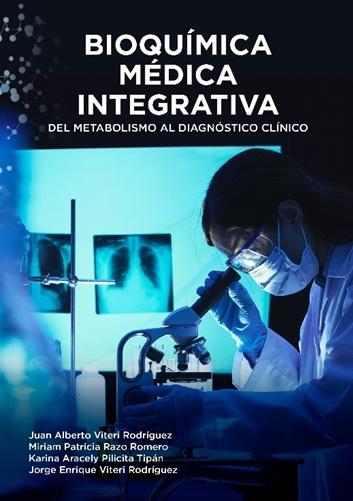
El libro que tiene en sus manos surge de una perspectiva diferente: la bioquímica médica no es solo un ejercicio memorístico sin sentido, sino un sistema conceptual dinámico, bien integrado y extremadamente relevante para la práctica clínica diaria. Siempre que un médico analiza un resultado de laboratorio, receta un medicamento, revisa la condición nutricional de un paciente o entiende la fisiopatología de una enfermedad, está aplicando, ya sea de manera consciente o inconsciente, los fundamentos de la bioquímica. Por tanto, el reto educativo no radica en simplificar la complejidad de esta disciplina, sino en presentarla de tal manera que su lógica interna y su relación con la clínica sean claras y evidentes.
El texto aborda la bioquímica médica desde una visión integradora que vincula la estructura molecular con su función fisiológica, el metabolismo con la patología y los mecanismos bioquímicos con las herramientas de diagnóstico. Los autores han estructurado el contenido en cuatro grandes secciones que se desarrollan como una historia lógica: los principios de la bioquímica celular y el equilibrio de líquidos y ácido-base; la hemoglobina y el sistema de coagulación como ejemplos claves de proteínas funcionales; las vitaminas y minerales como nutrientes fundamentales para la actividad enzimática; y los procesos bioenergéticos que sustentan la vida celular.
Cada uno de los capítulos incluye correlaciones clínicas que demuestran la aplicación directa de los principios bioquímicos en el diagnóstico y la gestión de enfermedades: la interpretación de una gasometría arterial, el uso de biomarcadores enzimáticos en el infarto o pancreatitis, la comprensión de la cinética enzimática para la creación de medicamentos o el balance energético en la nutrición clínica. La orientación no es un simple añadido, sino el eje central de toda la obra, con el objetivo de que tanto el estudiante como el profesional de la salud no solo adquieran conocimiento, sino que también desarrollen una forma de razonamiento fisiopatológica.
La Universidad Politécnica Estatal del Carchi (UPEC), al poner a disposición este texto, reafirma su dedicación a la formación de profesionales de la salud que cuenten con una base científica sólida y una visión humanista de la medicina. La bioquímica no es un objetivo en sí misma; es una herramienta para entender al ser humano en su totalidad, para interpretar sus síntomas y signos, para tomar decisiones terapéuticas informadas y, en última instancia, para aliviar el dolor. Este libro busca contribuir a esa misión, ofreciendo un recurso educativo que acompañe a estudiantes y profesionales en su proceso de aprendizaje continuo.
Adam, S. S., Key, N. S., & Greenberg, C. S. (2020). D-dimer antigen: Current concepts and future prospects. Blood, 136(8), 847–854. https://doi.org/10.1182/blood.2019002918
Adrogué, H. J., Tucker, B. M., & Madias, N. E. (2022). Diagnosis and management of hyponatremia: A review. JAMA, 328(3), 280–291. https://doi.org/10.1001/jama.2022.11176
Aird, W. C. (2020). The endothelium and haemostasis. Thrombosis and Haemostasis, 120(8), 1259–1266. https://doi.org/10.1055/s-0040-1712695
Alberts, A. (2025). Vitamin C: A comprehensive review of its role in health. Molecules, 30(3), 748. https://doi.org/10.3390/molecules30030748
AlBlooshi, S. (2025). Vitamin K and women's health: A review. Frontiers in Global Women's Health. https://doi.org/10.3389/fgwh.2025.1590414
Aldea, M., Friboulet, L., Apcher, S., Jaulin, F., Mosele, F., Sourisseau, T., Soria, J.-C., Nikolaev, S., & André, F. (2023). Precision medicine in the era of multi-omics: Can the data tsunami guide rational treatment decision? ESMO Open, 8(5), 101642. https://doi.org/10.1016/j.esmoop.2023.101642
Aletras, G., et al. (2025). Hypochloremia in clinical practice. Cureus, 17(4), e78901.
Alfonzo, A., Soar, J., MacTier, R., Fox, J., Dawborn, J., & colleagues. (2023). Clinical practice guideline: Management of hyperkalaemia in adults. UK Kidney Association.
American Diabetes Association. (2024). Classification and diagnosis of diabetes: Standards of care in diabetes—2024. Diabetes Care, 47(Supplement 1), S15–S33. https://doi.org/10.2337/dc24-S002
American Thoracic Society. (s. f.). Interpretation of arterial blood gases. https://www.thoracic.org/professionals/clinical-resources/critical-care/clinical-education/abg-interpretation.php
Barletta, J. F., Figueroa, B. E., & Asad, Z. U. A. (2023). A systematic approach to understanding acid-base disorders in the critically ill. The Annals of Pharmacotherapy, 58(1), 65–75. https://doi.org/10.1177/10600280231167891
Bar-Peled, L., & Kory, N. (2022). Principles and functions of metabolic compartmentalization. Nature Metabolism, 4(10), 1232–1244. https://doi.org/10.1038/s42255-022-00645-2
Bell, J. (2023). Clinical enzymology update. Journal of Laboratory Medicine, 47(2), 89–104. https://doi.org/10.1515/labmed-2022-0201
Berg, J. M., Tymoczko, J. L., & Stryer, L. (2021). Biochemistry (9th ed.). W. H. Freeman.
Bisswanger, H. (2022). Enzyme kinetics: Principles and methods (4th ed.). Wiley-VCH.
Bonner, R., Bockenhauer, D., & Walsh, S. B. (2025). Renal tubular acidosis: Core curriculum 2025. American Journal of Kidney Diseases, 85(5), 715–731. https://doi.org/10.1053/j.ajkd.2024.08.002
Boxhoorn, L., Voermans, R. P., Bouwense, S. A., Bruno, M. J., Verdonk, R. C., Boermeester, M. A., & van Santvoort, H. C. (2020). Acute pancreatitis. The Lancet, 396(10252), 726–742. https://doi.org/10.1016/S0140-6736(20)31310-6
Burmester, T., & Hankeln, T. (2021). The globin gene family: Structure, function and evolution. Journal of Experimental Biology, 224(2), jeb234567. https://doi.org/10.1242/jeb.234567
Camaschella, C. (2021). Iron deficiency. Blood, 137(14), 1847–1858. https://doi.org/10.1182/blood.2019001785
Cesarman-Maus, G., & Hajjar, K. A. (2021). Molecular mechanisms of fibrinolysis. Thrombosis and Haemostasis, 121(2), 155–165. https://doi.org/10.1055/s-0040-1718975
Chen, J. (2025). Clinical fluid therapy: Principles and practice. Critical Care Medicine, 53(1), e45–e58.
Chiabrando, D., Mercurio, S., & Tolosano, E. (2021). Heme synthesis and metabolism. Nature Reviews Molecular Cell Biology, 22(9), 594–610. https://doi.org/10.1038/s41580-021-00378-4
Connors, J. M., & Levy, J. H. (2020). Thromboinflammation and the coagulation system. New England Journal of Medicine, 383(17), 1621–1631. https://doi.org/10.1056/NEJMra1905204
Cooper, G. M., et al. (2024). Hemoglobin structure and function. Nature Reviews Molecular Cell Biology, 25(1), 45–62.
Copeland, R. A. (2021). Evaluation of enzyme inhibitors in drug discovery: A guide for medicinal chemists and pharmacologists (3rd ed.). Wiley.
Costanzo, L. S. (2022). Physiology (7th ed.). Elsevier.
D'Alessandro, A., et al. (2021). Red blood cell metabolism and 2,3-BPG regulation. Blood Reviews, 45, 100712. https://doi.org/10.1016/j.blre.2021.100712
Dalamaga, M. (2026). Vitamin D and health outcomes: State-of-the-art review. Current Nutrition Reports. https://doi.org/10.1007/s13668-026-00748-2
Daniyal, M. (2026). Multivitamins and cognitive health in older adults. Annals of Medicine and Surgery. https://doi.org/10.1097/MS9.0000000000002143
De Nicola, L., Coluzzi, F., Lagrutta, L., Granata, A., Bover, J., De Carvalho, F., Cupisti, A., & Di Lullo, L. (2023). Recommendations for the management of hyperkalemia in patients receiving renin–angiotensin–aldosterone system inhibitors. Internal and Emergency Medicine, 18, 2345–2358. https://doi.org/10.1007/s11739-023-03452-7
De Pasquale, V., Scarcella, M., & Pavone, L. M. (2022). Molecular mechanisms in lysosomal storage diseases: From pathogenesis to therapeutic strategies. Biomedicines, 10(4), 922. https://doi.org/10.3390/biomedicines10040922
Deepika. (2025). Vitamin D: Recent advances, associated factors, and its role. npj Science of Food. https://doi.org/10.1038/s41538-025-00460-5
Devlin, T. M. (2017). Textbook of biochemistry with clinical correlations (7th ed.). Wiley-Liss.
Ding, Y., et al. (2024). Iron metabolism and homeostasis: From molecular mechanisms to clinical implications. Cell Metabolism, 36(1), 1–18.
Erlinger, S., et al. (2020). Bilirubin metabolism and its disorders. Hepatology, 72(3), 1028–1044.
Esmon, C. T. (2020). The protein C pathway. Thrombosis Research, 190, 1–9. https://doi.org/10.1016/j.thromres.2020.03.023
Esrick, E. B., & Bauer, D. E. (2021). Gene therapy for sickle cell disease: A review. Blood, 138(5), 389–401.
FAO. (2023). Food energy: Methods of analysis and conversion factors. Food and Agriculture Organization of the United Nations.
Fischer, M., & Smith, A. (2023). Structural dynamics in enzyme catalysis: From conformational sampling to catalytic power. Nature Reviews Chemistry, 7(3), 180–196. https://doi.org/10.1038/s41570-023-00468-1
Forget, B. G., & Bunn, H. F. (2021). Classification of the disorders of hemoglobin. Cold Spring Harbor Perspectives in Medicine, 11(1), a035451. https://doi.org/10.1101/cshperspect.a035451
Franchi, F., & Mannucci, P. M. (2020). Natural anticoagulant pathways. Blood Reviews, 41, 100647. https://doi.org/10.1016/j.blre.2020.100647
Frangoul, H., Altshuler, D., Cappellini, M. D., Chen, Y.-S., Domm, J., Eustace, B. K., Foell, J., de la Fuente, J., Grupp, S., Handgretinger, R., Ho, T. W., Kattamis, A., Kernytsky, A., Lekstrom-Himes, J., Li, A. M., Locatelli, F., Mapara, M. Y., de Montalembert, M., Rondelli, D., ... Walters, M. C. (2021). CRISPR-Cas9 gene editing for sickle cell disease and β-thalassemia. New England Journal of Medicine, 384(3), 252–260. https://doi.org/10.1056/NEJMoa2031054
Garg, V. (2025). The role of multivitamin and mineral supplements. PMC. https://doi.org/10.1186/s40795-025-00834-2
Geers, C., & Gros, G. (2021). Carbon dioxide transport and acid-base balance. Respiratory Physiology & Neurobiology, 287, 103628. https://doi.org/10.1016/j.resp.2021.103628
Gillette, M. A., Jimenez, C. R., & Carr, S. A. (2024). Clinical proteomics: A promise becoming reality. Molecular & Cellular Proteomics, 23(2), 100688. https://doi.org/10.1016/j.mcpro.2023.100688
Hall, J. E., & Hall, M. E. (2021). Guyton and Hall textbook of medical physiology (14th ed.). Elsevier.
Hammond, D. A., et al. (2020). Anion gap interpretation. Journal of Critical Care, 58, 1–8.
Harris, A. N., & Weiner, I. D. (2023). An update on kidney ammonium transport along the nephron. Function, 4(1), zqac062. https://doi.org/10.1093/function/zqac062
Harvard T.H. Chan School of Public Health. (2024). The Nutrition Source: Vitamins and Minerals. Harvard University. https://www.hsph.harvard.edu/nutritionsource/vitamins/
He, Z., Liu, Q., Wang, Y., Zhao, B., Zhang, L., Yang, X., & Wang, Z. (2025). The role of endoplasmic reticulum stress in type 2 diabetes mellitus mechanisms and impact on islet function. PeerJ, 13, e19192. https://doi.org/10.7717/peerj.19192
Henry, J. B. (2022). Clinical diagnosis and management by laboratory methods (24th ed.). Elsevier.
Henzler-Wildman, K. A. (2021). Protein dynamics and catalysis: Insights from single-molecule and ensemble methods. Current Opinion in Structural Biology, 68, 17–24. https://doi.org/10.1016/j.sbi.2020.12.002
Hoffman, M., & Monroe, D. M. (2021). Coagulation 201: The cell-based model. Thrombosis and Haemostasis, 121(7), 855–865. https://doi.org/10.1055/s-0041-1724234
Imenez Silva, P. H., Noronha, I. L., & Malnic, G. (2022). Kidney metabolism and acid-base control: Back to the basics. Pflügers Archiv - European Journal of Physiology, 474(5), 695–715. https://doi.org/10.1007/s00424-022-02673-1
IUBMB. (2024). Enzyme nomenclature: Recommendations of the nomenclature committee of the International Union of Biochemistry and Molecular Biology. https://iubmb.org/enzyme-nomenclature/
Kapitulnik, J., & Ostrow, J. D. (2021). Bilirubin metabolism and transport. Hepatology Communications, 5(3), 345–360. https://doi.org/10.1002/hep4.1622
Kassebaum, N. J., et al. (2021). Global burden of sickle cell disease. The Lancet Haematology, 8(4), e284–e295.
Kato, G. J., et al. (2020). Sickle cell disease. Nature Reviews Disease Primers, 6, 1–22. https://doi.org/10.1038/s41572-020-0207-4
KDIGO. (2024). KDIGO 2024 clinical practice guideline for the evaluation and management of chronic kidney disease. Kidney Disease: Improving Global Outcomes.
Kennelly, P. J., Botham, K. M., McGuinness, O. P., Rodwell, V. W., & Weil, P. A. (2023). Harper's illustrated biochemistry (32nd ed.). McGraw Hill.
Klei, T. R., et al. (2020). Erythrocyte lifespan and clearance. Blood, 136(19), 2160–2170. https://doi.org/10.1182/blood.2019004233
Korus, J., Małyszko, J., & Małyszko, J. S. (2025). Metabolic acidosis in patients with chronic kidney disease: Diagnosis, pathogenesis, and treatment. Diagnostics, 15(16), 2052. https://doi.org/10.3390/diagnostics15162052
Kuhn, C., & Wagner, C. A. (2024). Metabolic acidosis in chronic kidney disease. Pflügers Archiv - European Journal of Physiology, 476, 475–488. https://doi.org/10.1007/s00424-024-02884-1
Lieberman, M., & Peet, A. (2022). Marks' basic medical biochemistry: A clinical approach (6th ed.). Wolters Kluwer.
Lieberman, M., & Peet, A. (2023). Marks' basic medical biochemistry: A clinical approach (7th ed.). Wolters Kluwer.
Lin, C., Tian, Q., Guo, S., Xie, D., & Cai, Y. (2024). Metabolomics for clinical biomarker discovery and therapeutic target identification. Molecules, 29(10), 2198. https://doi.org/10.3390/molecules29102198
Mairbäurl, H. (2023). 2,3-BPG and hemoglobin oxygen affinity. Journal of Applied Physiology, 134(3), 567–581.
Mani, S., Lalani, S. R., & Pammi, M. (2025). Genomics and multiomics in the age of precision medicine. Pediatric Research, 97, 1399–1410. https://doi.org/10.1038/s41390-025-04021-0
McPherson, R. A., & Pincus, M. R. (2022). Henry's clinical diagnosis and management by laboratory methods (24th ed.). Elsevier.
Menezes, M. S. S., et al. (2024). Structural, functional, nutritional and clinical aspects of Vitamin A. Biomedicine & Pharmacotherapy, 172, 116234. https://doi.org/10.1016/j.biopha.2024.116234
Mettananda, S., et al. (2020). Fetal hemoglobin in hemoglobinopathies. Blood Reviews, 43, 100668.
Mohandas, N., & Gallagher, P. G. (2020). Red cell membrane mechanics. Annual Review of Biochemistry, 89, 461–487. https://doi.org/10.1146/annurev-biochem-120219-103852
Muckenthaler, M. U., et al. (2021). Iron metabolism in health and disease. Cell, 184(10), 2636–2651. https://doi.org/10.1016/j.cell.2021.04.003
Murray, R. K., et al. (2021). Harper's illustrated biochemistry (31st ed.). McGraw Hill.
NASEM (National Academies of Sciences, Engineering, and Medicine). (2020). Dietary reference intakes for water, potassium, sodium, chloride, and sulfate. National Academies Press.
National Institutes of Health [NIH], Office of Dietary Supplements. (2026). Dietary Reference Intakes (DRI) Tables. U.S. Department of Health & Human Services. https://ods.od.nih.gov/HealthInformation/nutrientrecommendations.aspx
National Institutes of Health [NIH]. (2026). Zinc - Health Professional Fact Sheet. Office of Dietary Supplements. https://ods.od.nih.gov/factsheets/Zinc-HealthProfessional/
Nelson, D. L., & Cox, M. M. (2015). Lehninger principles of biochemistry (7th ed.). W. H. Freeman.
Nelson, D. L., & Cox, M. M. (2021). Lehninger principles of biochemistry (8th ed.). W. H. Freeman.
Nelson, D. L., Cox, M. M., & Hoskins, A. A. (2021). Lehninger principles of biochemistry (8th ed.). W. H. Freeman.
Obeng-Gyasi, E. (2020). Lead exposure and heme synthesis. Journal of Environmental and Public Health, 2020, 1–12.
Ordway, G. A., & Garry, D. J. (2020). Myoglobin function in muscle oxygenation. Physiological Reviews, 100(2), 743–765. https://doi.org/10.1152/physrev.00024.2018
Palmer, B. F., & Clegg, D. J. (2023). Respiratory acidosis and respiratory alkalosis: Core curriculum 2023. American Journal of Kidney Diseases, 82(6), 749–761. https://doi.org/10.1053/j.ajkd.2023.05.006
Percy, M. J., et al. (2022). Methemoglobinemia: Pathophysiology and diagnosis. Blood, 139(10), 1479–1490. https://doi.org/10.1182/blood.2021013984
Pirahanchi, Y., Jessu, R., & Aeddula, N. R. (2023). Physiology, sodium potassium pump. In StatPearls. StatPearls Publishing.
Ponka, P., et al. (2020). Heme biosynthesis and regulation. Blood, 135(2), 145–154. https://doi.org/10.1182/blood.2019002256
Puy, H., Gouya, L., & Deybach, J. C. (2021). Porphyrias. The Lancet, 397(10280), 186–196. https://doi.org/10.1016/S0140-6736(20)31816-X
Reeder, B. J. (2021). Globins beyond hemoglobin. Free Radical Biology and Medicine, 165, 90–100. https://doi.org/10.1016/j.freeradbiomed.2021.01.035
ResearchGate. (2026). Role of calcium, magnesium, and zinc in the management of hypocalcemia: A review. Journal of Pharmacognosy and Phytochemistry. https://www.researchgate.net/publication/400264489
Rodwell, V. W. (2016). Harper's illustrated biochemistry (30th ed.). McGraw-Hill.
Rose, J. J., et al. (2021). Carbon monoxide poisoning: Pathogenesis, management, and future directions. Nature Reviews Disease Primers, 7, 1–17.
Rosendaal, F. R. (2019). Venous thrombosis: A multicausal disease. The Lancet, 393(10174), 125–134. https://doi.org/10.1016/S0140-6736(18)31862-5
Ruggeri, Z. M. (2021). Platelet adhesion mechanisms. Blood, 138(1), 10–20. https://doi.org/10.1182/blood.2020009678
Sagar, N., Kharat, A., Kumar, A., & Singh, R. K. (2024). A comprehensive review of chloride management in critically ill patients. Cureus, 16(3), e57074. https://doi.org/10.7759/cureus.57074
Sak, F., Sengul, F., & Vatansev, H. (2024). The role of endoplasmic reticulum stress in metabolic diseases. Metabolic Syndrome and Related Disorders, 22(7), 487–493. https://doi.org/10.1089/met.2024.0013
Sarkar, M., et al. (2022). Oxygen transport physiology. Respiratory Physiology & Neurobiology, 298, 103–120. https://doi.org/10.1016/j.resp.2021.103120
Schulte, R. R., et al. (2021). Vitamin K prophylaxis in newborns. Pediatrics, 148(3), e2021050914.
Shaw, I. (2022). Acid-base balance: A review of normal physiology. BJA Education, 22(11), 375–381. https://doi.org/10.1016/j.bjae.2022.07.003
Shearer, M. J., & Okano, T. (2020). Vitamin K metabolism and function. Annual Review of Nutrition, 40, 37–58. https://doi.org/10.1146/annurev-nutr-022520-112528
Simon, L. V., Hashmi, M. F., & Farrell, M. W. (2025). Hyperkalemia. In StatPearls. StatPearls Publishing.
Sonani, B., Jha, A., & Radparvar, S. (2023). Hypernatremia. In StatPearls. StatPearls Publishing.
Stafford, D. W. (2021). Vitamin K cycle. Journal of Thrombosis and Haemostasis, 19(1), 1–10. https://doi.org/10.1111/jth.15157
Sterns, R. H. (2023). Treatment guidelines for hyponatremia: Stay the course. Kidney360, 5(2), 182–184. https://doi.org/10.34067/KID.0000000000000359
Suppadungsuk, S., Chattranukulchai, P., & Tiranathanagul, K. (2024). Hyponatremia correction and osmotic demyelination syndrome risk: A systematic review and meta-analysis. Clinical Journal of the American Society of Nephrology. https://doi.org/10.2215/CJN.0000000000000487
Taher, A. T., et al. (2021). Thalassemia syndromes. New England Journal of Medicine, 384(8), 727–740. https://doi.org/10.1056/NEJMra2021969
Takvam, M., Wood, C. M., Gilmour, K. M., Perry, S. F., & Tresguerres, M. (2023). Role of the kidneys in acid-base regulation and ammonia excretion. Frontiers in Physiology, 14, 1226068. https://doi.org/10.3389/fphys.2023.1226068
Taylor, K., & Davis, J. (2025). Adult dehydration. In StatPearls. StatPearls Publishing.
Teijón, J. M., et al. (2009). Fundamentos de bioquímica. Editorial Tébar Flores.
Torres, P. A., et al. (2021). Rhabdomyolysis and myoglobinuria. Kidney International, 99(6), 1300–1310. https://doi.org/10.1016/j.kint.2021.01.025
Vallon, V. (2024). State-of-the-art review: Mechanisms of action of SGLT2 inhibitors and their implications in clinical medicine. Kidney360, 5(10), 1516–1526. https://doi.org/10.34067/KID.0000000000000492
Versteeg, H. H., Heemskerk, J. W., Levi, M., & Reitsma, P. H. (2023). New fundamentals in hemostasis. Physiological Reviews, 103(1), 1–60. https://doi.org/10.1152/physrev.00009.2021
Vincent, J. L., et al. (2023). Oxygen delivery in critical illness. Critical Care, 27(1), 1–15. https://doi.org/10.1186/s13054-023-04458-7
Vinogradov, S. N., et al. (2021). The globin family: Evolution and function. Journal of Molecular Evolution, 89(1), 1–20.
Weaver, L. K. (2020). Carbon monoxide poisoning. New England Journal of Medicine, 383(6), 582–593.
Webb, J. L., et al. (2023). Hemoglobin allostery and oxygen delivery. Nature Structural & Molecular Biology, 30(1), 12–25.
Weisel, J. W., & Litvinov, R. I. (2022). Fibrin formation and structure. Journal of Thrombosis and Haemostasis, 20(1), 1–14. https://doi.org/10.1111/jth.15530
Yee, J., Fink, J., & Frinak, S. (2022). Fundamentals of arterial blood gas interpretation. Kidney360, 3(8), 1458–1466. https://doi.org/10.34067/KID.0000000000000251
Yin, J., et al. (2024). Allosteric regulation of hemoglobin. Nature Communications, 15, 112–128. https://doi.org/10.1038/s41467-023-43218-9
Zong, Y., Li, H., Yi, W., Chen, J., Xu, Y., Wang, X., Huang, J., Zeng, F., Huang, J., Hu, C., Wang, Y., & Chen, Y. (2024). Mitochondrial dysfunction: Mechanisms and advances in therapy. Signal Transduction and Targeted Therapy, 9(1), 124. https://doi.org/10.1038/s41392-024-01839-8

Esta obra está bajo una licencia internacional Creative Commons Atribución-NoComercial-CompartirIgual 4.0.
No es necesario que cumpla con la licencia para los elementos del material que sean de dominio público o cuando su uso esté permitido por una excepción o limitación aplicable .
No se ofrecen garantías. La licencia podría no otorgarle todos los permisos necesarios para el uso previsto. Por ejemplo, otros derechos, como los de publicidad, privacidad o morales, podrían limitar el uso del material.