https://orcid.org/0009-0000-2086-5667






Lo que ocurre antes de que el niño cuente
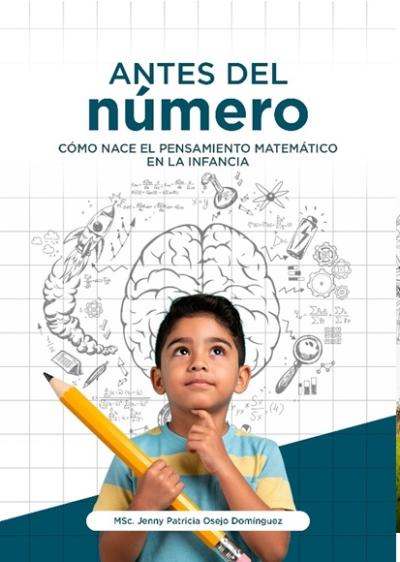
Este libro nació de una incomodidad. No de las que paralizan, sino de las que obligan a moverse.
Durante años, mientras impartía clases de didáctica de las matemáticas en la universidad, observé un fenómeno que se repetía con una constancia desconcertante. Formaba a futuros docentes de Educación Básica: les explicaba secuencias didácticas, les mostraba materiales concretos, les hablaba de constructivismo y de aprendizaje significativo. Ellos asentían, tomaban notas, aprobaban los exámenes. Pero cuando los observaba en sus primeras prácticas de aula, ocurría algo que me perturbaba en lo más hondo: enseñaban exactamente como les habían enseñado a ellos. Mecánicamente. Apresuradamente. Con el número como punto de partida y la corrección del error como herramienta central.
Me pregunté muchas veces si el problema estaba en lo que enseñaba, en cómo lo enseñaba, o en algo anterior a todo eso: en la imagen de las matemáticas que los propios docentes en formación cargaban desde su propia historia escolar.
La respuesta —incómoda, como todas las respuestas honestas— fue: en las tres cosas a la vez.
Este libro es mi intento de llegar a ese algo anterior. De plantarme en el origen. De preguntarme, de preguntarle a quienes me leen: ¿qué ocurre en la mente de un niño antes de que la escuela llegue con su secuencia de números, sus fichas de trabajo y su urgencia de resultados? ¿Qué tipo de pensamiento ya está activo, ya está construyendo, ya está ordenando el mundo, cuando todavía no ha pisado un aula?
La respuesta que la neurociencia, la psicología cognitiva y la didáctica contemporánea han ido articulando en las últimas décadas es tan clara como desafiante: el pensamiento matemático existe antes de la escuela, antes del símbolo, antes del número. Y la escuela, con demasiada frecuencia, no lo recoge. Lo ignora. Lo reemplaza por una instrucción que llega antes de que el andamiaje esté listo. El problema no es que los niños no puedan aprender matemáticas. El problema es que les enseñamos matemáticas antes de que hayamos comprendido cómo piensan (Kamii & DeClark, 2000, p. 17).
No escribo esto para culpar a los docentes. Todo lo contrario. Escribo porque creo profundamente que la mayoría de los maestros y las maestras que trabajan hoy en las aulas ecuatorianas —y latinoamericanas— son personas comprometidas, que se esfuerzan, que quieren lo mejor para sus estudiantes. Pero están atrapados en un sistema que no les dio las herramientas para mirar diferente. Y este libro es, antes que nada, una invitación a mirar diferente.
La estructura del libro sigue una lógica deliberada: comenzamos fuera del aula, en el mundo del niño antes de la escolarización formal, para luego entrar al aula con una mirada nueva. En la Parte I exploramos lo que ocurre antes del número: cómo el cerebro humano llega al mundo con capacidades matemáticas ya activas, cómo el pensamiento matemático se construye en la experiencia cotidiana, y por qué el cuerpo —no los símbolos— es el primer instrumento matemático de cualquier ser humano.
La Parte II nos adentra en la mente infantil: en las operaciones cognitivas que sostienen el número, en el error como fuente de información pedagógica, y en el papel inseparable que juegan el lenguaje y la emoción en la construcción del pensamiento matemático. La Parte III lleva esas comprensiones al aula y se hace preguntas difíciles: ¿cuándo la enseñanza mata el pensamiento? ¿Qué prácticas deberíamos desaprender? ¿Qué pequeños cambios tienen el mayor impacto? Y la Parte IV cierra con didáctica: diseño de experiencias, el juego como estructura cognitiva, y las implicaciones para quien forma a los que forman.
No encontrará aquí recetas. Encontrará pensamiento. Encontrará preguntas. Encontrará, espero, el tipo de incomodidad productiva que lleva a actuar.
Una invitación para seguir el camino
Este libro es el primero de una serie pensada para docentes que quieren transformar su enseñanza desde adentro. Si lo que leyó aquí le generó preguntas, si algo removió sus certezas sobre cómo se aprenden las matemáticas en la infancia, entonces el camino que empieza aquí tiene una segunda etapa. El próximo volumen de esta colección —Aprender Matemáticas No es Memorizar: Didáctica para Pensar, No para Repetir— toma exactamente donde este libro termina: en el aula, en la práctica cotidiana, en la decisión de enseñar para la comprensión y no para la reproducción.
Ese segundo libro tiene tres propósitos centrales: romper el paradigma de la repetición mecánica que tanto daño ha hecho a generaciones de estudiantes; diseñar actividades basadas en la exploración y el diálogo matemático genuino; y mostrar, con ejemplos concretos del aula ecuatoriana, cómo los números pueden tener sentido, cómo la resolución de problemas puede comenzar desde edades tempranas, y cómo el material concreto y el juego estructurado son herramientas didácticas de primer orden, no actividades de relleno.
Una advertencia honesta: ese libro, como este, requiere docentes dispuestos a reflexionar sobre su propia práctica. Su mayor impacto se produce cuando se trabaja con acompañamiento —en grupos de formación, en comunidades de aprendizaje, en procesos de tutoría. La transformación pedagógica es un proceso social, no solo individual.
Ashcraft, M. H., & Moore, A. M. (2009). Mathematics anxiety and mathematical ability: A latent variable study. Contemporary Educational Psychology, 34(3), 197–206. https://doi.org/10.1016/j.cedpsych.2009.03.002
Bailey, D. H., Siegler, R. S., & Geary, D. C. (2014). Early predictors of middle school fraction knowledge. Developmental Psychology, 50(3), 775–785. https://doi.org/10.1037/a0035512
Ball, D. L., Thames, M. H., & Phelps, G. (2008). Content knowledge for teaching: What makes it special? Journal of Teacher Education, 59(5), 389–407. https://doi.org/10.1177/0022487108324554
Baroody, A. J. (2020). Neurological, cognitive developmental, and educational perspectives on early childhood mathematics. En A. Shillady (Ed.), Spotlight on young children: Exploring math (pp. 104–119). National Association for the Education of Young Children.
Baroody, A. J., Purpura, D. J., Eiland, M. D., Reid, E. E., & Paliwal, V. (2019). Does fostering reasoning strategies for relatively difficult basic combinations promote transfer by K-3 students? Journal of Educational Psychology, 108(4), 576–591. https://doi.org/10.1037/edu0000145
Beilock, S. L., Gunderson, E. A., Ramirez, G., & Levine, S. C. (2010). Female teachers' math anxiety affects girls' math achievement. Proceedings of the National Academy of Sciences, 107(5), 1860–1863. https://doi.org/10.1073/pnas.0910967107
Beilock, S. L., & Maloney, E. A. (2015). Math anxiety: A factor in math learning not to be ignored. Policy Insights from the Behavioral and Brain Sciences, 2(1), 4–12. https://doi.org/10.1177/2372732215601438
Berch, D. B. (2005). Making sense of number sense: Implications for children with mathematical disabilities. Journal of Learning Disabilities, 38(4), 333–339. https://doi.org/10.1177/00222194050380040901
Black, P., & Wiliam, D. (1998). Assessment and classroom learning. Assessment in Education: Principles, Policy & Practice, 5(1), 7–74. https://doi.org/10.1080/0969595980050102
Boaler, J. (2016). Mathematical mindsets: Unleashing students' potential through creative math, inspiring messages, and innovative teaching. Jossey-Bass.
Boaler, J. (2022). Mathematical mindsets: Unleashing students' potential through creative math, inspiring messages, and innovative teaching (2.ª ed.). Jossey-Bass.
Boston, M. D., & Smith, M. S. (2009). Transforming secondary mathematics teaching: Increasing demand through task selection and enactment. Educational Studies in Mathematics, 71(2), 117–138. https://doi.org/10.1007/s10649-008-9151-9
Bransford, J. D., Brown, A. L., & Cocking, R. R. (Eds.). (2000). How people learn: Brain, mind, experience, and school (Ed. ampliada). National Academy Press.
Brophy, J. (1999). Teaching (Practitioner Inquiry Series). Association for Supervision and Curriculum Development.
Bruner, J. S. (1966). Toward a theory of instruction. Harvard University Press.
Butler, R. (1987). Task-involving and ego-involving properties of evaluation: Effects of different feedback conditions on motivational perceptions, interest, and performance. Journal of Educational Psychology, 79(4), 474–482. https://doi.org/10.1037/0022-0663.79.4.474
Butterworth, B. (2019). The mathematical brain. Butterworth-Heinemann.
Carbonneau, K. J., Marley, S. C., & Selig, J. P. (2022). A meta-analysis on the efficacy of teaching mathematics with manipulatives. Journal of Educational Psychology, 114(4), 795–818. https://doi.org/10.1037/edu0000628
Clausen-May, T. (2019). Teaching mathematics to diverse learners: The role of rhythm and embodied patterns. Educational Insights Press.
Clements, D. H., & Sarama, J. (2021). Learning and teaching early math: The learning trajectories approach (3.ª ed.). Routledge.
Cvencek, D., Meltzoff, A. N., & Greenwald, A. G. (2011). Math–gender stereotypes in elementary school children. Child Development, 82(3), 766–779. https://doi.org/10.1111/j.1467-8624.2010.01529.x
D'Ambrosio, U. (2001). Etnomatemática: Elo entre as tradições e a modernidade. Autêntica.
Darling-Hammond, L., Hyler, M. E., & Gardner, M. (2017). Effective teacher professional development. Learning Policy Institute.
Dehaene, S. (2011). The number sense: How the mind creates mathematics (Ed. revisada y ampliada). Oxford University Press.
Dehn, M. J. (2015). Working memory and academic learning: Assessment and intervention. John Wiley & Sons.
Doyle, W. (1986). Classroom organization and management. En M. C. Wittrock (Ed.), Handbook of research on teaching (3.ª ed., pp. 392–431). Macmillan.
Fives, H., & Buehl, M. M. (2012). Spring cleaning for the "messy" construct of teachers' beliefs: What are they? Which have been examined? What can they tell us? En K. R. Harris, S. Graham, & T. Urdan (Eds.), APA educational psychology handbook, Vol. 2: Individual differences and cultural and contextual factors (pp. 471–499). American Psychological Association.
Freudenthal, H. (1991). Revisiting mathematics education: China lectures. Kluwer Academic Publishers.
Fyfe, E. R., McNeil, N. M., & Borjas, S. (2020). Benefits of perceptual richness in educational materials. Journal of Educational Psychology, 112(1), 121–135. https://doi.org/10.1037/edu0000360
Gelman, R., & Gallistel, C. R. (1978). The child's understanding of number. Harvard University Press.
Gunderson, E. A., & Levine, S. C. (2011). Some types of parent number talk count more than others: Relations between parents' input and children's cardinal-number knowledge. Developmental Science, 14(5), 1021–1032. https://doi.org/10.1111/j.1467-7687.2011.01050.x
Hattie, J. (2009). Visible learning: A synthesis of over 800 meta-analyses relating to achievement. Routledge.
Henningsen, M., & Stein, M. K. (1997). Mathematical tasks and student cognition: Classroom-based factors that support and inhibit high-level mathematical thinking and reasoning. Journal for Research in Mathematics Education, 28(5), 524–549. https://doi.org/10.2307/749690
Hiebert, J., Carpenter, T. P., Fennema, E., Fuson, K. C., Wearne, P., Murray, H., Olivier, A., & Human, P. (1997). Making sense: Teaching and learning mathematics with understanding. Heinemann.
Hiebert, J., & Grouws, D. A. (2020). The effects of classroom mathematics teaching on students' learning. En D. A. Grouws (Ed.), Handbook of research on mathematics teaching and learning (pp. 371–404). Macmillan.
Hughes, M. (1986). Children and number: Difficulties in learning mathematics. Blackwell.
Huizinga, J. (1972). Homo ludens: A study of the play-element in culture (R. F. C. Hull, Trad.). Beacon Press. (Obra original publicada en 1938)
Immordino-Yang, M. H., & Damasio, A. (2007). We feel, therefore we learn: The relevance of affective and social neuroscience to education. Mind, Brain, and Education, 1(1), 3–10. https://doi.org/10.1111/j.1751-228X.2007.00004.x
Jordan, N. C., Devlin, B. L., & Botello, M. (2022). Core foundations of early mathematics: Refining the number sense framework. Current Opinion in Behavioral Sciences, 46, 101133. https://doi.org/10.1016/j.cobeha.2022.101133
Kamii, C. (2000). Young children reinvent arithmetic: Implications of Piaget's theory (2.ª ed.). Teachers College Press.
Kamii, C., & DeClark, G. (2000). Young children reinvent arithmetic (2.ª ed.). Teachers College Press.
Kelemanik, G., Lucenta, A., & Creighton, S. J. (2020). Routines for reasoning: Fostering the mathematical practices in all students. Heinemann.
Lakoff, G., & Núñez, R. E. (2000). Where mathematics comes from: How the embodied mind brings mathematics into being. Basic Books.
Levine, S. C., Suriyakham, L. W., Rowe, M. L., Huttenlocher, J., & Gunderson, E. A. (2010). What counts in the development of young children's number knowledge? Developmental Psychology, 46(5), 1309–1319. https://doi.org/10.1037/a0019671
Lewis, C. (2016). Lesson study: The core of Japanese professional development. En M. S. Khine (Ed.), Teaching and learning in mathematics (pp. 95–114). Springer.
McIntosh, A., Reys, B. J., & Reys, R. E. (1992). A proposed framework for examining basic number sense. For the Learning of Mathematics, 12(3), 2–8.
Ministerio de Educación del Ecuador. (2016). Currículo de los niveles de educación obligatoria. Ministerio de Educación.
Mix, K. S., Cheng, Y. L., & Saligan, L. N. (2021). Toward a comprehensive model of number sense in early childhood. Child Development Perspectives, 15(3), 154–160. https://doi.org/10.1111/cdep.12415
Nguyen, T., Watts, T. W., Duncan, G. J., Clements, D. H., Sarama, J., Wolfe, C., & Spitler, M. E. (2016). Which preschool math competencies are most predictive of fifth-grade achievement? Early Childhood Research Quarterly, 36, 550–560. https://doi.org/10.1016/j.ecresq.2016.03.003
Nunes, T., & Bryant, P. (2021). Children doing mathematics. Wiley-Blackwell.
Pajares, M. F. (1992). Teachers' beliefs and educational research: Cleaning up a messy construct. Review of Educational Research, 62(3), 307–332. https://doi.org/10.3102/00346543062003307
Panadero, E., Jonsson, A., & Strijbos, J. W. (2022). Scaffolding self-regulated learning through formative assessment: Feedback and self-assessment in education. Frontiers in Psychology, 13, 863481. https://doi.org/10.3389/fpsyg.2022.863481
Pekrun, R., & Linnenbrink-Garcia, L. (2020). Academic emotions. Guilford Press.
Penner-Wilger, M., et al. (2017). The role of finger gnosis in numerical development. Journal of Numerical Cognition, 3(2), 115–130.
Philipp, R. A. (2007). Mathematics teachers' beliefs and affect. En F. K. Lester (Ed.), Second handbook of research on mathematics teaching and learning (pp. 257–315). Information Age Publishing.
Piaget, J., & Inhelder, B. (2007). La psicología del niño (L. Hernández, Trad.). Morata. (Obra original publicada en 1966)
Piaget, J., & Szeminska, A. (2007). La génesis del número en el niño (J. Saiz, Trad.). Guadalupe. (Obra original publicada en 1941)
Richardson, V. (1996). The role of attitudes and beliefs in learning to teach. En J. Sikula (Ed.), Handbook of research on teacher education (2.ª ed., pp. 102–119). Macmillan.
Rittle-Johnson, B., Star, J. R., & Durkin, K. (2020). The power of comparison in mathematics teaching. American Educator, 44(2), 14–19.
Rohrer, D., & Taylor, K. (2021). The effects of interleaved and distributed practice on mathematics learning. Journal of Educational Psychology, 113(3), 552–567. https://doi.org/10.1037/edu0000628
Rowe, M. B. (1986). Wait time: Slowing down may be a way of speeding up. Journal of Teacher Education, 37(1), 43–50. https://doi.org/10.1177/002248718603700110
Schneider, M., Grabner, R. H., & Paetsch, J. (2022). Mental number line estimation and mathematical competence: A meta-analysis. Contemporary Educational Psychology, 68, 102035. https://doi.org/10.1016/j.cedpsych.2022.102035
Schön, D. A. (1983). The reflective practitioner: How professionals think in action. Basic Books.
Schukajlow, S., Rakoczy, K., & Pekrun, R. (2021). Emotions and modeling in mathematics education. ZDM – Mathematics Education, 53(1), 139–153. https://doi.org/10.1007/s11858-020-01203-4
Sfard, A. (2008). Thinking as communicating: Human development, the growth of discourses, and mathematizing. Cambridge University Press.
Shulman, L. S. (1986). Those who understand: Knowledge growth in teaching. Educational Researcher, 15(2), 4–14. https://doi.org/10.3102/0013189X015002004
Siegler, R. S., & Braithwaite, D. W. (2017). Numerical development. Annual Review of Psychology, 68, 353–379. https://doi.org/10.1146/annurev-psych-010416-044033
Siegler, R. S., & Ramani, G. B. (2008). Playing linear numerical board games promotes low-income children's numerical development. Developmental Science, 11(5), 655–661. https://doi.org/10.1111/j.1467-7687.2008.00714.x
Stein, M. K., Smith, M. S., Henningsen, M. A., & Silver, E. A. (2000). Implementing standards-based mathematics instruction: A casebook for professional development. Teachers College Press.
Sullivan, P., & Lilburn, P. (2020). Good questions for math teaching: Why ask them and what to ask (Grades K-6). National Council of Teachers of Mathematics (NCTM) / Oxford University Press.
Sweller, J. (2016). Cognitive load theory, evolutionary educational psychology, and instructional design. En L. Corno & E. M. Anderman (Eds.), Handbook of educational psychology (3.ª ed., pp. 29–40). Routledge.
Verdine, B. N., Golinkoff, R. M., Hirsh-Pasek, K., & Newcombe, N. S. (2014). Finding the missing piece: Blocks, puzzles, and the development of spatial skill in preschoolers. Journal of Cognition and Development, 15(3), 395–410. https://doi.org/10.1080/15248372.2014.904879
Vygotsky, L. S. (1978). Mind in society: The development of higher psychological processes. Harvard University Press.
Waller, P., Garg, S., & Martin, A. (2021). Embodied geometry in early childhood education: A systematic review. Educational Research Review, 34, 100405. https://doi.org/10.1016/j.edurev.2021.100405
Watts, T. W., Duncan, G. J., Siegler, R. S., & Davis-Kean, P. E. (2014). What's past is present: Predictive associations of early mathematics skills, reading skills, and socioeconomic status with later mathematics achievement. Child Development, 85(4), 1509–1525. https://doi.org/10.1111/cdev.12215
Winnicott, D. W. (1971). Playing and reality. Tavistock Publications.
Young, C. B., Wu, S. S., & Menon, V. (2012). The neurodevelopmental basis of math anxiety. Psychological Science, 23(5), 492–501. https://doi.org/10.1177/0956797611429134

Esta obra está bajo una licencia internacional Creative Commons Atribución-NoComercial-CompartirIgual 4.0.
No es necesario que cumpla con la licencia para los elementos del material que sean de dominio público o cuando su uso esté permitido por una excepción o limitación aplicable .
No se ofrecen garantías. La licencia podría no otorgarle todos los permisos necesarios para el uso previsto. Por ejemplo, otros derechos, como los de publicidad, privacidad o morales, podrían limitar el uso del material.