https://orcid.org/0000-0003-0629-1526





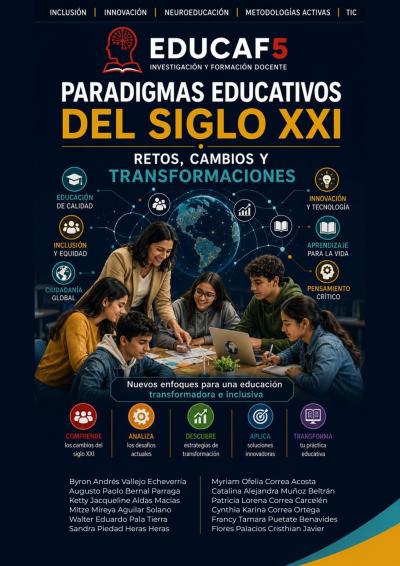
La educación siempre ha estado en constante movimiento. Cada generación ha traído consigo retos nuevos para la escuela, lo que ha exigido poner en cuestión la forma de entender el aprendizaje, la enseñanza y el desarrollo humano. Sin embargo, son pocas las ocasiones en la historia que hemos conocido donde estas transformaciones han transcurrido con la velocidad y la profundidad que caracterizan este siglo XXI.
Estamos ante una sociedad que está en continuo proceso de producción y transformación del conocimiento; la inteligencia artificial, la digitalización, la globalización, la diversidad cultural, las transformaciones sociales, los retos medioambientales, etc. están alterando de forma radical la forma de aprender, de trabajar, de comunicarse, de participar en la vida sociocultural. En consecuencia, la escuela ya no basta con ser transmisora de información: la escuela se ha de constituir en formar personas que sean capaces de comprender, de pensar críticamente, de adaptarse a los cambios, de contribuir de forma responsable a la construcción de una sociedad más humana, más inclusiva y más sostenible. Durante muchas décadas, la calidad educativa estuvo fundamentalmente vinculada con la cobertura curricular, el dominio de contenidos, la transmisión eficaz del conocimiento. Y aunque serían importantes estos aspectos, hoy sabemos que son insuficientes para hacerle frente a las necesidades de niñas, niños y adolescentes que deben desenvolverse en escenarios convulsos, complejos e inciertos.
Educar en el siglo XXI significa formar competencias para aprender toda la vida; reforzar el pensamiento crítico, la creatividad y la solución de problemas; fomentar la colaboración, la comunicación y la ciudadanía responsable; incorporar la tecnología y la inteligencia artificial de forma ética; citar la diversidad como riqueza social; construir escuelas a la altura de las necesidades del alumnado sin excepción.
Este libro surge precisamente a partir de esta convicción.
No quiere ofrecer pedagogías de moda ni recetas universales aplicables a cualquier contexto. El objetivo de esto es mostrar de manera amplísima, rigurosa, fundamentada, los paradigmas a partir de los cuales se está llevando a cabo la transformación educativa y ofrece herramientas, pautas y modelos para que el docente reflexione sobre su actividad práctica y la optimice desde su capacidad de responder a los retos actuales, desde una postura crítica, ética y basada en la evidencia. Durante los doce capítulos que forman el libro, el lector se va a encontrar un recorrido por algunos de los temas candentes de la educación en nuestros días. Se estudian los cambios que han dado lugar a diversos paradigmas educativos en lo que respecta a la evolución del rol del docente y del alumno; el cambio de la enseñanza centrada en los contenidos hacia la enseñanza que desarrolla competencias; las metodologías activas; el aprendizaje basado en proyectos, problemas y retos; la evaluación formativa y auténtica; la educación inclusiva; el bienestar socioemocional; el pensamiento crítico y la creatividad; la ciudadanía digital y la inteligencia artificial; la conectividad del aprendizaje en relación a las familias y la comunidad; y la construcción de escuelas que aprendan, innoven y se transformen continuamente.
Cada capítulo se ha diseñado, en cambio, para la acción pedagógica. Es por esto que, junto a la concepción sustraída de las últimas investigaciones, está también suministro de figuras, tablas comparativas, organizadores gráficos, estudios de casos, estrategias para Educación Inicial, Educación General Básica y Bachillerato, herramientas prácticas, de aplicación inmediata, preguntas para la reflexión del docente y actividades de la transferencia que permiten trasladar las ideas a la práctica.
Uno de los principios fundamentales que orientan esta obra dice así: innovar no es sustituir todo lo anterior. Lo que la educación ha construido en su historia son prácticas valiosas que tienen todavía sentido. La transformación es no sólo conservar lo que merece conservarse sino también descubrir lo que debe cambiarse y la toma de decisiones pedagógicas certificadas por la mejor evidencia y las necesidades de nuestros estudiantes.
El libro también asume una forma profundamente humanista de la educación. Las nuevas tecnologías, la inteligencia artificial y los recursos digitales representan oportunidades impresionantes de enriquecer el aprendizaje, pero ninguna herramienta podrá superar la sensibilidad, el juicio profesional, la creatividad y el compromiso ético del docente. Las maestras y los maestros continúan diseñando experiencias, construyendo ambientes de confianza, acompañan trayectorias de aprendizaje y forman ciudadanos para convivir, pensar y transformar la realidad.
Dentro de esta obra hay otro eje que atraviesa el relato: la inclusión. La diversidad no es una excepción en el aula; es la propia condición natural de estas. Cada estudiante tiene su propia manera de aprender, sus propias experiencias, intereses, capacidades y contextos. Por lo tanto, la tarea del docente tiene que ver con la generación de oportunidades de aprendizaje suficientemente flexibles para que todos, todas y todes puedan participar, progresar y alcanzar su propio desarrollo. La transformación de la práctica educativa no puede entenderse sólo desde el interior del aula. También lo constituye la relación con las familias, con la comunidad y con el entorno cultural, y los problemas sociales que conforman parte de la educación con sentido. Ella hace que el diálogo de la escuela con su contexto desplace el conocimiento entendido como una mera acumulación de contenidos en una herramienta de comprensión del mundo, participación responsable y mejora del mismo.
La intención de este libro es la de acompañar tanto a las personas que inician su trayectoria docente como las que tienen una vasta experiencia profesional. Ninguna práctica educativa está terminada. Una práctica docente puede ser revisada, enriquecida y fortalecida desde la reflexión, la colaboración y el aprendizaje continuo.
Nos gustaría que estas páginas no aportaran sólo conocimientos, sino que también generasen nuevas preguntas. Que invitaran a mirar el aula con otros ojos, a escuchar con más atención a los alumnos y las alumnas, a valorar el papel de las familias y de la comunidad, a articular un sentido pedagógico de la innovación y a comprender que toda decisión docente puede tener efectos sobre la vida de las demás personas.
Si este libro lograse motivar a una persona docente a replantearse una actividad, a diseñar una experiencia de aprendizaje más significativa, a realizar una introducción de una estrategia basada en evidencias o a descubrir nuevas formas de acompañar a sus alumnos y alumnas, entonces habrá cumplido su objetivo plenamente.
Porque, al final, los paradigmas educativos no cambian la escuela por sí mismos. Son las maestras y los maestros quienes, con el conocimiento, mediante el compromiso, la sensibilidad y la esperanza, convierten cada aula en un espacio de aprendizaje pero también de crecimiento, de convivencia y de construcción de un futuro para todas las personas.
Aba-Oli, Z., Koyas, K., & Husen, A. (2024). Higher-order thinking skills-oriented problem-based learning interventions in mathematics: A systematic literature review. School Science and Mathematics. https://doi.org/10.1111/ssm.12676
Abd Halim, H., Hamzah, M. I., & Zulkifli, H. (2024). A systematic review on the formative assessment practice in teaching and learning in secondary school. International Journal of Evaluation and Research in Education, 13(2). https://doi.org/10.11591/ijere.v13i2.26187
Abror, S., & Makoelle, T. R. (2025). Evaluating the effectiveness of outcome-based curriculum implementation in improving 21st-century skills among secondary school students. Journal of Education and Learning Sciences, 5(2). https://doi.org/10.56404/jels.v5i2.175.
Adeyele, V. O. (2023). Inquiry-based science approach in kindergarten: A systematic review. Journal AL-MUDARRIS, 6(2). https://doi.org/10.32478/al-mudarris.v6i2.1853
Ağırman, N., & Ercoşkun, M. H. (2025). Mapping the first twenty years of the flipped classroom model in primary school education: A systematic review. International Electronic Journal of Elementary Education. https://doi.org/10.26822/iejee.2025.410
Aldridge, J., & Blackstock, M. J. (2024). Assessing students’ perceptions of school climate in primary schools. Learning Environments Research, 27, 579–602. https://doi.org/10.1007/s10984-024-09492-2
Alé, J., Ávalos, B., & Araya, R. (2025). Scientific practices for understanding, applying and creating with artificial intelligence in K–12 education: A scoping review. Review of Education. https://doi.org/10.1002/rev3.70098
Alias, N. Z., Kamal, S. S. L. A., Jamil, H., & Abdullah, M. (2023). A systematic review of understanding parental involvement in children’s ESL learning: What the literature says?. International Journal of English Language and Literature Studies, 12(2). https://doi.org/10.55493/5019.v12i2.4810
Al-Kamzari, F., & Alias, N. (2025). A systematic literature review of project-based learning in secondary school physics: Theoretical foundations, design principles, and implementation strategies. Humanities and Social Sciences Communications, 12. https://doi.org/10.1057/s41599-025-04579-4
Allal, L. (2021). Involving primary school students in the co-construction of formative assessment in support of writing. Assessment in Education: Principles, Policy & Practice, 28(5–6), 584–601. https://doi.org/10.1080/0969594X.2021.1951164
Alordiah, C. (2025). Enhancing learning outcomes through formative assessments in Africa: A systematic review of practices, challenges, and opportunities. e-Kafkas Journal of Educational Research. https://doi.org/10.30900/kafkasegt.1630814
Amanulloh, M. J. A., Marbun, M., Sobri, A. Y., & Ubaidillah, A. F. (2024). 21st century skills development in secondary schools: A systematic literature review. Education and Human Development Journal, 9(3). https://doi.org/10.33086/ehdj.v9i3.5522
Amilusholihah, Kurniawati, S., Liubana, A., & Sutarni, N. (2025). Secondary school teachers’ formative assessment competencies in the digital environment: A systematic review. Pertanika Proceedings. https://doi.org/10.47836/pp.1.2.002
Andriana, E., Rokmanah, S., & Ramadhani, C. O. (2025). Unveiling the role of parental involvement in enhancing elementary school students’ learning outcomes. Progres Pendidikan, 6(1). https://doi.org/10.29303/prospek.v6i1.1314
Aravantinos, S., Lavidas, K., Komis, V., Karalis, T., & Papadakis, S. (2026). Artificial intelligence in K–12 education: A systematic review of teachers’ professional development needs for AI integration. Computers, 15(1), 49. https://doi.org/10.3390/computers15010049
Arlinda, C. P., Marianti, A., & Rahayuningsih, M. (2022). The implementation of project-based learning model with Instagram media towards students’ critical thinking and creativity. Unnes Science Education Journal, 11(1). https://doi.org/10.15294/usej.v11i1.46495
Arranz Garcia, O., Romero García, M. del C., & Alonso-Secades, V. (2025). Perceptions, strategies, and challenges of teachers in the integration of artificial intelligence in primary education: A systematic review. Journal of Information Technology Education: Research, 24. https://doi.org/10.28945/5458
Asadi, M., Pouretemad, H., & Akbarizardkhaneh, S. (2025). Characteristics of critical thinking education to children: A systematic review. Educational and Developmental Psychologist, 42, 212–225. https://doi.org/10.1080/20590776.2025.2499561
Aseery, A. (2025). Teacher professional standards across leading education systems. British Educational Research Journal. https://doi.org/10.1002/berj.70107
Assia, B., Hasnaoui, M. L., & Bouguidou, M. (2026). The effects of formative assessment on improving pupils’ performance and learning skills: A systematic review. International Journal of Scientific Research and Innovative Studies, 5(2). https://doi.org/10.63883/ijsrisjournal.v5i2.694
Ayari, M., Sellami, A., Santhosh, M., Naji, K., Al-Ali, A., & Alhazbi, S. (2025). From problems to performance: A systematic review of problem-based learning in K–12 mathematics. Frontiers in Education. https://doi.org/10.3389/feduc.2025.1731307
Bagnall, C., Jindal-Snape, D., Banwell, E., Panayiotou, M., Mason, C., & Qualter, P. (2025). Emotional wellbeing in the context of primary-secondary school transitions: A concept analysis paper. Educational Psychology Review, 37. https://doi.org/10.1007/s10648-025-09990-6
Batista, J., Mesquita, A., & Carnaz, G. (2024). Generative AI and higher education: Trends, challenges, and future directions from a systematic literature review. Information, 15(11), 676. https://doi.org/10.3390/info15110676
Bernal Parraga, A. P. . (2026). Analítica de aprendizaje e inteligencia artificial responsable para la toma de decisiones pedagógicas basadas en datos en educación básica. LUZ, 25, e1601. Recuperado a partir de https://luz.uho.edu.cu/index.php/luz/article/view/1601
Bernal ParragaA., Alvarez SantosA., & Mite CisnerosM. (2025). Formación docente: enfoques pedagógicos innovadores para el fortalecimiento de competencias profesionales en el siglo XXI. Varona, (84). Recuperado a partir de http://revistas.ucpejv.edu.cu/index.php/rVar/article/view/2981
Bernal, A., & Guarda, T. (2020). La gestión de la información es factor determinante para elaborar estrategias innovadoras en política educativa pública. Iberian Journal of Information Systems and Technologies, (E27), 35-48. https://core.ac.uk/download/pdf/487026121.pdf#page=35
Byejwe, P. A., & Mwila, P. (2025). Enhancing student learning through parental participation in school meetings: A case study of secondary schools in Kinondoni Municipality, Tanzania. Action Research Journal Indonesia, 7(1). https://doi.org/10.61227/arji.v7i1.337
Caracuel-Cáliz, R., Ubago-Jiménez, J. L., Alonso-Vargas, J. M., & Melguizo-Ibáñez, E. (2025). Impact of active methodologies involving physical activity on primary school students: A systematic review (2018–2024). Sports, 13. https://doi.org/10.3390/sports13100358
Carless, D., & Boud, D. (2018). The development of student feedback literacy: Enabling uptake of feedback. Assessment & Evaluation in Higher Education, 43(8), 1315–1325. https://doi.org/10.1080/02602938.2018.1463354
Carless, D., & Winstone, N. (2020). Teacher feedback literacy and its interplay with student feedback literacy. Teaching in Higher Education, 28(1), 150–163. https://doi.org/10.1080/13562517.2020.1782372
Chan, M., Manzon, M., Hong, H., & Khong, L. (2021). Multidimensional profiles of parent involvement: Antecedents and impact on student engagement. British Journal of Educational Psychology. https://doi.org/10.1111/bjep.12456
Che Mat, N., & Jamaludin, K. (2024). Effectiveness of practices and applications of student-centered teaching and learning in primary schools: A systematic literature review. International Journal of Academic Research in Progressive Education and Development, 13(3). https://doi.org/10.6007/IJARPED/v13-i3/21733
Chicaiza, V. (2025). Inteligencia artificial y aprendizaje de idiomas: Personalización del aula de inglés a través de plataformas adaptativas. Revista Veritas de Difusão Científica, 6(2), 477–506. https://revistaveritas.org/index.php/veritas/article/view/643
Cipriano, C., Naples, L. H., Eveleigh, A., Cook, A., Funaro, M., Cassidy, C. E., McCarthy, M. F., & Rappolt-Schlichtmann, G. (2023). A systematic review of student disability and race representation in universal school-based social and emotional learning interventions for elementary school students. Review of Educational Research, 93(1), 73–102. https://doi.org/10.3102/00346543221094079.
Cipriano, C., Strambler, M. J., Naples, L. H., Ha, C., Kirk, M., Wood, M., Sehgal, K., Zieher, A. K., Eveleigh, A., McCarthy, M., Funaro, M., Ponnock, A., Chow, J. C., & Durlak, J. A. (2023). The state of evidence for social and emotional learning: A contemporary meta-analysis of universal school-based SEL interventions. Child Development, 94(5), 1181–1204. https://doi.org/10.1111/cdev.13968.
Costa, L. M. G., & Reis, M. (2025). Motivational teaching techniques in secondary and higher education: A systematic review of active learning methodologies. Digital, 5, 40. https://doi.org/10.3390/digital5030040
Dahal, P. P., & G. C., L. (2026). Effectiveness of project-based learning in enhancing mathematical reasoning and creativity: A systematic review. KMC Journal, 8(1). https://doi.org/10.3126/kmcj.v8i1.90657
de Bruijn, A. D., Ehren, M., Meeter, M., & Kortekaas-Rijlaarsdam, A. F. (2025). School and student characteristics related to primary and secondary school students’ social–emotional functioning. Frontiers in Education, 10, 1514895. https://doi.org/10.3389/feduc.2025.1514895.
Deslauriers, L., McCarty, L. S., Miller, K., Callaghan, K., & Kestin, G. (2019). Measuring actual learning versus feeling of learning in response to being actively engaged in the classroom. Proceedings of the National Academy of Sciences of the United States of America, 116(39), 19251–19257. https://doi.org/10.1073/pnas.1821936116
Dimeli, M., & Kostas, A. (2025). The role of ChatGPT in education: Applications and challenges—Insights from a systematic review. Journal of Information Technology Education: Research, 24. https://doi.org/10.28945/5422
Dlamini, C., Chikuvadze, P., Young, M., Daimond, D., & Claretah, M. (2025). Competence-based education pedagogy and its infusion into primary school learning activities: Experiences from teachers in a selected cluster in Eswatini. Journal of Educational Research and Practice, 3(1). https://doi.org/10.70376/jerp.v3i1.267
Double, K. S., McGrane, J. A., & Hopfenbeck, T. N. (2020). The impact of peer assessment on academic performance: A meta-analysis of control group studies. Educational Psychology Review, 32, 481–509. https://doi.org/10.1007/s10648-019-09510-3
Eriksen, E. V., Tharaldsen, K. B., & Bru, E. (2025). Social-emotional learning and academic engagement: A qualitative study among lower secondary school students. International Journal of School & Educational Psychology, 13, 294–306. https://doi.org/10.1080/21683603.2025.2546301
Erol, M. (2025). Digital citizenship education supported by blended learning in primary school. International Online Journal of Primary Education. https://doi.org/10.55020/iojpe.1661792
Estélles, M., & Doyle, A. (2025). From safeguarding to critical digital citizenship? A systematic review of approaches to online safety education. Review of Education. https://doi.org/10.1002/rev3.70056
Fadillah, S. M., & Ha, M. (2024). Using rubrics to enhance accuracy of peer assessment and self-judgment in biology learning. Asia-Pacific Science Education. https://doi.org/10.1163/23641177-bja10080
Farantika, D., Afrezah, N. N., Salhah, Saudah, Asiah, & Yafie, E. (2024). Enhancing creative thinking in preschoolers: Teacher strategies for creating a multiliteracy-based learning environment. JPUD - Jurnal Pendidikan Usia Dini, 18(1). https://doi.org/10.21009/jpud.181.17
Ferguson-Patrick, K., & Liebech-Lien, B. (2025). Implementing collaborative problem-solving in primary school mathematics: Action research. Educational Research, 67, 461–482. https://doi.org/10.1080/00131881.2025.2571226
Filges, T., Dietrichson, J., Viinholt, B. A., & Dalgaard, N. (2022). Service learning for improving academic success in students in grade K to 12: A systematic review. Campbell Systematic Reviews, 18. https://doi.org/10.1002/cl2.1210
Fitria, D., Lufri, L., Elizar, E., & Amran, A. (2023). 21st century skill-based learning: Teacher problems in applying 21st century skills. International Journal of Humanities Education and Social Sciences, 2(4). https://doi.org/10.55227/ijhess.v2i4.409
Fitriadi, Herpratiwi, H., Yulianti, D., Setiyadi, A., Hariri, H., Sunyono, Haenilah, E., & Mukhlis, H. (2024). Enhancing critical thinking in elementary education: A systematic review of effective learning models. Multidisciplinary Reviews. https://doi.org/10.31893/multirev.2025157
Fry, K., Nakar, S., & Zorn, K. E. (2025). Professional learning interventions for inquiry-based pedagogies in primary classrooms: A scoping review. Mathematics Education Research Journal, 37, 853–887. https://doi.org/10.1007/s13394-024-00516-x
Gandini, M., & Morselli, D. (2026). Challenge-based learning implementation in K–12 education: A systematic literature review. Frontiers in Education. https://doi.org/10.3389/feduc.2025.1680347
Gaol, P. L. (2025). Assessment models in deep learning at school. Dharmawangsa: International Journal of the Social Sciences, Education and Humanities, 6(3). https://doi.org/10.46576/ijsseh.v6i3.7920
García-López, I., Ramírez-Montoya, M. S., & Molina Espinosa, J. M. (2025). Generative artificial intelligence in education: A systematic analysis of opportunities, challenges, and responses. Interactive Learning Environments, 34, 1194–1217. https://doi.org/10.1080/10494820.2025.2519133
Garil, G. (2024). Effectiveness of problem-based learning to students’ problem-solving and critical-thinking skills: A systematic review. Journal of Education, Management and Development Studies, 4(3). https://doi.org/10.52631/jemds.v4i3.269
Ghosh, R., Gardia, A., & Singha, J. (2026). A scoping review of artificial intelligence literacy in secondary education. Discover Artificial Intelligence. https://doi.org/10.1007/s44163-026-01408-8
Giang, N., Anh, N., Dao, T. T., Tuấn, P., Linh, C., & Chau, P. (2024). A systematic review of problem-solving skill development for students in STEM education. International Journal of Learning, Teaching and Educational Research, 23(5). https://doi.org/10.26803/ijlter.23.5.1
Ginanjar, A., Anisah, A., Munggaran, S. W., & Lestari, P. (2025). Authentic assessment for holistic learning: Evaluating the implementation of formative practices in Indonesian competency-based education classrooms. Eduscape: Journal of Education Insight, 3(3). https://doi.org/10.61978/eduscape.v3i3.1013
Goagoses, N., Suovuo, T., Winschiers-Theophilus, H., Suero Montero, C., Pope, N., Rötkönen, E., & Sutinen, E. (2023). A systematic review of social classroom climate in online and technology-enhanced learning environments in primary and secondary school. Education and Information Technologies. https://doi.org/10.1007/s10639-023-11705-9
Gomez, M. J. (2025). The impact of inquiry-based learning in science education: A systematic review of student engagement and achievement. Journal of Education, Learning, and Management, 2(2). https://doi.org/10.69739/jelm.v2i2.1143
Gonfa, M., Birhanu, A. L., & Gendo, K. M. (2024). Review on practice and challenges of ICT integration as pedagogical tools in Ethiopian primary school curriculum implementation. Discover Education, 3. https://doi.org/10.1007/s44217-024-00184-w.
Greenberg, M. T. (2023). Evidence for social and emotional learning in schools. Learning Policy Institute. https://doi.org/10.54300/928.269.
Gülhan, F. (2023). Parental involvement in STEM education: A systematic literature review. European Journal of STEM Education. https://doi.org/10.20897/ejsteme/13506
Hanum, F. F., Murdiono, M., Suyato, S., & Trisnawati, D. (2025). Hybrid service learning to promote civic engagement: A systematic literature review. Citizenship Teaching & Learning. https://doi.org/10.1386/ctl_00189_1
Hernández, D., Jacomino, G., Swamy, U., Donis, K., & Eddy, S. L. (2021). Measuring supports from learning assistants that promote engagement in active learning: Evaluating a novel social support instrument. International Journal of STEM Education, 8, 22. https://doi.org/10.1186/s40594-021-00286-z
Ikhlas, M., Mokhtar, M., & Rahman, M. R. A. (2022). Systematic review on parental involvement in secondary schools. International Journal of Academic Research in Progressive Education and Development, 11(2). https://doi.org/10.6007/IJARPED/v11-i2/13871
Indriani, V., Sari, K., Djuniadi, D., Isnaeni, W., & Rusilowati, A. (2025). Mapping and measuring digital literacy in secondary education through systematic literature review of psychometric and implication. Perspektif Ilmu Pendidikan. https://doi.org/10.21009/pip.392.5.
Ismail, N. H., & Osman, K. (2024). Exploring formative assessment strategies in the chemistry classroom in secondary school: A systematic literature review. International Journal of Academic Research in Progressive Education and Development, 13(2). https://doi.org/10.6007/IJARPED/v13-i2/21226
Jiang, W., Saito, E., Zhang, H., & Waterhouse, P. (2025). Conceptualizing student wellbeing in secondary education: A qualitative systematic literature review. International Journal of Adolescence and Youth, 30. https://doi.org/10.1080/02673843.2025.2488474
Khut, S., & Shimizu, K. (2023). Integrating STEM approach in K–12 science education teaching practice: A systematic literature review. International Journal of Research in STEM Education, 5(2). https://doi.org/10.33830/ijrse.v5i2.1598
Korukluoğlu, P., Çeliköz, M., & Gürol, M. (2022). Investigating the effectiveness of Web 2.0-based critical thinking curriculum developed for secondary school students: A mixed-methods study. Journal of Learning and Teaching in Digital Age. https://doi.org/10.53850/joltida.1033373
Kristiyuana, K., Wuriningsih, F. R., Idammatussilmi, I., & Agung, A. (2025). Reforming pedagogy in Indonesian primary schools: A five-year systematic review of differentiated instruction, project-based learning, and formative assessment (2020–2025). Jurnal Ilmiah Profesi Pendidikan, 10(2). https://doi.org/10.29303/jipp.v10i2.3413
Larkin, K., & Lowrie, T. (2023). Teaching approaches for STEM integration in pre- and primary school: A systematic qualitative literature review. International Journal of Science and Mathematics Education. https://doi.org/10.1007/s10763-023-10362-1
Lau, K.-L., Qian, Q., & Chiu, T. (2024). Effects of instructional factors on students’ acceptance of and participation in flipped language learning. Interactive Learning Environments, 33, 1755–1769. https://doi.org/10.1080/10494820.2024.2375642
León Ruíz , M. E., Bernal Párraga , A. P., Bustamante Peñaherrera , G. S., Yanza Rojas, C. J., Guzmán Quiña , M. de los A., Davila Amari , M. A., & López Villacis, D. E. (2024). Enfoques Pedagógicos para la Enseñanza de Estudios Sociales en Libros de Texto de Educación Básica Superior. Ciencia Latina Revista Científica Multidisciplinar, 8(4), 9132-9152. https://doi.org/10.37811/cl_rcm.v8i4.13060
Li, W., & Zou, W. (2021). Exploring primary-school EFL teacher expertise in scaffolding: A comparative study. SAGE Open, 11. https://doi.org/10.1177/21582440211061574
Li, Y., & Rahman, M. N. B. A. (2025). Parental involvement in digital learning during elementary school education: A systematic literature review. European Journal of Education. https://doi.org/10.1111/ejed.70186
Limone, P., & Toto, G. A. (2022). Psychological strategies and protocols for promoting school well-being: A systematic review. Frontiers in Psychology, 13, 914063. https://doi.org/10.3389/fpsyg.2022.914063
Lorca, A. L., Peltzer, K., Busse, V., & Krause, U.-M. (2026). Effects of peer feedback and self-assessment on writing. Learning and Instruction. https://doi.org/10.1016/j.learninstruc.2025.102253
Lu, C., & Gu, M. (2024). A systematic review and meta-analysis of factors and outcomes of digital citizenship among adolescents. Asia Pacific Journal of Education, 45, 1130–1145. https://doi.org/10.1080/02188791.2023.2296352
Machanova, J. (2025). Project-based learning in primary schools: A path to active learning. Cherkasy University Bulletin: Pedagogical Sciences, 192–198. https://doi.org/10.31651/2524-2660-2025-1-192-198
Man, M. Z. G., Hidayat, R., Kashmir, M. K., Suhaimi, N. F., Adnan, M., & Saswandila, A. (2022). Design thinking in mathematics education for primary school: A systematic literature review. Alifmatika: Jurnal Pendidikan dan Pembelajaran Matematika, 4(1), 17–36. https://doi.org/10.35316/alifmatika.2022.v4i1.17-36
Martínez, C. (2022). Developing 21st century teaching skills: A case study of teaching and learning through project-based curriculum. Cogent Education, 9. https://doi.org/10.1080/2331186X.2021.2024936
Mena Castillo, M. L., Iza Maigua, A. C., Bernal Parraga, A. P., & Lalangui Sandoval, J. A. (2026). Neurociencia de la lectura e inteligencia artificial: comparación del método fonológico y global en estudiantes con dislexia temprana. Tesla Revista Científica, 6(2), e696. https://doi.org/10.55204/trc.v6i2.e695
Meylani, R. (2024). Artificial intelligence in the education of teachers: A qualitative synthesis of the cutting-edge research literature. Journal of Computer and Education Research. https://doi.org/10.18009/jcer.1477709
Mlemba, A., Massam, W., & Mrema, B. J. (2024). Investigating the effect of assessment feedback on students’ learning and performance in Tanzania: Lessons from secondary education mathematics. Journal of Issues and Practice in Education, 16. https://doi.org/10.61538/jipe.v16i.1425
Mohd Abeden, N. A., & Siew, N. M. (2022). Assessing students’ critical thinking and physics problem-solving skills in secondary schools. Malaysian Journal of Social Sciences and Humanities, 7(6). https://doi.org/10.47405/mjssh.v7i6.1584
Mokhtar, K., Zaharudin, R., Amir, S., & Mokhtar, N. F. (2023). Family involvement in education of special needs students: A systematic literature review. International Journal of Education, Psychology and Counseling. https://doi.org/10.35631/IJEPC.852020
Molloy, E., Boud, D., & Henderson, M. (2020). Developing a learning-centred framework for feedback literacy. Assessment & Evaluation in Higher Education, 45(4), 527–540. https://doi.org/10.1080/02602938.2019.1667955
Moura, N., Dias, P., Veríssimo, L., Oliveira-Silva, P., & Serra, S. (2024). Solo music performance assessment criteria: A systematic review. Frontiers in Psychology, 15, 1467434. https://doi.org/10.3389/fpsyg.2024.1467434
Mulyani, P. S., & Heliawati, L. (2025). Enhancing problem-solving skills in chemistry through problem-based learning with SETS: A systematic review. Jurnal EDUCATIO: Jurnal Pendidikan Indonesia. https://doi.org/10.29210/1202525369
Nasir, W. M. F. W. M., Halim, L., & Arsad, N. M. (2022). Strategies in promoting creative thinking skills in science classroom: A systematic review. Cypriot Journal of Educational Sciences, 17(12). https://doi.org/10.18844/cjes.v17i12.7605
Näsström, G., Andersson, C., Granberg, C., Palm, T., & Palmberg, B. (2021). Changes in student motivation and teacher decision making when implementing a formative assessment practice. Frontiers in Education, 6, Article 616216. https://doi.org/10.3389/feduc.2021.616216
Noviyanti, R., Mariana, N., & Wiryanto, W. (2025). Critical thinking skills in mathematics learning through a differentiated learning approach in the era of Independent Curriculum: Systematic literature review. Journal of Innovation and Research in Primary Education, 4(3). https://doi.org/10.56916/jirpe.v4i3.1453.
O’Reilly, C., Devitt, A., & Hayes, N. (2022). Critical thinking in the preschool classroom: A systematic literature review. Thinking Skills and Creativity, 46, 101110. https://doi.org/10.1016/j.tsc.2022.101110
Ocen, S., Elasu, J., Aarakit, S., & Olupot, C. (2025). Artificial intelligence in higher education institutions: Review of innovations, opportunities and challenges. Frontiers in Education, 10, 1530247. https://doi.org/10.3389/feduc.2025.1530247
Omusonga, T. O., & Chesaro, D. K. (2023). Assessment of 21st century teaching profession skills emphasis in university pre-service teacher training programmes in Kenya: A case study of Bomet University College. European Journal of Education Studies, 10(12). https://doi.org/10.46827/ejes.v10i12.5092.
Opria, S., & Momanu, M. (2023). Systematic literature review on digital citizenship education for primary school students. Journal of Educational Sciences. https://doi.org/10.35923/jes.2023.1.06
Opria, S., & Momanu, M. (2024). The development of a systematic review on digital citizenship education for primary school students based on PRISMA method. Journal of Educational Sciences & Psychology. https://doi.org/10.51865/jesp.2024.2.17
Parmigiani, D., Nicchia, E., Pario, M., Murgia, E., Silvaggio, C., Ambrosini, A., Pedevilla, A., Sardi, I., & Ingersoll, M. (2025). Formative assessment in upper secondary schools: Ideas, concepts, and strategies. Education Sciences, 15(4), 438. https://doi.org/10.3390/educsci15040438
Pham, T. D., Karunaratne, N., Exintaris, B., Liu, D., Lay, T., Yuriev, E., & Lim, A. S. (2025). The impact of generative AI on health professional education: A systematic review in the context of student learning. Medical Education, 59, 1280–1289. https://doi.org/10.1111/medu.15746
Podiya, J., Navaneetham, J., & Bhola, P. (2025). Influences of school climate on emotional health and academic achievement of school-going adolescents in India: A systematic review. BMC Public Health, 25. https://doi.org/10.1186/s12889-024-21268-0
Pranata, A., & Syamsijulianto, T. (2025). Enhancing civic literacy in primary education through game-based learning and team games tournament: A bibliometric review (2015–2025). Journal of Elementary Education, 2(1). https://doi.org/10.38040/jeleduc.v2i1.1248
Prokop-Dorner, A., Piłat-Kobla, A., Ślusarczyk, M., Świątkiewicz-Mośny, M., Ożegalska-Łukasik, N., Potysz-Rzyman, A., Zarychta, M., Juszczyk, A., Kondyjowska, D., Magiera, A., Maraj, M., Storman, D., Warzecha, S., Weglarz, P., Wojtaszek-Glówka, M., Zabicka, W., & Bała, M. M. (2024). Teaching methods for critical thinking in health education of children up to high school: A scoping review. PLOS ONE, 19(8), e0307094. https://doi.org/10.1371/journal.pone.0307094
Putri, D. A., Sumarno, Apriza, B., & Widianingrum, A. (2025). Analysis of the effectiveness of implementing project-based learning models on students’ critical thinking skills in elementary schools: A systematic literature review. Journal for Lesson and Learning Studies, 8(1). https://doi.org/10.23887/jlls.v8i1.90392
Qi, B. (2021). The implementation of project-based learning in K–12 education. SFU Educational Review, 14(1). https://doi.org/10.21810/sfuer.v14i1.2376
Ramli, N. A., & Mahmud, S. N. D. (2025). Integration of artificial intelligence to support inquiry-based science teaching and learning: A systematic literature review. International Journal of Academic Research in Progressive Education and Development, 14(2). https://doi.org/10.6007/IJARPED/v14-i2/25380.
Rana, K., & Rana, K. (2025). How secondary English teachers employ formative assessment and feedback to scaffold students’ odyssey in English learning. Journal of Language and Education. https://doi.org/10.17323/jle.2025.19854
Rapti, S., Sapounidis, T., & Tselegkaridis, S. (2025). Review of robotics activities to promote kindergarteners’ communication, collaboration, critical thinking, and creativity. Information, 16(4), 260. https://doi.org/10.3390/info16040260
Rattanachaithada, R., Kwangmuang, P., Vongtathum, P., Gamlunglert, R., & Srikoon, S. (2025). A confirmatory factor analysis of scientific critical thinking in secondary school. Cogent Education, 12(1). https://doi.org/10.1080/2331186X.2025.2467508
Rodríguez-Triana, M. J., Prieto, L. P., Holzer, A., & Gillet, D. (2020). Instruction, student engagement, and learning outcomes: A case study using anonymous social media in a face-to-face classroom. IEEE Transactions on Learning Technologies, 13(4), 718–733. https://doi.org/10.1109/TLT.2020.2995557
Rohmah, N., Rosyidha, A., & Saputri, L. A. D. E. (2024). Unlocking the potential of project-based learning in English language education: A systematic review of benefits, challenges, and implementation strategies. Journal of English Language Teaching and Applied Linguistics, 6(4). https://doi.org/10.32996/jeltal.2024.6.4.17
Saeed, B. A., & Ramdane, T. (2022). The effect of implementation of a creative thinking model on the development of creative thinking skills in high school students: A systematic review. Review of Education, 10(3), e3379. https://doi.org/10.1002/rev3.3379
Safitri, A., Chotimah, H., Hudha, A. M., & Rahardjanto, A. (2023). Application of problem-based learning to improve problem solving skills and creative thinking skills of class XI students. Jurnal Eksakta Pendidikan, 7(2). https://doi.org/10.24036/jep/vol7-iss2/757
Salter, D. L. H., Neelakandan, A., & Wuthrich, V. M. (2024). Anxiety and teacher-student relationships in secondary school: A systematic literature review. Child Psychiatry & Human Development, 56, 1870–1888. https://doi.org/10.1007/s10578-024-01665-7
Salvo-Garrido, S., Polanco-Levicán, K., Cisternas-Salcedo, P., & Moraga-Pumarino, A. (2026). Educational trajectories and academic achievement from primary to secondary education: A systematic review of individual, family, school, and contextual factors. Behavioral Sciences, 16, 608. https://doi.org/10.3390/bs16040608
Samane-Cutipa, V. A., Callacondo Velarde, J. C., Rucano Paucar, F. H., & Talavera-Mendoza, F. (2025). Managing cooperative learning and digital competences in secondary education: A systematic review. International Journal of Evaluation and Research in Education, 14(3). https://doi.org/10.11591/ijere.v14i3.30449.
Saraç, H., Ölmez-Çağlar, F., Atabek, O., Charmier, A. J., Guerra, C., Rocha, C., Barbuti, N., De Bari, M., Rando, N., Esteban, R., & Bakay, Ö. (2026). Integrating STEM education with digital storytelling in primary education: A systematic review across four Mediterranean countries. Umanistica Digitale. https://doi.org/10.60923/issn.2532-8816/23809.
Sarıgöz, O. (2023). Examination of secondary school mathematics curriculum in terms of 21st century skills. e-International Journal of Educational Research. https://doi.org/10.19160/e-ijer.1200499
Sasse, H., Weber, A., Reuter, T., & Leuchter, M. (2024). Teacher guidance and on-the-fly scaffolding in primary school students’ inquiry learning. Science Education. https://doi.org/10.1002/sce.21921
Scholz, D., Taylor, A., & Strelan, P. (2022). Factors contributing to the efficacy of universal mental health and wellbeing programs in secondary schools: A systematic review. Adolescent Research Review, 8, 117–136. https://doi.org/10.1007/s40894-022-00193-6
See, B. H., Gorard, S., El-Soufi, N., Lu, B., Siddiqui, N., & Dong, L. (2020). A systematic review of the impact of technology-mediated parental engagement on student outcomes. Educational Research and Evaluation, 26, 150–181. https://doi.org/10.1080/13803611.2021.1924791
Seprie, Wuryandani, W., & Muthmainah. (2025). Transforming primary education: Balancing social skills and academic achievement through global inquiry-based learning models. Frontiers in Education, 10, 1512274. https://doi.org/10.3389/feduc.2025.1512274.
Sidek, R., Halim, L., Buang, N., & Arsad, N. M. (2020). Fostering scientific creativity in teaching and learning science in schools: A systematic review. Jurnal Penelitian dan Pembelajaran IPA, 6(1), 13–35. https://doi.org/10.30870/jppi.v6i1.7149
Silke, C., Davitt, E., Flynn, N., Shaw, A., Brady, B., Murray, C., & Dolan, P. (2023). Activating social empathy: An evaluation of a school-based social and emotional learning programme. Social and Emotional Learning: Research, Practice, and Policy, 100021. https://doi.org/10.1016/j.sel.2023.100021
Simoni, J., Urtubia-Fernandez, J., Mengual, E., Simoni, D., Royo, M., Egaña-Yin, D., Hertog, O. L. A., López-Ortiz, L., Muñoz-Tomás, A., Santiago-Martínez, P., Vahamaki, A., & Pereira, J. (2025). Artificial intelligence in undergraduate medical education: An updated scoping review. BMC Medical Education, 25, 1568. https://doi.org/10.1186/s12909-025-08188-2
Sırvermez, U., Baltacı, Ş., & Coşkun Onan, B. (2025). Digital citizenship education: An in-depth study of teaching practices and research insights. Interactive Learning Environments. https://doi.org/10.1080/10494820.2025.2542890
Soforon, O. G. B., Sikko, S. A., & Tesfamicael, S. A. (2024). Engaging primary mathematics teachers in two private schools in South Sudan: A case study on student-centred teaching in problem-solving and mathematical discourse. Pythagoras, 45(1). https://doi.org/10.4102/pythagoras.v45i1.775
Son, J., & Kim, S. (2025). A living lab model for elementary informatics education: Enhancing sustainability competencies through collaborative problem-solving, computational thinking, and communication. Sustainability, 17(13), 5811. https://doi.org/10.3390/su17135811
Ssali, C., Batiibwe, M. S. K., Dahl, B., Kariisa, H. A., Magero, J., & Mayende, G. (2025). Problem-based learning in secondary school mathematics: A review. Educational Research, 67(2), 212–230. https://doi.org/10.1080/00131881.2025.2493255
Suherman, S., & Vidákovich, T. (2022). Assessment of mathematical creative thinking: A systematic review. Thinking Skills and Creativity, 44, 101019. https://doi.org/10.1016/j.tsc.2022.101019
Sulla, F., Monacis, D., & Limone, P. (2023). A systematic review of the role of teachers’ support in promoting socially shared regulatory strategies for learning. Frontiers in Psychology, 14, 1208012. https://doi.org/10.3389/fpsyg.2023.1208012
Sun, D., Zhan, Y., Wan, Z., Yang, Y., & Looi, C. K. (2023). Identifying the roles of technology: A systematic review of STEM education in primary and secondary schools from 2015 to 2023. Research in Science & Technological Education, 43, 145–169. https://doi.org/10.1080/02635143.2023.2251902.
Sun, L., Ruokamo, H., Siklander, P., Li, B., & Devlin, K. (2021). Primary school students’ perceptions of scaffolding in digital game-based learning in mathematics. Learning, Culture and Social Interaction. https://doi.org/10.1016/j.lcsi.2020.100457
Sun, T., Lei, P.-W., DiPerna, J. C., Hart, S., Zhao, H., & Husmann, K. D. (2025). Association between social-emotional behaviors and academic outcomes in primary school students: A person-centered approach. School Mental Health, 17, 980–994. https://doi.org/10.1007/s12310-025-09787-6
Tadlaoui-Brahmi, A., Çuko, K., & Alvarez, L. (2022). Digital citizenship in primary education: A systematic literature review describing how it is implemented. Social Sciences & Humanities Open, 6, 100348. https://doi.org/10.1016/j.ssaho.2022.100348
Theobald, E. J., Hill, M. J., Tran, E., Agrawal, S., Arroyo, E. N., Behling, S., Chambwe, N., Cintrón, D. L., Cooper, J. D., Dunster, G. P., Grummer, J. A., Hennessey, K., Hsiao, J., Iranon, N., Jones, L., Jordt, H., Keller, M., Lacey, M. E., Littlefield, C. E., … Freeman, S. (2020). Active learning narrows achievement gaps for underrepresented students in undergraduate science, technology, engineering, and math. Proceedings of the National Academy of Sciences of the United States of America, 117(12), 6476–6483. https://doi.org/10.1073/pnas.1916903117
Töllner, F., Kuhl, P., & Besser, M. (2025). Formative assessment in inclusive mathematics education in secondary schools: A systematic review. Education Sciences, 15(5), 577. https://doi.org/10.3390/educsci15050577
Torres Illescas, V., Villacrés Prieto, P., Román Cabrera, J., Bernal Párraga, A. (2024). Charting the Path of Reading Development: A Study on the Importance and Effective Strategies for Reading in Early Ages Based on Technology. In: Gervasi, O., Murgante, B., Garau, C., Taniar, D., C. Rocha, A.M.A., Faginas Lago, M.N. (eds) Computational Science and Its Applications – ICCSA 2024 Workshops. ICCSA 2024. Lecture Notes in Computer Science, vol 14820. Springer, Cham. https://doi.org/10.1007/978-3-031-65285-1_2
Troya Santillán, C. M., Bernal Párraga, A. P., Guaman Santillan , R. Y., Guzmán Quiña , M. de los A., & Castillo Alvare, M. A. (2024). Formación Docente en el Uso de Herramientas Tecnológicas para el Apo-yo a las Necesidades Educativas Especiales en el Aula. Ciencia Latina Revista Científica Multidisciplinar, 8(3), 3768-3797. https://doi.org/10.37811/cl_rcm.v8i3.11588
Troya, B. N., Arzube, M. C., Arzube, D. M., Troya, C. M., Martínez, M. Y., Zapata, Y. F. y Bernal, A. P. (2024). Liderazgo Educativo Transformacional: Estrategias para Inspirar y Motivar a los Docentes en el Contexto Escolar. Ciencia Latina Revista Científica Multidisciplinar, 8(5), 2230-2246. https://doi.org/10.37811/cl_rcm.v8i5.13687
Ukobizaba, F., Maniraho, J. F., & Uworwabayeho, A. (2025). Project-based learning in STEAM subjects for socioformation: A systematic review of contributions, prevalence, and challenges. F1000Research, 14. https://doi.org/10.12688/f1000research.170698.3
Un, S. (2025). Digital citizenship in Cambodian upper secondary schools: A curriculum review using the Digital Kids Asia-Pacific framework for education. Journal of Educational Technology and Online Learning. https://doi.org/10.31681/jetol.1639704
Vattøy, K.-D., & Gamlem, S. M. (2024). Navigating formative assessment as professional development in digital contexts: Insights from teachers’ experiences. Teacher Development, 29, 343–360. https://doi.org/10.1080/13664530.2024.2382956
Vestad, L., & Tharaldsen, K. B. (2021). Building social and emotional competencies for coping with academic stress among students in lower secondary school. Scandinavian Journal of Educational Research, 66, 907–921. https://doi.org/10.1080/00313831.2021.1939145
Villacreses Sarzoza, E. G., Nancy Maribel, M. C., Calderón Quezada, J. E., Víctor Gregory, T. V., Iza Chungandro, M. F., Tandazo Sarango, F. E., & Bernal Párraga, A. P. (2025). Inteligencia Artificial: Transformando la Escritura Académica y Creativa en la Era del Aprendizaje Significativo. Revista Científica De Salud Y Desarrollo Humano , 6(1), 1427–1451. https://doi.org/10.61368/r.s.d.h.v6i1.533
Viner, R., Michalopoulou, S., Hudson, L. D., Hope, S., Lloyd-Houldey, O., Sundaram, N., Scott, S., Nicholls, D., & Bonell, C. (2025). Learning Together for Mental Health: Rapid systematic review of reviews of school-level interventions to promote mental health and wellbeing. Public Health Research, 1–34. https://doi.org/10.3310/FFHR7745
Vithanage, V., & Nakashima, N. (2025). Evaluating the effectiveness of a project-based STEM curriculum in the acquisition and development of 4Cs of 21st-century skills. School Science and Mathematics. https://doi.org/10.1111/ssm.18388
Wang, X., Zainuddin, Z., & Leng, C. H. (2025). Generative artificial intelligence in pedagogical practices: A systematic review of empirical studies (2022–2024). Cogent Education, 12(1), 2485499. https://doi.org/10.1080/2331186X.2025.2485499
Wardana, I. I., Sukaesih, S., & Dewi, N. R. (2024). Visualizing research trends on the impact of STEM-integrated project-based learning model on 21st-century skills using VOSviewer and Harzing’s Publish or Perish: A systematic literature review. Journal of Innovative Science Education, 13(3). https://doi.org/10.15294/jise.v13i3.16998
Wei, X., Chow, M.-K., Huang, L.-A., Huang, X., & Cheng, G. (2023). Teacher evaluation in primary and secondary schools: A systematic review of SSCI journal publications from 2012 to 2022. Sustainability, 15, 7280. https://doi.org/10.3390/su15097280
Wei, Y., Zhang, Q., & Guo, J. (2022). Can mathematical modelling be taught and learned in primary mathematics classrooms: A systematic review of empirical studies. Education Sciences, 12(12), 923. https://doi.org/10.3390/educsci12120923.
Weng, C., Kassaw, K., Astatke, M., & Yang, C.-C. (2024). Online learning environments for transferable skills development: A systematic literature review from 2013–2022. Interactive Learning Environments, 32(10), 6894–6914. https://doi.org/10.1080/10494820.2023.2294769
Wright, G., & Park, S. (2021). The effects of flipped classrooms on K-16 students’ science and math achievement: A systematic review. Studies in Science Education, 58, 95–136. https://doi.org/10.1080/03057267.2021.1933354
Xia, Q., Weng, X., Ouyang, F., Lin, T.-J., & Chiu, T. K. F. (2024). A scoping review on how generative artificial intelligence transforms assessment in higher education. International Journal of Educational Technology in Higher Education, 21, 40. https://doi.org/10.1186/s41239-024-00468-z
Yang, D., Chen, P., Wang, K., Li, Z., Zhang, C., & Huang, R. (2023). Parental involvement and student engagement: A review of the literature. Sustainability, 15(7), 5859. https://doi.org/10.3390/su15075859
Yasmin, S., & Amiruddin, N. S. (2026). Project-based learning in early mathematics education: A recent systematic review. International Journal of Research and Innovation in Social Science. https://doi.org/10.47772/ijriss.2026.10100573
Ye, P., & Xu, X. (2023). A case study of interdisciplinary thematic learning curriculum to cultivate “4C skills”. Frontiers in Psychology, 14, 1080811. https://doi.org/10.3389/fpsyg.2023.1080811
Yemini, M., Engel, L. C., & Ben Simon, A. (2023). Place-based education: A systematic review of literature. Educational Review, 77, 640–660. https://doi.org/10.1080/00131911.2023.2177260
Yim, I. H. Y., & Su, J. (2025). Artificial intelligence literacy education in primary schools: A review. International Journal of Technology and Design Education, 35, 2175–2204. https://doi.org/10.1007/s10798-025-09979-w
Zakeri, N. N., Hidayat, R., Sabri, N. M., Yaakub, N. F., Balachandran, K., & Azizan, N. I. (2023). Creative methods in STEM for secondary school students: Systematic literature review. Contemporary Mathematics and Science Education. https://doi.org/10.30935/conmaths/12601
Zhao, Y., & Sang, B. (2025). The effect of social-emotional learning programs on elementary and middle school students’ academic achievement: A meta-analytic review. Behavioral Sciences, 15(11), 1527. https://doi.org/10.3390/bs15111527
Zhong, Y., & Rosli, M. S. (2025). Generative artificial intelligence in higher education: Opportunities, challenges, and future directions. International Journal of Academic Research in Progressive Education and Development, 14(3). https://doi.org/10.6007/IJARPED/v14-i3/25813

Esta obra está bajo una licencia internacional Creative Commons Atribución-NoComercial-CompartirIgual 4.0.
No es necesario que cumpla con la licencia para los elementos del material que sean de dominio público o cuando su uso esté permitido por una excepción o limitación aplicable .
No se ofrecen garantías. La licencia podría no otorgarle todos los permisos necesarios para el uso previsto. Por ejemplo, otros derechos, como los de publicidad, privacidad o morales, podrían limitar el uso del material.