https://orcid.org/0009-0006-7033-6927




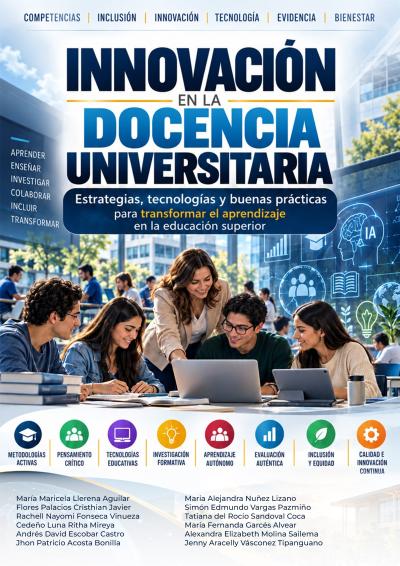
La educación superior atraviesa uno de los procesos de transformación más profundos de su historia reciente. La aceleración en la producción del conocimiento, la expansión de las tecnologías digitales, la irrupción de la inteligencia artificial generativa, la creciente diversidad del estudiantado, la transformación de las profesiones y la complejidad de los desafíos sociales están modificando las expectativas sobre aquello que las universidades deben enseñar y, especialmente, sobre aquello que sus estudiantes necesitan aprender.
Durante mucho tiempo, una parte importante de la enseñanza universitaria se organizó alrededor de la transmisión de conocimientos disciplinares. El profesor explicaba, el estudiante estudiaba y posteriormente demostraba, mediante diferentes formas de evaluación, cuánto podía recordar o reproducir. Este modelo permitió consolidar tradiciones académicas y formar generaciones de profesionales; sin embargo, resulta insuficiente cuando el conocimiento cambia rápidamente y los problemas profesionales requieren interpretar información, integrar perspectivas, investigar, colaborar, tomar decisiones y aprender continuamente.
La universidad contemporánea enfrenta, por tanto, una responsabilidad que trasciende la enseñanza de contenidos. Necesita formar personas capaces de pensar críticamente, resolver problemas, investigar con rigor, evaluar evidencias, aprender de manera autónoma, colaborar entre disciplinas, utilizar responsablemente la tecnología y actuar con compromiso ético y social.
Esta transformación exige reconsiderar el currículo, las metodologías, la evaluación y el papel de quienes participan en el proceso educativo. También obliga a preguntarnos qué significa realmente innovar.
Innovar no consiste necesariamente en utilizar la tecnología más reciente ni en sustituir una metodología tradicional por otra aparentemente novedosa. Una universidad puede disponer de plataformas digitales, inteligencia artificial y múltiples recursos tecnológicos y continuar reproduciendo experiencias de aprendizaje predominantemente pasivas. Del mismo modo, una metodología activa puede perder su potencial cuando se aplica sin relación clara con los resultados de aprendizaje que pretende desarrollar.
La innovación educativa adquiere sentido cuando responde a una necesidad formativa, se fundamenta en principios pedagógicos, utiliza críticamente la evidencia disponible y produce mejores oportunidades para aprender.
Desde esta perspectiva surge Innovación en la Docencia Universitaria: Estrategias para potenciar el pensamiento crítico, la investigación y el aprendizaje autónomo. Esta obra nace de la convicción de que la transformación de la educación superior necesita integrar aquello que con frecuencia se analiza por separado: currículo, competencias, metodologías activas, pensamiento crítico, investigación, autorregulación, inclusión, inteligencia artificial, evaluación, sostenibilidad e interdisciplinariedad.
El libro no pretende ofrecer una fórmula universal para transformar la universidad. Los contextos institucionales son diferentes, las disciplinas poseen características particulares y los estudiantes presentan necesidades diversas. Su propósito es proporcionar fundamentos conceptuales, evidencia científica, estrategias y herramientas que permitan a docentes, investigadores, diseñadores curriculares y gestores académicos analizar sus prácticas y tomar decisiones pedagógicas fundamentadas.
A lo largo de sus doce capítulos, el lector encontrará un recorrido que comienza con los fundamentos de la innovación educativa y avanza progresivamente hacia los desafíos que determinarán buena parte del futuro de la enseñanza universitaria.
Los primeros capítulos analizan la transición desde modelos centrados principalmente en la transmisión del conocimiento hacia experiencias orientadas al aprendizaje y al desarrollo de competencias. Esta transformación conduce necesariamente al diseño curricular por resultados de aprendizaje y a la necesidad de establecer coherencia entre aquello que esperamos que los estudiantes aprendan, las experiencias mediante las cuales pueden desarrollar esas capacidades y las evidencias utilizadas para evaluar sus logros.
A partir de esta base, la obra examina las metodologías activas como instrumentos para promover una participación intelectual más profunda. El aprendizaje basado en problemas, proyectos y casos, la colaboración, la indagación y otras estrategias son abordados no como tendencias pedagógicas aisladas, sino como posibilidades que adquieren valor cuando permiten al estudiante utilizar el conocimiento para analizar situaciones, formular explicaciones, construir soluciones y justificar decisiones.
El recorrido continúa con tres capacidades que constituyen el núcleo formativo de esta obra: pensamiento crítico, investigación y aprendizaje autónomo.
En un contexto caracterizado por abundancia de información y creciente presencia de contenidos generados mediante inteligencia artificial, pensar críticamente representa mucho más que expresar opiniones. Implica analizar argumentos, contrastar fuentes, reconocer supuestos, valorar evidencias, identificar incertidumbres y construir conclusiones justificadas. La universidad necesita crear experiencias sistemáticas para desarrollar estas capacidades porque difícilmente emergerán únicamente mediante la exposición a contenidos disciplinares.
La investigación formativa complementa este propósito. Independientemente de que un estudiante decida posteriormente dedicarse a la investigación científica, su formación universitaria debería permitirle formular preguntas relevantes, localizar información académica, evaluar críticamente fuentes, interpretar datos, reconocer las limitaciones de la evidencia y comunicar conclusiones con integridad intelectual. Investigar se convierte así no solamente en una actividad científica, sino también en una forma rigurosa de aprender.
Sin embargo, ninguna de estas capacidades resulta suficiente si el estudiante permanece permanentemente dependiente de instrucciones externas. Por esta razón, el aprendizaje autónomo y la autorregulación ocupan un lugar central en el libro. Aprender a establecer metas, planificar, seleccionar estrategias, supervisar la comprensión, utilizar retroalimentación y modificar el propio proceso de aprendizaje constituye una preparación indispensable para profesiones y sociedades en constante transformación.
Otro principio fundamental de esta obra es que la calidad educativa y la inclusión no constituyen objetivos contrapuestos.
La diversidad representa una condición habitual de las aulas universitarias. Los estudiantes poseen diferentes trayectorias, capacidades, experiencias, culturas y formas de participar en el aprendizaje. Esta realidad exige superar modelos educativos construidos alrededor de un estudiante supuestamente homogéneo. La accesibilidad y el Diseño Universal para el Aprendizaje ofrecen principios para anticipar barreras y ampliar las posibilidades de participación sin disminuir el rigor de las competencias que la universidad tiene la responsabilidad de garantizar.
La inteligencia artificial introduce otra dimensión decisiva. Su rápida incorporación a la educación superior está transformando la manera de buscar información, escribir, investigar, producir contenidos y resolver determinados problemas. Las universidades se enfrentan a decisiones que no pueden reducirse a permitir o prohibir herramientas. Necesitan preguntarse qué capacidades humanas desean preservar y fortalecer cuando determinadas operaciones cognitivas pueden delegarse parcialmente a sistemas artificiales.
Este libro aborda la inteligencia artificial desde una perspectiva pedagógica y crítica. Su valor no reside únicamente en aquello que puede automatizar, sino en la posibilidad de utilizarla para enriquecer experiencias de aprendizaje sin sustituir el razonamiento, la verificación, la creatividad, la autoría y la responsabilidad humana. En este contexto, la alfabetización en inteligencia artificial pasa a formar parte de una competencia universitaria más amplia: aprender a interactuar críticamente con tecnologías capaces de producir respuestas plausibles, pero no necesariamente verdaderas.
Esta transformación obliga también a reconsiderar la evaluación. Si una universidad pretende formar personas capaces de investigar, argumentar, colaborar y resolver problemas, resulta insuficiente evaluar predominantemente la reproducción de información. La evaluación auténtica, la retroalimentación y las nuevas posibilidades y desafíos asociados a la inteligencia artificial invitan a observar no solamente el producto final, sino también los procesos mediante los cuales el estudiante construye, justifican y mejora su desempeño.
Los últimos capítulos amplían la mirada desde el aula hacia la responsabilidad social y el futuro institucional. La sostenibilidad y los problemas complejos del mundo contemporáneo muestran que las disciplinas, aunque indispensables, no pueden funcionar permanentemente como compartimentos aislados. Muchos desafíos requieren integrar conocimientos científicos, tecnológicos, económicos, jurídicos, ambientales, sociales y humanísticos.
La interdisciplinariedad se presenta entonces como una capacidad para aprender a construir soluciones con otros. No supone diluir la identidad de las disciplinas, sino reconocer sus aportes y limitaciones, establecer lenguajes compartidos y desarrollar la capacidad de integrar perspectivas diferentes ante problemas que ninguna especialidad puede resolver completamente por sí sola.
Finalmente, la obra dirige su mirada hacia el futuro de la docencia universitaria y propone comprender la universidad como un ecosistema de aprendizaje. Desde esta perspectiva, la transformación educativa no depende únicamente de profesores innovadores o de iniciativas aisladas. Requiere instituciones capaces de aprender de sus propias experiencias, utilizar evidencia para tomar decisiones, acompañar el desarrollo docente, establecer políticas responsables para las tecnologías emergentes y construir culturas de innovación y mejora continua.
Una característica transversal de este libro es su orientación multidisciplinaria. Los principios desarrollados no pertenecen exclusivamente a una profesión. Ingeniería, administración, ciencias sociales, educación, derecho, arquitectura, ciencias básicas, tecnología, humanidades y ciencias de la salud enfrentan, con sus particularidades, preguntas semejantes: ¿qué necesita saber y hacer un graduado?, ¿cómo desarrollar esas capacidades?, ¿cómo comprobar que realmente las ha adquirido?, ¿qué papel corresponde al docente?, ¿qué puede aportar la tecnología?, ¿cómo garantizar inclusión y rigor?, ¿cómo preparar a los estudiantes para problemas todavía desconocidos?
Por esta razón, los capítulos combinan fundamentos conceptuales con ejemplos procedentes de diferentes campos profesionales. Las tablas de síntesis, organizadores gráficos, casos de aplicación, preguntas de reflexión y propuestas prácticas buscan facilitar la transferencia de los principios analizados a distintos contextos universitarios. No se pretende que cada estrategia sea reproducida literalmente, sino que pueda ser examinada, adaptada y evaluada de acuerdo con las características de cada disciplina e institución.
También existe una convicción que atraviesa toda la obra: la innovación educativa debe estar acompañada por evidencia. Las decisiones pedagógicas necesitan superar tanto la adopción acrítica de tendencias como la permanencia automática de prácticas tradicionales simplemente porque siempre se han realizado de determinada manera. Innovar responsablemente significa formular preguntas sobre nuestra propia enseñanza, observar resultados, utilizar investigación educativa, reconocer limitaciones y estar dispuestos a modificar aquello que no produce el aprendizaje esperado.
En este proceso, el docente universitario continúa ocupando un lugar fundamental.
La inteligencia artificial podrá generar explicaciones. Las plataformas podrán distribuir contenidos. Los sistemas digitales podrán analizar determinados patrones de aprendizaje. Sin embargo, educar implica también interpretar contextos, formular preguntas significativas, reconocer necesidades humanas, acompañar dificultades, construir relaciones de confianza, modelar integridad intelectual y ayudar a otra persona a descubrir aquello que todavía es capaz de aprender.
La tecnología puede transformar muchas funciones de la docencia, pero el sentido de la educación continua siendo profundamente humano.
Esperamos que esta obra resulte útil tanto para quienes comienzan su trayectoria docente como para profesores con amplia experiencia, investigadores educativos, estudiantes de posgrado, diseñadores curriculares y responsables de la gestión académica. Cada lector encontrará perspectivas diferentes según su contexto, pero todos comparten una misma responsabilidad: contribuir a construir experiencias universitarias capaces de preparar a las personas para comprender y transformar responsablemente el mundo que habitan.
Si alguna de estas páginas conduce a un docente a reconsiderar una evaluación, formular una mejor pregunta, diseñar una experiencia más inclusiva, incorporar críticamente la inteligencia artificial, utilizar evidencia para modificar su enseñanza o conceder mayor autonomía intelectual a sus estudiantes, este libro habrá cumplido una parte importante de su propósito.
Si además contribuye a que una comunidad académica comprenda que la innovación no constituye una actividad ocasional, sino una capacidad permanente para aprender institucionalmente, entonces su propósito será todavía mayor.
Porque el futuro de la universidad no dependerá exclusivamente de cuánto conocimiento sea capaz de transmitir, sino de qué personas sea capaz de formar y qué capacidades logre desarrollar en ellas.
Personas capaces de pensar antes de aceptar una respuesta.
Y de reconocer que el verdadero valor de una educación universitaria no termina cuando se obtiene un título, sino que comienza cuando aquello que se aprendió permite actuar con conocimiento, responsabilidad y compromiso frente a los demás.
Innovar en la docencia universitaria significa, en última instancia, ampliar las posibilidades de aprender. Y ampliar las posibilidades de aprender significa ampliar también las posibilidades de transformar el futuro.
Abejuela, H. J., Castillon, H. T., & Sigod, M. J. G. (2022). Constructive alignment of higher education curricula. Asia Pacific Journal of Social and Behavioral Sciences, 20. https://doi.org/10.57200/apjsbs.v20i0.288
Agyeman, N. Y. B., & Aphane, V. (2024). Implementing flipped classroom to enhance student engagement: An action research. E-Journal of Humanities, Arts and Social Sciences, 5(11), 1860–1878. https://doi.org/10.38159/ehass.202451119
Alarcon Burneo, S. N., Basantes Guerra, J. P., Chaglla Lasluisa, W. F., Carvajal Coronado, D. E., Martínez Oviedo, M. Y., Vargas Saritama, M. E., & Bernal Parraga, A. P. (2024). Uso de Recursos Manipulativos para Mejorar la Comprensión de Conceptos Matemáticos Abstractos en la Educación Secundaria. Ciencia Latina Revista Científica Multidisciplinar, 8(5), 1972-1988. https://doi.org/10.37811/cl_rcm.v8i5.13669
Albán Pazmiño, E. J., Cruz Sari, C. R., Bernal Parraga, A. P., & Lasluiza Centeno, K. G. (2026). Influencia del aprendizaje cooperativo sobre la toma de decisiones, el rendimiento técnico-táctico y el compromiso académico en estudiantes de Educación Física durante la enseñanza del baloncesto. Prometeo Conocimiento Científico, 6(2). https://doi.org/10.55204/pcc.v6i2.e145
Alemdag, E., & Narciss, S. (2025). Promoting formative self-assessment through peer assessment: Peer work quality matters for writing performance and internal feedback generation. International Journal of Educational Technology in Higher Education, 22, Article 22. https://doi.org/10.1186/s41239-025-00522-4
Alhazbi, S., Al-Ali, A., Tabassum, A., Al-Ali, A. K., Al-Emadi, A., Khattab, T., & Hasan, M. A. (2024). Using learning analytics to measure self-regulated learning: A systematic review of empirical studies in higher education. Journal of Computer Assisted Learning, 40(4), 1658–1674. https://doi.org/10.1111/jcal.12982
Aligula, E. (2024). Enhancing quality learning in East African higher education: Towards a common understanding of formative feedback. Journal of Education, 4(5), 35–48. https://doi.org/10.70619/vol4iss5pp35-48
Alvarez Piza, R. A., Del Hierro Pérez, M. C., Vera Molina, R. M., Moran Piguave, G. D., Pareja Mancilla, S. S., Narváez Hoyos, J. J., & Bernal Parraga, A. P. (2024). Desarrollo del razonamiento en educación básica mediante aprendizaje basado en problemas y lecciones aprendidas de proyectos matemáticos previos. Ciencia Latina Revista Científica Multidisciplinar, 8(5), 13998-14014. https://doi.org/10.37811/cl_rcm.v8i5.14912
Álvarez-Vanegas, A., Ramani, S. V., & Volante, L. (2024). Service-learning as a niche innovation in higher education for sustainability. Frontiers in Education, 9, 1291669. https://doi.org/10.3389/feduc.2024.1291669
Amelink, C. T., Grote, D. M., Norris, M. B., & Grohs, J. R. (2024). Transdisciplinary learning opportunities: Exploring differences in complex thinking skill development between STEM and non-STEM majors. Innovative Higher Education, 49, 153–176. https://doi.org/10.1007/s10755-023-09682-5
Andrade-Girón, D., Marín-Rodriguez, W., Sandivar-Rosas, J., Carreño-Cisneros, E., Susanibar-Ramirez, E., Zúñiga-Rojas, M., Ángeles-Morales, J., & Villarreal-Torres, H. (2024). Generative artificial intelligence in higher education learning: A review based on academic databases. Iberoamerican Journal of Science Measurement and Communication. https://doi.org/10.47909/ijsmc.101
Annelin, A., & Boström, G.-O. (2024). Interdisciplinary perspectives on sustainability in higher education: A sustainability competence support model. Frontiers in Sustainability, 5, 1416498. https://doi.org/10.3389/frsus.2024.1416498
Antonio, R. P., & Prudente, M. S. (2024). Effects of inquiry-based approaches on students’ higher-order thinking skills in science: A meta-analysis. International Journal of Education in Mathematics, Science and Technology, 12(1), 251–281. https://doi.org/10.46328/ijemst.3216
Aráuz Cerezo, E., Tuarez Cobeña, M., Bernal Parraga, A., Yépez Yépez, L., & Loor Quintero, J. (2026). Efecto del aprendizaje cooperativo en el desarrollo de habilidades técnico-tácticas y la motivación en estudiantes de Educación Física durante la enseñanza delbaloncesto en secundaria. Polo del Conocimiento, 11(4), 2266-2283. doi:https://doi.org/10.23857/pc.v11i4.11541
Arcos Alonso, A. (2020). Intergenerational service-learning, sustainability and university social responsibility. Cypriot Journal of Educational Sciences, 15(6), 1629–1641. https://doi.org/10.18844/cjes.v15i6.5322
Argelagós, E., García, C., Privado, J., & Wopereis, I. (2023). Improving Master’s students’ information literacy through online instruction. The IAFOR Conference on Educational Research & Innovation: 2023 Official Conference Proceedings. https://doi.org/10.22492/issn.2435-1202.2023.15
Baumber, A. (2022). Transforming sustainability education through transdisciplinary practice. Environment, Development and Sustainability, 24, 7622–7639. https://doi.org/10.1007/s10668-021-01731-3
Beagon, Ú., Kövesi, K., Tabas, B., Nørgaard, B., Lehtinen, R., Bowe, B., Gillet, C., & Spliid, C. (2023). Preparing engineering students for the challenges of the SDGs: What competences are required? European Journal of Engineering Education, 48(1), 1–23. https://doi.org/10.1080/03043797.2022.2033955
Beagon, Ú., Kövesi, K., Tabas, B., Nørgaard, B., Lehtinen, R., Bowe, B., Gillet, C., & Spliid, C. (2023). Preparing engineering students for the challenges of the SDGs: What competences are required? European Journal of Engineering Education, 48(1), 1–23. https://doi.org/10.1080/03043797.2022.2033955
Bernal Párraga , A. P., Constante Olmedo , D. F., López Sánchez , I. Y., Padilla Portocarrero , D. K., & Duarte Salinas , E. M. (2026). Ecosistema híbrido inteligente para la enseñanza de Ciencias Naturales: un modelo integrador de metodologías activas, IA y regulación emocional. Tesla Revista Científica, 6(1). https://doi.org/10.55204/trc.v6i1.e588
Bernal Parraga, A. P. . (2026). Analítica de aprendizaje e inteligencia artificial responsable para la toma de decisiones pedagógicas basadas en datos en educación básica. LUZ, 25, e1601. Recuperado a partir de https://luz.uho.edu.cu/index.php/luz/article/view/1601
Bernal Parraga, A. P., Alvarado Cantos, T. M., Lucas Farías, M. S., Palacios Palma, P. P., & Demera Moreira, M. V. (2026). Aprendizaje basado en la indagación y laboratorios virtuales para fortalecer las competencias científicas en Biología del Bachillerato. Prometeo Conocimiento Científico, 6(2), e147. https://doi.org/10.55204/pcc.v6i2.e147
Bernal Parraga, A. P., Rodríguez Cajas, G. A., & Ramírez Campoverde, E. A. (2026). Impacto de las metodologías activas y tecnologías emergentes en el desarrollo de la comprensión lectora y la escritura creativa en Lengua y Literatura en educación básica. Educaf5-Berit, 1(01), 147–157. https://doi.org/10.5281/zenodo.18210399
Bernal Parraga, A. P., Rodríguez Pinargote, Y. D., Echeverria Galeas, A. F., Macias Loor, Y. M., & Gutierrez Grijalva, N. C. (2026). Metodologías activas y herramientas de Inteligencia Artificial para fortalecer las competencias emprendedoras en estudiantes de Bachillerato. Prometeo Conocimiento Científico, 6(2), e148. https://doi.org/10.55204/pcc.v6i2.e148
Bertel, L. B., Winther, M., Routhe, H. W., & Kolmos, A. (2022). Framing and facilitating complex problem-solving competences in interdisciplinary megaprojects: An institutional strategy to educate for sustainable development. International Journal of Sustainability in Higher Education, 23(5), 1173–1191. https://doi.org/10.1108/IJSHE-10-2020-0423
Bittle, K., & El-Gayar, O. (2025). Generative AI and academic integrity in higher education: A systematic review and research agenda. Information, 16(4), 296. https://doi.org/10.3390/info16040296
Bohm, N. L., Klaassen, R. G., van Bueren, E., & den Brok, P. (2024). Education in collaboration with cities: The intentions of transdisciplinary courses. International Journal of Sustainability in Higher Education, 25(4), 801–820. https://doi.org/10.1108/IJSHE-11-2022-0359
Braßler, M., & Sprenger, S. (2021). Fostering sustainability knowledge, attitudes, and behaviours through a tutor-supported interdisciplinary course in education for sustainable development. Sustainability, 13(6), 3494. https://doi.org/10.3390/su13063494
Camacho Rivadeneira, M. H., Valcke, M., & Chiluiza, K. (2017). Research based learning in higher education: A review of literature. In L. Gómez Chova, A. López Martínez, & I. Candel Torres (Eds.), INTED2017 proceedings (pp. 4188–4197). IATED. https://doi.org/10.21125/inted.2017.1004
Chanpradit, T. (2025). Generative artificial intelligence in academic writing in higher education: A systematic review. *Edelweiss Applied Science and Technology*. https://doi.org/10.55214/25768484.v9i4.6128
Cheng, G., Poon, L. K. M., Lau, W. W. F., & Zhou, R. C. (2019). Exploring the relationship between self-regulated learning strategies and computer programming achievement in higher education. In Proceedings of the International Conference on Education (Vol. 5, pp. 67–74). TIIKM Publishing. https://doi.org/10.17501/24246700.2019.5108
Cheung, K. S., Geertshuis, S., Liu, Q., & Albashiry, N. (2026). A systematic curriculum intervention: Embedding employability through constructive alignment to enhance student learning. The Curriculum Journal, 37(2), 465–483. https://doi.org/10.1002/curj.70016
Chicaiza, V. (2025). Inteligencia artificial y aprendizaje de idiomas: Personalización del aula de inglés a través de plataformas adaptativas. *Revista Veritas de Difusão Científica, 6*(2), 477–506. https://revistaveritas.org/index.php/veritas/article/view/643
Chowdhury, A., Mirzaei, S., & Afikuzzaman, M. (2025). Course-aligned generative AI-based intelligent tutoring. ASCILITE Publications. https://doi.org/10.65106/apubs.2025.2765
Cochancela Pérez, N., Bernal Parraga, A., Romero Torres, T., & Morales Loayza, D. (2026). Impacto de las estrategias innovadoras sobre la comprensión lectora y la producción textual en estudiantes de educación básica elemental media y superior. Polo del Conocimiento, 11(7), 2447-2471. doi:https://doi.org/10.23857/pc.v11i7.12154
Coelho, M., & Menezes, I. (2021). University social responsibility, service learning, and students' personal, professional, and civic education. Frontiers in Psychology, 12, 617300. https://doi.org/10.3389/fpsyg.2021.617300
Cosma, M. L., Berce, C., Bochis, L. E., & Clipa, O. (2025). The role of learning strategies and motivation in academic performance: A study of university students. Revista Românească pentru Educaţie Multidimensională, 17(4), 200–222. https://doi.org/10.18662/rrem/17.4/1054
Degen, P., & Asanov, I. (2025). Beyond automation: Socratic AI, epistemic agency, and the implications of the emergence of orchestrated multi-agent learning architectures. arXiv. https://doi.org/10.48550/arXiv.2508.05116
Demir, S. (2023). Analysis of peer and self-assessments using the many-facet Rasch measurement model and student opinions. Journal of Measurement and Evaluation in Education and Psychology, 14(3), 266–286. https://doi.org/10.21031/epod.1344196
Di Gerio, C., Fiorani, G., & Paciullo, G. (2020). Fostering sustainable development and social responsibility in higher education: The case of Tor Vergata University of Rome. Management Dynamics in the Knowledge Economy, 8(1), 31–44. https://doi.org/10.2478/mdke-2020-0003
Dinh, C.-T., & Phuong, H.-Y. (2024). Examining student characteristics, self-regulated learning strategies, and their perceived effects on satisfaction and academic performance in MOOCs. Electronic Journal of e-Learning, 22(8), 41–59. https://doi.org/10.34190/ejel.22.8.3446
Diyal, S. B., & Malla, V. (2026). Generative AI in academic writing: A systematic review of faculty expectations, emerging practices, and higher education implications. Innovative Research Journal, 5(1). https://doi.org/10.3126/irj.v5i1.97105
Doyle, L., & Nilsson, T. (2016). Lessons learned from changing content delivery methods in engineering statics. 2016 ASEE Annual Conference & Exposition Proceedings. American Society for Engineering Education. https://doi.org/10.18260/p.25551
Edisherashvili, N., Saks, K., Pedaste, M., & Leijen, Ä. (2022). Supporting self-regulated learning in distance learning contexts at higher education level: Systematic literature review. Frontiers in Psychology, 12, 792422. https://doi.org/10.3389/fpsyg.2021.792422
English, L. D. (2023). Ways of thinking in STEM-based problem solving. ZDM–Mathematics Education, 55(7), 1219–1230. https://doi.org/10.1007/s11858-023-01474-7
Faza, A., & Lestari, I. A. (2025). Self-regulated learning in the digital age: A systematic review of strategies, technologies, benefits, and challenges. The International Review of Research in Open and Distributed Learning, 26(2), 23–58. https://doi.org/10.19173/irrodl.v26i2.8119
Francis, N. J., Jones, S., & Smith, D. P. (2025). Generative AI in higher education: Balancing innovation and integrity. British Journal of Biomedical Science, 81, 14048. https://doi.org/10.3389/bjbs.2024.14048
Freeman, S., Eddy, S. L., McDonough, M., Smith, M. K., Okoroafor, N., Jordt, H., & Wenderoth, M. P. (2014). Active learning increases student performance in science, engineering, and mathematics. Proceedings of the National Academy of Sciences, 111(23), 8410–8415. https://doi.org/10.1073/pnas.1319030111
Fuzi, S. F., Jama, S. R., Zainudin, S. N., Abdul Halim, B., Zahidi, N. E., Jusoh, N., & Wan Hassan, W. H. (2024). Impact of self-efficacy and self-regulated learning on satisfaction and academic performance in online learning. Information Management and Business Review, 16(3[I]), 267–281. https://doi.org/10.22610/imbr.v16i3(I).3814
Gabriel, S. (2024). Generative AI and educational (in)equity. International Conference on AI Research. https://doi.org/10.34190/icair.4.1.3153
Garcia, C., Argelagós, E., & Privado, J. (2021). Assessment of higher education students’ information problem-solving skills in educational sciences. Information Development, 37(3), 359–375. https://doi.org/10.1177/0266666920976189
García-Aracil, A., Isusi-Fagoaga, R., & Planells-Aleixandre, E. (2024). Students' perspectives of alignment between teaching-learning methods and the promotion of social innovation competencies. Higher Education Research & Development, 43, 1479–1494. https://doi.org/10.1080/07294360.2024.2354278
Gehrke, S., & Kezar, A. (2017). The roles of STEM faculty communities of practice in institutional and departmental reform in higher education. American Educational Research Journal, 54(5), 803–833. https://doi.org/10.3102/0002831217706736
Gerges, E., & Rice, B. (2026). Assessment cycle model: Enhancing self-assessment through formative peer assessment in higher education. Assessment & Evaluation in Higher Education, 51(3), 459–475. https://doi.org/10.1080/02602938.2025.2536565
Grohs, J. R., Kirk, G. R., Soledad, M. M., & Knight, D. B. (2018). Assessing systems thinking: A tool to measure complex reasoning through ill-structured problems. Thinking Skills and Creativity, 28, 110–130. https://doi.org/10.1016/j.tsc.2018.03.003
Guan, R., Raković, M., Chen, G., & Gašević, D. (2025). How educational chatbots support self-regulated learning? A systematic review of the literature. Education and Information Technologies, 30, 4493–4518. https://doi.org/10.1007/s10639-024-12881-y
Gupta, R., Goyal, H., Kumar, D., Mehra, A., Sharma, S., Mittal, K., & Challa, J. (2025). Sakshm AI: Advancing AI-assisted coding education for engineering students in India through Socratic tutoring and comprehensive feedback. ACM Journal on Computing and Sustainable Societies, 4, 1–38. https://doi.org/10.1145/3788679
Gupta, S. K., & Srivastava, T. (2024). Assessment in undergraduate competency-based medical education: A systematic review. Cureus, 16(4), e58073. https://doi.org/10.7759/cureus.58073
Henri, M., Johnson, M. D., & Nepal, B. (2017). A review of competency-based learning: Tools, assessments, and recommendations. Journal of Engineering Education, 106(4), 607–638. https://doi.org/10.1002/jee.20180 DOI
Hoinle, B., Roose, I., & Shekhar, H. (2021). Creating transdisciplinary teaching spaces: Cooperation of universities and non-university partners to design higher education for regional sustainable transition. Sustainability, 13(7), 3680. https://doi.org/10.3390/su13073680
Holincheck, N. M., Galanti, T., & Trefil, J. (2022). Assessing the development of digital scientific literacy with a computational evidence-based reasoning tool. Journal of Educational Computing Research, 60(7), 1796–1817. https://doi.org/10.1177/07356331221081484
Hou, Z., Chen, J., & Zhang, H. (2026). Reframing faculty development for digital transformation and generative AI in higher education. Frontiers in Medicine, 13. https://doi.org/10.3389/fmed.2026.1864520
Howlett, C., Ferreira, J.-A., & Blomfield, J. (2016). Teaching sustainable development in higher education: Building critical, reflective thinkers through an interdisciplinary approach. International Journal of Sustainability in Higher Education, 17(3), 305–321. https://doi.org/10.1108/IJSHE-07-2014-0102
Hristov, S., Nakov, D., & Miočinović, J. (2023). Constructive alignment between objectives, teaching and learning activities, student competencies and assessment methods in higher education. Journal of Agriculture and Plant Sciences, 21(2), 21–36. https://doi.org/10.46763/JAPS23212021h
İlhan, E. (2021). Evaluation of competency based medical education curriculum. International Journal of Progressive Education, 17(3), 153–168. https://doi.org/10.29329/ijpe.2021.346.10
Iqbal, J., Asgarova, V., Hashmi, Z. F., Ngajie, B. N., Asghar, M., & Järvenoja, H. (2025). Exploring faculty experiences with generative artificial intelligence tools integration in second language curricula in Chinese higher education. Discover Computing, 28. https://doi.org/10.1007/s10791-025-09655-6
Jaramillo, J. G., Rivadeneira, J. C., & Calle Peña, E. (2024). Competency-based evaluation in the context of higher education: A systematic review of the last five years. International Journal of Religion. https://doi.org/10.61707/6p0cx830
Khan, Z. I., & Sohail, M. (2025). Information literacy instructions in higher education institutions: Enhancing academic success and research competencies among university students in the United Arab Emirates. DESIDOC Journal of Library & Information Technology, 45(5), 477–487. https://doi.org/10.14429/djlit.20794
Kozanitis, A., & Nenciovici, L. (2023). Effect of active learning versus traditional lecturing on the learning achievement of college students in humanities and social sciences: A meta-analysis. Higher Education, 86(6), 1377–1394. https://doi.org/10.1007/s10734-022-00977-8
Kressler, B., & Kressler, J. (2020). Diverse student perceptions of active learning in a large enrollment STEM course. Journal of the Scholarship of Teaching and Learning, 20(1), 40–64. https://doi.org/10.14434/josotl.v20i1.24688
Lee, S. K., & Willson, P. (2018). Concept-based curriculum development, implementation, and evaluation: A systematic review. International Journal of Nursing & Clinical Practices, 5, Article 271. https://doi.org/10.15344/2394-4978/2018/271
León Ruíz , M. E., Bernal Párraga , A. P., Bustamante Peñaherrera , G. S., Yanza Rojas, C. J., Guzmán Quiña , M. de los A., Davila Amari , M. A., & López Villacis, D. E. (2024). Enfoques Pedagógicos para la Enseñanza de Estudios Sociales en Libros de Texto de Educación Básica Superior. Ciencia Latina Revista Científica Multidisciplinar, 8(4), 9132-9152. https://doi.org/10.37811/cl_rcm.v8i4.13060
Lerdpornkulrat, T., Poondej, C., Koul, R., Khiawrod, G., & Prasertsirikul, P. (2019). The positive effect of intrinsic feedback on motivational engagement and self-efficacy in information literacy. Journal of Psychoeducational Assessment, 37(4), 421–434. https://doi.org/10.1177/0734282917747423
Li, F.-N. (2025). A framework for Socratic AI agents in open education: Fostering metacognition in English language learning. Proceedings of the 2025 3rd International Conference on Information Education and Artificial Intelligence. https://doi.org/10.1145/3799457.3799504
Li, R.-J., Jiang, Y.-H., Wang, J.-T., & Jiang, B. (2025). How real is AI tutoring? Comparing simulated and human dialogues in one-on-one instruction. Proceedings of the International Conference on Computers in Education. https://doi.org/10.58459/icce.2025.6066
Liu, J., Watabe, Y., & Goto, T. (2022). Integrating sustainability themes for enhancing interdisciplinarity: A case study of a comprehensive research university in Japan. Asia Pacific Education Review, 23, 695–710. https://doi.org/10.1007/s12564-022-09788-z
Liu, S., Guo, X., Hu, X.-G., & Zhao, X. (2024). Advancing generative intelligent tutoring systems with GPT-4: Design, evaluation, and a modular framework for future learning platforms. Electronics, 13(24), 4876. https://doi.org/10.3390/electronics13244876
Lobos, K., Sáez-Delgado, F., Bruna, D., Cobo-Rendon, R., & Díaz-Mujica, A. (2021). Design, validity and effect of an intra-curricular program for facilitating self-regulation of learning competences in university students with the support of the 4Planning app. Education Sciences, 11(8), 449. https://doi.org/10.3390/educsci11080449
Long, D. Y., Wang, S., Md Rashid, S., & Lu, X. T. (2026). Artificial intelligence in higher education: A systematic review of its impact on student engagement and the mediating role of teaching methods. Frontiers in Education, 10, 1648661. https://doi.org/10.3389/feduc.2025.1648661
Lorencová, H., Jarošová, E., Avgitidou, S., & Dimitriadou, C. (2019). Critical thinking practices in teacher education programmes: A systematic review. Studies in Higher Education, 44(5), 844–859. https://doi.org/10.1080/03075079.2019.1586331 Taylor &
Loyens, S. M. M., Schaap, L., & Wijnia, L. (2023). Situating higher-order, critical, and critical-analytic thinking in problem- and project-based learning environments: A systematic review. Educational Psychology Review, 35, 39. https://doi.org/10.1007/s10648-023-09757-x
Lubis, M., Nurkanti, M., & Hartono, R. (2026). The role of technology-enhanced learning media in supporting innovative teaching methods in higher education. International Journal of Technology in Education and Science, 10(3), 676–692. https://doi.org/10.46328/ijtes.8123
Ludwig, P., Hough, T. L., & Lewis, E. J. (2026). Transdisciplinary innovation pedagogy as a catalyst for institutional transformation in higher education. Metropolitan Universities. https://doi.org/10.18060/29182
Mahmudah, K. R., Peni, N. R., Musa’ad, F., Chea, S., & Shingphachanh, S. (2026). Generative AI in mathematics education: Considerations for academic integrity and assessment strategies. Jurnal Elemen. https://doi.org/10.29408/jel.v12i2.33851
Maldonado Arias, M. del M., Ferrín Bravo , V. T., Troya Santillán , C. M., Rengel Santin, A. E., & Bernal Parraga, A. P. (2026). Inteligencia Artificial generativa y metodologías activas para transformar la enseñanza y el aprendizaje en Educación Superior. Saber Estratégico Internacional, 4(3), 981–999. https://doi.org/10.70577/s.e.v4i3.98
Maphalala, M. C., & Ajani, O. A. (2025). Leveraging artificial intelligence as a learning tool in higher education. Interdisciplinary Journal of Education Research, 7(1), a01. https://doi.org/10.38140/ijer-2025.vol7.1.01
Marchena Sekli, G., Godo, A., & Véliz, J. C. (2024). Generative AI solutions for faculty and students: A review of literature and roadmap for future research. *Journal of Information Technology Education: Research, 23*, Article 14. https://doi.org/10.28945/5304
Marder, M. (2022). Developing territory for active learning. Proceedings of the National Academy of Sciences, 119(50), e2217999119. https://doi.org/10.1073/pnas.2217999119
Martella, A. M., Martella, R. C., Yatcilla, J. K., Newson, A., Shannon, E. N., & Voorhis, C. (2023). How rigorous is active learning research in STEM education? An examination of key internal validity controls in intervention studies. Educational Psychology Review, 35, Article 107. https://doi.org/10.1007/s10648-023-09826-1
Martinez, M. E., & Gomez, V. (2025). Active learning strategies: A mini review of evidence-based approaches. Acta Pedagogia Asiana, 4(1), 43–54. https://doi.org/10.53623/apga.v4i1.555
Martínez-López, Z., Nouws, S., Villar, E., Mayo, M. E., & Tinajero, C. (2023). Perceived social support and self-regulated learning: A systematic review and meta-analysis. International Journal of Educational Research Open, 5, 100291. https://doi.org/10.1016/j.ijedro.2023.100291
McPhee, S. W., & Jerowsky, M. (2025). Beyond technical skills: A pedagogical perspective on fostering critical engagement with generative AI in university classrooms. Frontiers in Education, 10, 1593278. https://doi.org/10.3389/feduc.2025.1593278
Mena Castillo, M. L., Iza Maigua, A. C., Bernal Parraga, A. P., & Lalangui Sandoval, J. A. (2026). Neurociencia de la lectura e inteligencia artificial: comparación del método fonológico y global en estudiantes con dislexia temprana. Tesla Revista Científica, 6(2), e695. https://doi.org/10.55204/trc.v6i2.e695
Moisander, P. H. (2021). Practicing critical thinking in undergraduate microbiology classes by presenting news stories with data evidence. Journal of Microbiology & Biology Education, 22(3), e00171-21. https://doi.org/10.1128/jmbe.00171-21
Molerov, D., Zlatkin-Troitschanskaia, O., Nagel, M.-T., Brückner, S., Schmidt, S., & Shavelson, R. J. (2020). Assessing university students' critical online reasoning ability: A conceptual and assessment framework with preliminary evidence. Frontiers in Education, 5, 577843. https://doi.org/10.3389/feduc.2020.577843
Mooney, J. (2018). Emergent professional learning communities in higher education: Integrating faculty development, educational innovation, and organizational change at a Canadian college. Journal of Teaching and Learning, 12(2). https://doi.org/10.22329/jtl.v12i2.5526
Moriña, A., Carballo, R., & Doménech, A. (2025). Transforming higher education: A systematic review of faculty training in UDL and its benefits. Teaching in Higher Education, 30(7), 1722–1739. https://doi.org/10.1080/13562517.2025.2465994
Mujriati, A., Purwoko, A., & Savalas, L. R. (2025). A systematic review of scientific inquiry research: Trends in science literacy and critical thinking (2016–2025). Current Educational Review, 1(3). https://doi.org/10.56566/cer.v1i3.404
Mukwevho, M., & Gadisi, A. (2021). Perceptions of students with disabilities on reasonable accommodation at a tertiary education: A case of a rural university in Limpopo Province, South Africa. Journal of Intellectual Disability - Diagnosis and Treatment, 9(6). https://doi.org/10.6000/2292-2598.2021.09.06.3
Musengimana, T., Yadav, L. L., Uwamahoro, J., & Nizeyimana, G. (2025). Assessing physics students’ problem-solving skills: A baseline investigation. Discover Education, 4. https://doi.org/10.1007/s44217-025-00640-1
Muzdalifah, F., Kurniawati, F., Mangunsong, F. M., Setiamurti, A., Levyadi, J., Bracken, S., & Martono, W. C. (2026). Factors influencing faculty members’ implementation of universal design for learning in higher education: A systematic review. Innovations in Education and Teaching International, 63(3), 983–997. https://doi.org/10.1080/14703297.2025.2513540
Nagamalla, L., Readdy, V., Kumar, S., Kolagani, L., & Suryadevara, G. (2025). Impact of active learning methods on project-based learning (PBL): Enhancing student engagement and outcomes. Journal of Engineering Education Transformations, 38(Special Issue 2). https://doi.org/10.16920/jeet/2025/v38is2/25005
Naqvi, W. M., Ganjoo, R., Rowe, M., Pashine, A. A., & Mishra, G. V. (2025). Critical thinking in the age of generative AI: Implications for health sciences education. Frontiers in Artificial Intelligence, 8, 1571527. https://doi.org/10.3389/frai.2025.1571527
Ncube, P. D. N., Dzvapatsva, G. P., Matobobo, C., & Ranga, M. M. (2026). Redefining student assessment in AI-infused learning environments: A systematic review of challenges and strategies for academic integrity. AI and Ethics, 6, Article 68. https://doi.org/10.1007/s43681-025-00871-w
Nguyen, K. A., Borrego, M., Finelli, C. J., Shekhar, P., DeMonbrun, R. M., Henderson, C., Prince, M. J., & Waters, C. K. (2016). Measuring student response to instructional practices (StRIP) in traditional and active classrooms. In 2016 ASEE Annual Conference & Exposition. ASEE Conferences. https://doi.org/10.18260/p.25696
Nicol, D., Thomson, A., & Breslin, C. (2014). Rethinking feedback practices in higher education: A peer review perspective. Assessment & Evaluation in Higher Education, 39(1), 102–122. https://doi.org/10.1080/02602938.2013.795518
Nikolic, S., Sandison, C., Haque, R., Daniel, S., Grundy, S., Belkina, M., Lyden, S., Hassan, G. M., & Neal, P. (2024). ChatGPT, Copilot, Gemini, SciSpace and Wolfram versus higher education assessments: An updated multi-institutional study of the academic integrity impacts of generative artificial intelligence (GenAI) on assessment, teaching and learning in engineering. Australasian Journal of Engineering Education, 29, 126–153. https://doi.org/10.1080/22054952.2024.2372154
Nikolopoulou, K. (2024). Generative artificial intelligence in higher education: Exploring ways of harnessing pedagogical practices with the assistance of ChatGPT. International Journal of Changes in Education. https://doi.org/10.47852/bonviewIJCE42022489
Novoa-Echaurren, Á., Pavez, I., & Anabalón, M. (2025). Reflective practice and digital technology use in a university context: A qualitative approach to transformative teaching. Education Sciences, 15(6), 643. https://doi.org/10.3390/educsci15060643
Osuna-Juárez, A., & González-Castellano, N. (2024). Understanding professors’ and students with disabilities’ perceptions of inclusive higher education: A systematic literature review. European Journal of Special Needs Education, 39, 774–788. https://doi.org/10.1080/08856257.2023.2294238
Pang, T. Y., Kootsookos, A., & Cheng, C.-T. (2025). Artificial intelligence in higher education learning: Transferable skills and academic integrity. Intelligent Technologies in Education. https://doi.org/10.53761/ited/1.5
Peng, F.-K., Altieri, B., Hutchinson, T., Harris, A., & McLean, D. (2022). Design for social innovation: A systemic design approach in creative higher education toward sustainability. Sustainability, 14(13), 8075. https://doi.org/10.3390/su14138075
Perkins, M., Roe, J., & Furze, L. (2024). The AI Assessment Scale revisited: A framework for educational assessment [Prepublicación]. arXiv. https://doi.org/10.48550/arXiv.2412.09029
Perkins, M., Roe, J., & Furze, L. (2025). Reimagining the Artificial Intelligence Assessment Scale: A refined framework for educational assessment. Journal of University Teaching and Learning Practice, 22(7). https://doi.org/10.53761/rrm4y757
Podgórska, M., & Zdonek, I. (2023). Interdisciplinary collaboration in higher education towards sustainable development. Sustainable Development. https://doi.org/10.1002/sd.2765
Ponce Baque, L. R., Fienco Campozano, S. G., Aveiga Sornoza, Á. A., & Baque Anzules, J. A. (2026). Educational innovation and emerging technologies in Latin American higher education: Contributions to active, collaborative, and student-centered university learning. Revista Tecnológica Ciencia y Educación Edwards Deming, 10(2), 32–52. https://doi.org/10.37957/rfd.v10i2.17
Ramírez-Montoya, M. S., Portuguez-Castro, M., & Mendoza-Urdiales, R. (2025). Redefining education: Educational trajectories for complex thinking skills. Humanities and Social Sciences Communications, 12. https://doi.org/10.1057/s41599-025-04929-2
Ramos Rivadeneira, D. X., & Toledo, J. (2025). Applications of generative artificial intelligence in higher education: A systematic review of the literature. Journal of Posthumanism, 5(11). https://doi.org/10.63332/joph.v5i11.3684
Ranieri, M., Biagini, G., & Cuomo, S. (2025). AI literacy in higher education. International Journal of Digital Literacy and Digital Competence. https://doi.org/10.4018/IJDLDC.388469
Raptopoulou, A. (2025). ChatGPT in higher education: Supporting academic literacy through ChatGPT-based activities. European Journal of Education. https://doi.org/10.1111/ejed.70131
Redman, A., & Wiek, A. (2021). Competencies for advancing transformations towards sustainability. Frontiers in Education, 6, 785163. https://doi.org/10.3389/feduc.2021.785163
Ren, X.-Y., & Wu, M.-L. (2025). Examining teaching competencies and challenges while integrating artificial intelligence in higher education. TechTrends, 69, 519–538. https://doi.org/10.1007/s11528-025-01055-3
Ricciardelli, L. A., Chaffin, K. M., Herzog, J., & McGarity, S. (2025). Inclusive education at a crossroads: Assessing accommodations for online students with disabilities. Critical Disability Discourses. https://doi.org/10.25071/1918-6215.39771
Rivas, S. F., Bernardo, A. B., Casanova, J. R., & Saiz, C. (2025). Editorial: Educational transformation: 21st century skills and challenges for higher education. Frontiers in Education, 10, 1583876. https://doi.org/10.3389/feduc.2025.1583876
Rivas, S. F., Saiz, C., & Ossa, C. J. (2022). Metacognitive strategies and development of critical thinking in higher education. Frontiers in Psychology, 13, 913219. https://doi.org/10.3389/fpsyg.2022.913219
Rodriguez López, E. M., Bernal Parraga, A. P., Cuero González, O. V., Gavilanez González, L. C., & Merchán Ortiz, S. T. (2026). Gamification-based learning in EFL classrooms: Effects on motivation and communicative competence in secondary education. Prometeo Conocimiento Científico, 6(1), e125. https://doi.org/10.55204/pcc.v6i1.e125
Røe, Y., Wojniusz, S., & Bjerke, A. H. (2022). The digital transformation of higher education teaching: Four pedagogical prescriptions to move active learning pedagogy forward. Frontiers in Education, 6, 784701. https://doi.org/10.3389/feduc.2021.784701
Romanowski, M. H., Alkhateeb, H., & Chaaban, Y. (2024). Problematizing constructive alignment in higher education in Gulf Cooperation Council countries. Teaching in Higher Education, 29(8), 2042–2060. https://doi.org/10.1080/13562517.2023.2180729
Rothinam, N., Vengrasalam, R., Naidu, S., Nachiappan, S., & Jabamoney, S. (2025). Systematic literature review on critical thinking in higher education. Edelweiss Applied Science and Technology, 9(5). https://doi.org/10.55214/25768484.v9i5.7377
Sá, P., Lourenço, M., & Carlos, V. (2022). Sustainability competencies in higher education research: An analysis of doctoral theses in Portugal. European Journal of Investigation in Health, Psychology and Education, 12(4), 387–399. https://doi.org/10.3390/ejihpe12040028
Saenen, L., Hermans, K., Struyven, K., & Emmers, E. (2024). Co-designing inclusive excellence in higher education: Students’ and teachers’ perspectives on the ideal online learning environment using the I-TPACK model. Humanities and Social Sciences Communications, 11, 1–12. https://doi.org/10.1057/s41599-024-03417-3
Saenen, L., Stevens, R., Hermans, K., Struyven, K., & Emmers, E. (2026). From principles to practice: Universal design in higher education—A systematic review. Review of Education. https://doi.org/10.1002/rev3.70129
Sari, S. F., Roulina, F., Nurlaila, N., Eliza, E., & Siswanti, S. (2025). Classroom learning with active learning approach: A systematic literature review. PPSDP International Journal of Education, 4(1). https://doi.org/10.59175/pijed.v4i1.376
Saúde, S., Barros, J. P., & Almeida, I. (2024). Impacts of generative artificial intelligence in higher education: Research trends and students’ perceptions. Social Sciences, 13(8), 410. https://doi.org/10.3390/socsci13080410
Schreuer, N., & Sachs, D. (2014). Efficacy of accommodations for students with disabilities in higher education. Journal of Vocational Rehabilitation, 40(1), 27–40. https://doi.org/10.3233/JVR-130665
Serrano Aguilar , N. S., Paredes Montesdeoca, D. G., Silva Carrillo, A. G., Pilatasig Patango, M. R., Ibáñez Oña , J. E., Tumbez Cunuhay, L. F., & Bernal Parraga, A. P. (2024). Aprendizaje Híbrido: Modelos y Prácticas Efectivas para la Educación Post-Pandemia. Ciencia Latina Revista Científica Multidisciplinar, 8(4), 10074-10093. https://doi.org/10.37811/cl_rcm.v8i4.13152
Shaw, A. (2024). Inclusion of disabled higher education students: Why are we not there yet? International Journal of Inclusive Education, 28(6), 820–838. https://doi.org/10.1080/13603116.2021.1968514
Shofiyah, N., Wulandari, F., Aulina, C. N., Prihatiningtyas, S., Nisa’, K., & Nuzula, J. F. (2025). Building scientific reasoning using a data literacy module in higher education. International Journal of Research and Community Empowerment, 3(2), 110–124. https://doi.org/10.58706/ijorce.v3n2.p110-124
Sluijs, F. J. van der, Uijl, S., Vogt, E. T. C., & Weckhuysen, B. M. (2024). Da Vinci Project: Educating sustainability change-makers with transdisciplinary challenge-based learning and design thinking. Journal of Chemical Education, 101, 4161–4172. https://doi.org/10.1021/acs.jchemed.4c00158
Spangenberg, E. D. (2025). Constructive alignment of a mathematics methodology module. Instructional Science, 53(4), 729–760. https://doi.org/10.1007/s11251-025-09712-z
Stančić, M. (2021). Peer assessment as a learning and self-assessment tool: A look inside the black box. Assessment & Evaluation in Higher Education, 46(6), 852–864. https://doi.org/10.1080/02602938.2020.1828267
Stegmann, N., & Malan, M. (2016). Accounting students’ experience of an improved strategy of feedback on assessment. Journal of Economic and Financial Sciences, 9(3), 769–788. https://doi.org/10.4102/jef.v9i3.70
Sujannah, W. D., Swastikawara, S., & Ningsih, Z. (2025). Advancing inclusive practices in higher education: Insights from Indonesia’s approach to disability support. Cogent Social Sciences, 11. https://doi.org/10.1080/23311886.2025.2593559
Susanto, S., Wilujeng, I., Haryanto, Imami, M., Hidayat, R., & Uslan. (2025). The implementation of project-based learning in empowering student’s higher-order thinking skills: A systematic literature review. Multidisciplinary Reviews. https://doi.org/10.31893/multirev.2026286
Tao, X., Hanif, H., & Wang, L.-Q. (2025). The effects of self-regulated learning strategies on academic procrastination and academic success among college EFL students in China. Frontiers in Psychology, 16, 1562980. https://doi.org/10.3389/fpsyg.2025.1562980
Tashiro, L. M., Kusnick, J., Solanki, S. M., Cyrenne, D.-L. M., & Xu, D. (2025). STEM faculty professional development: Measuring the impact on college student grades and identifying critical program components. Journal of Research in Science Teaching. https://doi.org/10.1002/tea.22029
Tello Mayorga, L. E., Bowen Castro, D. J., Rosero Ubidia , A. M., Rea Elizalde, C. A., & Bernal Parraga, A. P. (2025). El papel del orientador educativo en la prevención del acoso escolar modelos de intervención basados en evidencia . ASCE, 4(3), 1089–1115. https://doi.org/10.70577/ASCE/1089.1115/2025
Tett, L., Hounsell, J., Christie, H., Cree, V. E., & McCune, V. (2012). Learning from feedback? Mature students’ experiences of assessment in higher education. Research in Post-Compulsory Education, 17(2), 247–260. https://doi.org/10.1080/13596748.2011.627174
Tijsma, G., Horn, A. L., Urias, E., & Zweekhorst, M. B. M. (2023). Training students in inter- and transdisciplinary sustainability education: Nurturing cross-faculty staff commitment and continuous community collaboration. International Journal of Sustainability in Higher Education, 24(4), 765–787. https://doi.org/10.1108/IJSHE-02-2022-0049
Ting, F. S. T., Shroff, R. H., Lam, W. H., Garcia, R. C. C., Chan, C. L., Tsang, W. K., & Ezeamuzie, N. O. (2023). A meta-analysis of studies on the effects of active learning on Asian students' performance in science, technology, engineering and mathematics (STEM) subjects. The Asia-Pacific Education Researcher, 32(3), 379–400. https://doi.org/10.1007/s40299-022-00661-6
Tinnell, T. L., Ralston, P. A. S., Tretter, T. R., & Mills, M. E. (2019). Sustaining pedagogical change via faculty learning community. International Journal of STEM Education, 6. https://doi.org/10.1186/s40594-019-0180-5
Tomkin, J. H., Beilstein, S. O., Morphew, J. W., & Herman, G. L. (2019). Evidence that communities of practice are associated with active learning in large STEM lectures. International Journal of STEM Education, 6, Article 1. https://doi.org/10.1186/s40594-018-0154-z
Törlind, P., Eklöf, L., & Larsson, L. (2023). Longitudinal evaluation of self-assessment and peer review in a capstone course. Proceedings of the International Conference on Engineering and Product Design Education (E&PDE 2023). https://doi.org/10.35199/epde.2023.70
Torres, C., Villagomez Cabezas, A. V., Torres, A., & Torres, N. (2024). Artificial intelligence tools applied to education: A systematic literature review. International Journal of Interactive Mobile Technologies, 18(24), 155–174. https://doi.org/10.3991/ijim.v18i24.50055
Troya Santillán, C. M., Bernal Párraga, A. P., Guaman Santillan , R. Y., Guzmán Quiña , M. de los A., & Castillo Alvare, M. A. (2024). Formación Docente en el Uso de Herramientas Tecnológicas para el Apo-yo a las Necesidades Educativas Especiales en el Aula. Ciencia Latina Revista Científica Multidisciplinar, 8(3), 3768-3797. https://doi.org/10.37811/cl_rcm.v8i3.11588
Troya, B. N., Arzube, M. C., Arzube, D. M., Troya, C. M., Martínez, M. Y., Zapata, Y. F. y Bernal, A. P. (2024). Liderazgo Educativo Transformacional: Estrategias para Inspirar y Motivar a los Docentes en el Contexto Escolar. Ciencia Latina Revista Científica Multidisciplinar, 8(5), 2230-2246. https://doi.org/10.37811/cl_rcm.v8i5.13687
Tzimas, D. E., & Demetriadis, S. N. (2024). Impact of learning analytics guidance on student self-regulated learning skills, performance, and satisfaction: A mixed methods study. Education Sciences, 14(1), 92. https://doi.org/10.3390/educsci14010092
Valle-Flórez, R.-E., de Caso Fuertes, A. M., Baelo, R., & García-Martín, S. (2021). Faculty of Education professors’ perception about the inclusion of university students with disabilities. International Journal of Environmental Research and Public Health, 18(21), 11667. https://doi.org/10.3390/ijerph182111667
Villacreses Sarzoza, E. G., Nancy Maribel, M. C., Calderón Quezada, J. E., Víctor Gregory, T. V., Iza Chungandro, M. F., Tandazo Sarango, F. E., & Bernal Párraga, A. P. (2025). Inteligencia Artificial: Transformando la Escritura Académica y Creativa en la Era del Aprendizaje Significativo. Revista Científica de Salud y Desarrollo Humano, 6(1), 1427–1451. https://doi.org/10.61368/r.s.d.h.v6i1.533
Walker, L. E., & Warfa, A.-R. M. (2017). Process oriented guided inquiry learning (POGIL®) marginally effects student achievement measures but substantially increases the odds of passing a course. PLOS ONE, 12(10), e0186203. https://doi.org/10.1371/journal.pone.0186203
Williams, A. (2025). Integrating artificial intelligence into higher education assessment. Intersection: A Journal at the Intersection of Assessment and Learning, 6(1), 128–154. https://doi.org/10.61669/001c.131915
Xiang, L., Mirakhur, Z., Pilny, A., & Krall, R. M. (2024). Measuring and comparing high school teachers’ and undergraduate students’ knowledge of complex systems. Education Sciences, 14(8), 837. https://doi.org/10.3390/educsci14080837
Xu, W., Xu, G., & Xing, Q.-W. (2025). The impact of different combinations of game elements for gamified learning in higher education on student learning outcomes: A multilevel meta-analysis. Studies in Higher Education, 50, 2376–2403. https://doi.org/10.1080/03075079.2024.2416498
Xu, Z.-H., Zhao, Y., Zhang, B., Liew, J., & Kogut, A. (2023). A meta-analysis of the efficacy of self-regulated learning interventions on academic achievement in online and blended environments in K–12 and higher education. Behaviour & Information Technology, 42(16), 2911–2931. https://doi.org/10.1080/0144929X.2022.2151935
Yang, W., Zhang, X., Chen, X.-H., Lu, J., & Tian, F. (2024). Based case based learning and flipped classroom as a means to improve international students’ active learning and critical thinking ability. BMC Medical Education, 24. https://doi.org/10.1186/s12909-024-05758-8
Yusof, Y., Chan, C. C., Hillaluddin, A. H., Ahmad Ramli, F. Z., & Mat Saad, Z. (2020). Improving inclusion of students with disabilities in Malaysian higher education. Disability & Society, 35(7), 1145–1170. https://doi.org/10.1080/09687599.2019.1667304
Zhang, D.-M., & Shen, J. (2015). Disciplinary foundations for solving interdisciplinary scientific problems. International Journal of Science Education, 37, 2555–2576. https://doi.org/10.1080/09500693.2015.1085658
Zhang, L., Lin, J., Kuang, Z.-Y., Xu, S., Yeasin, M., & Hu, X.-G. (2024). SPL: A Socratic playground for learning powered by large language model. arXiv. https://doi.org/10.48550/arXiv.2406.13919
Zhou, X., Chai, Q., Chilukuri, B., & Quach, J. (2026). From experimentation to integration: Embedding GenAI in business higher education through the lens of constructive alignment. Journal of University Teaching & Learning Practice. https://doi.org/10.53761/7j6dqf95
Zönnchen, B., Böhm, C., & Socher, G. (2024). Bridging disciplines in higher education: The convergence of AI and sustainability. In Proceedings of the 10th International Conference on Higher Education Advances (HEAd'24). https://doi.org/10.4995/HEAd24.2024.17278

Esta obra está bajo una licencia internacional Creative Commons Atribución-NoComercial-CompartirIgual 4.0.
No es necesario que cumpla con la licencia para los elementos del material que sean de dominio público o cuando su uso esté permitido por una excepción o limitación aplicable .
No se ofrecen garantías. La licencia podría no otorgarle todos los permisos necesarios para el uso previsto. Por ejemplo, otros derechos, como los de publicidad, privacidad o morales, podrían limitar el uso del material.