https://orcid.org/0009-0001-2346-2932





La educación superior se encuentra inmersa en uno de los procesos de transformación más trascendentales de las últimas décadas. La acelerada producción del conocimiento científico, el desarrollo de tecnologías digitales, la irrupción de la inteligencia artificial, la creciente diversidad del estudiantado y las nuevas demandas sociales han redefinido profundamente el papel de las universidades y de quienes tienen la responsabilidad de enseñar.
Durante mucho tiempo, la calidad educativa se asoció principalmente con la transmisión eficiente de conocimientos disciplinares. Sin embargo, la realidad contemporánea ha demostrado que este enfoque resulta insuficiente para formar profesionales capaces de desenvolverse en escenarios complejos, inciertos y en permanente transformación. Hoy sabemos que educar implica desarrollar competencias, promover el pensamiento crítico, fortalecer la capacidad para aprender de manera autónoma, trabajar colaborativamente, resolver problemas reales y actuar con responsabilidad ética frente a los desafíos de la sociedad.
En las Ciencias de la Salud, esta transformación adquiere una relevancia aún mayor. La calidad de la formación universitaria repercute directamente en la seguridad del paciente, en la calidad de los servicios sanitarios y en el bienestar de las comunidades. Cada innovación pedagógica implementada en las aulas, laboratorios, centros de simulación o escenarios clínicos tiene el potencial de mejorar la preparación de los futuros profesionales y, en consecuencia, contribuir a una atención más humana, segura y basada en la mejor evidencia disponible.
Este libro surge precisamente como respuesta a esa necesidad. No pretende ofrecer recetas universales ni soluciones definitivas para todos los contextos educativos. Su propósito es proporcionar fundamentos conceptuales, evidencia científica reciente, herramientas prácticas y propuestas de aplicación que permitan a docentes, investigadores y gestores académicos reflexionar críticamente sobre sus propias prácticas e impulsar procesos de mejora continua.
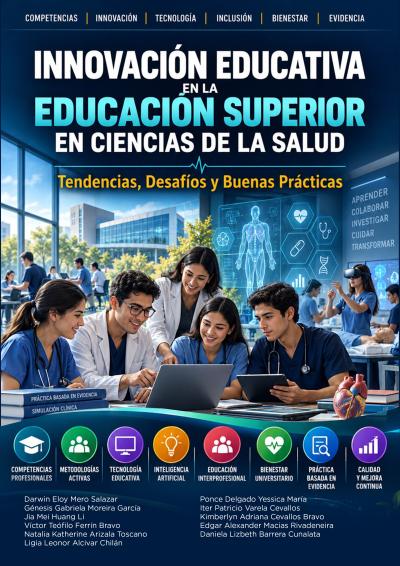
A lo largo de sus once capítulos, el lector encontrará un recorrido que integra algunos de los temas más relevantes para la educación superior contemporánea: la innovación pedagógica, las metodologías activas, la inteligencia artificial aplicada a la enseñanza, las competencias digitales docentes, el Diseño Universal para el Aprendizaje, la promoción de la salud, la simulación clínica, el bienestar estudiantil, la educación interprofesional, la evaluación auténtica, la sostenibilidad y, finalmente, la propuesta original del Modelo EICS-Salud (Ecosistema Inteligente para la Formación en Ciencias de la Salud), concebido como un marco integrador para articular inteligencia artificial, Diseño Universal para el Aprendizaje, Learning Analytics, metodologías activas y mejora continua.
A diferencia de otros textos centrados exclusivamente en la descripción de herramientas tecnológicas, esta obra parte de una convicción fundamental: la innovación educativa comienza con las personas. La tecnología puede ampliar las posibilidades de enseñar y aprender; sin embargo, son los docentes quienes continúan diseñando experiencias significativas, acompañando procesos formativos, interpretando evidencias y promoviendo el desarrollo integral de sus estudiantes. Del mismo modo, los estudiantes no constituyen receptores pasivos de información, sino protagonistas de su propio aprendizaje, capaces de construir conocimiento, cuestionar, investigar, colaborar y transformar la realidad.
Otro de los principios que orienta este libro es el compromiso con una educación superior inclusiva y basada en la evidencia. La diversidad del estudiantado ya no puede entenderse como una excepción que requiere adaptaciones posteriores. Constituye la condición habitual de nuestras aulas y exige diseñar experiencias de aprendizaje accesibles, flexibles y rigurosas desde su planificación inicial. En este sentido, el Diseño Universal para el Aprendizaje, la evaluación auténtica y la incorporación ética de la inteligencia artificial representan oportunidades para fortalecer la equidad sin renunciar a la excelencia académica.
Asimismo, esta obra reconoce que la innovación no depende únicamente de incorporar nuevas tecnologías, sino de desarrollar una cultura institucional de aprendizaje permanente. Las universidades que aspiren a responder a los desafíos del siglo XXI necesitarán fortalecer las competencias digitales de sus docentes, promover la colaboración interdisciplinaria, utilizar responsablemente los datos educativos y mantener una actitud constante de reflexión y mejora.
Esperamos que este libro sea útil tanto para quienes inician su trayectoria docente como para quienes cuentan con una amplia experiencia en educación superior. Cada capítulo ha sido concebido para facilitar la transferencia del conocimiento a la práctica mediante tablas, organizadores gráficos, estudios de caso, recomendaciones e instrumentos que puedan adaptarse a distintos contextos institucionales.
Finalmente, deseamos que estas páginas inspiren una reflexión permanente sobre el verdadero propósito de la educación universitaria. Formar profesionales competentes es, sin duda, una responsabilidad esencial; pero formar personas capaces de aprender durante toda la vida, actuar con ética, liderar el cambio y contribuir al bienestar de la sociedad constituye, quizá, el mayor desafío y la más noble misión de toda universidad.
Si este libro logra motivar a un docente a rediseñar una asignatura, a un estudiante a asumir un papel más activo en su aprendizaje o a una institución a impulsar procesos de innovación fundamentados en la evidencia, entonces habrá cumplido plenamente su propósito.
Porque, al final, la mejor innovación educativa no es aquella que incorpora más tecnología, sino aquella que ofrece más y mejores oportunidades para aprender, servir y transformar vidas.
Abulfaraj, G. G., Upsher, R., Zavos, H. M., & Dommett, E. (2024). The impact of resilience interventions on university students’ mental health and well-being: A systematic review. Education Sciences, 14(5), Article 510. https://doi.org/10.3390/educsci14050510
Agrawal, M., Spencer, E. A., Colombel, J.-F., & Ungaro, R. C. (2021). Approach to the management of recently diagnosed inflammatory bowel disease patients: A user’s guide for adult and pediatric gastroenterologists. Gastroenterology, 161(1), 47–65. https://doi.org/10.1053/j.gastro.2021.04.063
Alarcon Burneo, S. N., Basantes Guerra, J. P., Chaglla Lasluisa, W. F., Carvajal Coronado, D. E., Martínez Oviedo, M. Y., Vargas Saritama, M. E., & Bernal Parraga, A. P. (2024). Uso de Recursos Manipulativos para Mejorar la Comprensión de Conceptos Matemáticos Abstractos en la Educación Secundaria. Ciencia Latina Revista Científica Multidisciplinar, 8(5), 1972-1988. https://doi.org/10.37811/cl_rcm.v8i5.13669
Al-Bawardy, B., Shivashankar, R., & Proctor, D. D. (2021). Novel and emerging therapies for inflammatory bowel disease. Frontiers in Pharmacology, 12, 651415. https://doi.org/10.3389/fphar.2021.651415
Aleixo, A. M., Azeiteiro, U. M., & Leal, S. (2020). Are the Sustainable Development Goals being implemented in the Portuguese higher education formative offer? International Journal of Sustainability in Higher Education, 21(2), 336–352. https://doi.org/10.1108/IJSHE-04-2019-0150
Alexander, E., White, A., Varol, A. M., Appel, K., & Lieneck, C. (2024). Team- and problem-based learning in health services: A systematic literature review of recent initiatives in the United States. Education Sciences, 14(5), Article 515. https://doi.org/10.3390/educsci14050515
Ali, A., Nguyen, J., Dennett, L., Goez, H., y Rashid, M. (2023). A scoping review for designing a disability curriculum and its impact for medical students. Canadian Medical Education Journal, 14(3), 75–86. https://doi.org/10.36834/cmej.74411
Alizadeh, M., & Jafar Sameri, M. (2025). Intelligent assessment systems in medical education: A systematic review. Journal of Advances in Medical Education & Professionalism, 13(3), 173–190. https://doi.org/10.30476/jamp.2024.104560.2068
Aljaber, N., Alsaidan, J., Shebl, N., & Almanasef, M. (2023). Flipped classrooms in pharmacy education: A systematic review. Saudi Pharmaceutical Journal, 31, Article 101873. https://doi.org/10.1016/j.jsps.2023.101873
Allvin, R., Thompson, C., & Edelbring, S. (2023). Variations in measurement of interprofessional core competencies: A systematic review of self-report instruments in undergraduate health professions education. Journal of Interprofessional Care, 38(3), 486–498. https://doi.org/10.1080/13561820.2023.2241505
Alqaissi, N., & Qtait, M. (2025). Knowledge, attitudes, practices, and barriers regarding the integration of artificial intelligence in nursing and health sciences education: A systematic review. SAGE Open Nursing, 11. https://doi.org/10.1177/23779608251374185
Alvarez Piza, R. A., Del Hierro Pérez, M. C., Vera Molina, R. M., Moran Piguave, G. D., Pareja Mancilla, S. S., Narváez Hoyos, J. J., & Bernal Parraga, A. P. (2024). Desarrollo del razonamiento en educación básica mediante aprendizaje basado en problemas y lecciones aprendidas de proyectos matemáticos previos. Ciencia Latina Revista Científica Multidisciplinar, 8(5), 13998-14014. https://doi.org/10.37811/cl_rcm.v8i5.14912
Alwi, S., Che-Ha, N., Nguyen, B., Ghazali, E. M., Mutum, D. M., & Kitchen, P. J. (2019). Projecting university brand image via satisfaction and behavioral response: Perspectives from UK-based Malaysian students. Qualitative Market Research: An International Journal, 23(1), 47–68. https://doi.org/10.1108/QMR-12-2017-0191
American College Health Association. (2024). American College Health Association–National College Health Assessment III: Undergraduate student reference group executive summary, fall 2024. American College Health Association.
Ananthakrishnan, A. N., Murad, M. H., Scott, F. I., Agrawal, M., Haydek, J. P., Limketkai, B. N., Loftus, E. V., Jr., & Singh, S. (2024). Comparative efficacy of advanced therapies for management of moderate-to-severe ulcerative colitis: 2024 American Gastroenterological Association evidence synthesis. Gastroenterology, 167(7), 1460–1482. https://doi.org/10.1053/j.gastro.2024.07.046
Aráuz Cerezo, E., Tuarez Cobeña, M., Bernal Parraga, A., Yépez Yépez, L., & Loor Quintero, J. (2026). Efecto del aprendizaje cooperativo en el desarrollo de habilidades técnico-tácticas y la motivación en estudiantes de Educación Física durante la enseñanza delbaloncesto en secundaria. Polo del Conocimiento, 11(4), 2266-2283. doi:https://doi.org/10.23857/pc.v11i4.11541
Arruzza, E., Chau, M., & van Kessel, G. (2024). Resilience in allied health undergraduate education: A scoping review. Disability and Rehabilitation. Advance online publication. https://doi.org/10.1080/09638288.2024.2360062
Association for Simulated Practice in Healthcare. (2023). Standards for simulation-based education (2nd ed.). ASPiH.
Bai, S., Zeng, H., Zhong, Q., Cao, L., & He, M. (2025). Effectiveness of gamified teaching in disaster nursing education for health care workers: Systematic review. Journal of Medical Internet Research, 27, Article e74955. https://doi.org/10.2196/74955
Bała, M. M., Poklepović Peričić, T., Zając, J., Rohwer, A., Klugarová, J., Välimäki, M., Lantta, T., Pingani, L., Klugar, M., Clarke, M., & Young, T. (2021). What are the effects of teaching evidence-based health care at different levels of health professions education? An updated overview of systematic reviews. PLOS ONE, 16(7), Article e0254191. https://doi.org/10.1371/journal.pone.0254191
Balta, J. Y., Supple, B., y O’Keeffe, G. W. (2020). The Universal Design for Learning framework in anatomical sciences education. Anatomical Sciences Education, 14. https://doi.org/10.1002/ase.1992
Basantes-Andrade et al. (2022) — aquí hay DOS publicaciones reales posibles, pero el contenido de tu capítulo identifica cuál utilizaste. El capítulo afirma que una formación mediante nano-MOOCs produjo mejoras, por lo que corresponde al artículo de Heliyon, no a la revisión de Sustainability. Pasted text PubMed confirma autores, volumen, número, artículo y https://pubmed.ncbi.nlm.nih.gov/35669539/
Basantes-Andrade, A., Cabezas-González, M., Casillas-Martín, S., Naranjo-Toro, M., & Benavides-Piedra, A. (2022). NANO-MOOCs to train university professors in digital competences. Heliyon, 8(6), e09456. https://doi.org/10.1016/j.heliyon.2022.e09456
Basil, M., Ahmed, W., Hajeomar, R. R., Strawbridge, J., Lynch, M., & Mukhalalati, B. (2026). A scoping review of the use of generative artificial intelligence tools in health profession education. BMC Medical Education, 26. https://doi.org/10.1186/s12909-025-08527-3
Bernal Párraga , A. P., Constante Olmedo , D. F., López Sánchez , I. Y., Padilla Portocarrero , D. K., & Duarte Salinas , E. M. (2026). Ecosistema híbrido inteligente para la enseñanza de Ciencias Naturales: un modelo integrador de metodologías activas, IA y regulación emocional. Tesla Revista Científica, 6(1). https://doi.org/10.55204/trc.v6i1.e588
Bernal Parraga, A. P. . (2026). Analítica de aprendizaje e inteligencia artificial responsable para la toma de decisiones pedagógicas basadas en datos en educación básica. LUZ, 25, e1601. Recuperado a partir de https://luz.uho.edu.cu/index.php/luz/article/view/1601
Bernal Parraga, A. P., Rodríguez Cajas, G. A., & Ramírez Campoverde, E. A. (2026). Impacto de las metodologías activas y tecnologías emergentes en el desarrollo de la comprensión lectora y la escritura creativa en Lengua y Literatura en educación básica. Educaf5-Berit, 1(01), 147–157. https://doi.org/10.5281/zenodo.18210399
Bernal Parraga, A. P., Santin Castillo, A. P., Ordoñez Ruiz, I., Tayupanta Rocha, L. M., Reyes Ordoñez, J. P., Guzmán Quiña, M. de los A., & Nieto Lapo, A. P. (2024). La inteligencia artificial como proceso de enseñanza en la asignatura de estudios sociales. Ciencia Latina Revista Científica Multidisciplinar, 8(6), 4011-4030. https://doi.org/10.37811/cl_rcm.v8i6.15141
Bernal Parraga, A. P., Torres Zambrano, J. Y., Ortiz Farías, N. C., Tacuri Balbuca, E. A., & Chamba Pullaguari, J. L. (2026). Ecosistema Inteligente para el Desarrollo Integral en Educación Inicial: un modelo basado en Inteligencia Artificial, aprendizaje lúdico y evaluación formativa. Saber Estratégico Internacional, 4(3), 1354–1370. https://doi.org/10.70577/s.e.v4i3.129
Bernal ParragaA., Alvarez SantosA., & Mite CisnerosM. (2025). Formación docente: enfoques pedagógicos innovadores para el fortalecimiento de competencias profesionales en el siglo XXI. Varona, (84). Recuperado a partir de http://revistas.ucpejv.edu.cu/index.php/rVar/article/view/2981
Bernal, A., & Guarda, T. (2020). La gestión de la información es factor determinante para elaborar estrategias innovadoras en política educativa pública. Iberian Journal of Information Systems and Technologies, (E27), 35-48. https://core.ac.uk/download/pdf/487026121.pdf#page=35
Bhuiyan, S. M. M. S., Talukder, M. H. K., Yasmin, F., & Bhuiyan, F. S. (2020). Aligning the contents of curriculum of undergraduate medical education in Bangladesh with health-related targets of Sustainable Development Goals (SDG). Bangladesh Journal of Medical Education, 11(2), 21–26. https://doi.org/10.3329/bjme.v11i2.49246
Bocanegra-Valle, A. (2026). Opportunities and challenges of scholarly publishing and research dissemination in the age of digital technology and generative artificial intelligence. Ibérica, 51, 21–48. https://doi.org/10.17398/2340-2784.51.21
Bond, M., Bedenlier, S., Marín, V. I., & Händel, M. (2024). A decade of research on digital transformation and innovation in higher education. Educational Technology Research and Development.
Bond, M., Khosravi, H., de Laat, M., Bergdahl, N., Negrea, V., Oxley, E., Pham, P., Chong, S. W., & Siemens, G. (2024). A meta systematic review of artificial intelligence in higher education: A call for increased ethics, collaboration, and rigour. International Journal of Educational Technology in Higher Education, 21, Article 4. https://doi.org/10.1186/s41239-023-00436-z
Bong, W. K., & Chen, W. (2021). Increasing faculty’s competence in digital accessibility for inclusive education: A systematic literature review. International Journal of Inclusive Education, 28(2), 197–213. https://doi.org/10.1080/13603116.2021.1937344
Borg-Bartolo, S. P., Boyapati, R. K., Satsangi, J., & Kalla, R. (2020). Precision medicine in inflammatory bowel disease: Concept, progress and challenges. F1000Research, 9, 54. https://doi.org/10.12688/f1000research.20928.1
Bowers, P., Graydon, K., Ryan, T., Lau, J. H., & Tomlin, D. (2024). Artificial intelligence-driven virtual patients for communication skill development in healthcare students: A scoping review. Australasian Journal of Educational Technology. https://doi.org/10.14742/ajet.9307
Buja, A., Lo Bue, R., Mariotti, F., Miatton, A., Zampieri, C., y Leone, G. (2024). Promotion of physical activity among university students with social media or text messaging: A systematic review. INQUIRY: The Journal of Health Care Organization, Provision, and Financing, 61. https://doi.org/10.1177/00469580241248131
Cabero-Almenara, J., Barroso-Osuna, J., Gutiérrez-Castillo, J. J., y Palacios-Rodríguez, A. (2021). The teaching digital competence of health sciences teachers: A study at Andalusian universities (Spain). International Journal of Environmental Research and Public Health, 18(5), Article 2552. https://doi.org/10.3390/ijerph18052552
Cabero-Almenara, J., Barroso-Osuna, J., y Palacios-Rodríguez, A. (2021). Estudio de la competencia digital docente en Ciencias de la Salud: Su relación con algunas variables. Educación Médica, 22(2), 94–98. https://doi.org/10.1016/j.edumed.2020.11.014
Cabero-Almenara, J., y Palacios-Rodríguez, A. (2020). Marco europeo de competencia digital docente «DigCompEdu»: Traducción y adaptación del cuestionario «DigCompEdu Check-In». EDMETIC, Revista de Educación Mediática y TIC, 9(1), 213–234. https://doi.org/10.21071/edmetic.v9i1.12462
Caldarelli, G., Pizzini, B., Cosenza, M., & Troncone, A. (2024). The prevalence of mental health conditions and effectiveness of psychological interventions among university students in Italy: A systematic literature review. Psychiatry Research, 342, Article 116208. https://doi.org/10.1016/j.psychres.2024.116208
Calo, M., Judd, B., & Peiris, C. L. (2024). Grit, resilience and growth-mindset interventions in health professional students: A systematic review and meta-analysis. Medical Education, 58, 902–919. https://doi.org/10.1111/medu.15391
Camilleri, M. A. (2019). Higher education marketing: Opportunities and challenges in the digital era. Academia, 16–17, 4–28. https://doi.org/10.26220/aca.3169
Caretta-Weyer, H., Smirnova, A., Barone, M. A., Frank, J. R., Hernandez-Boussard, T., Levinson, D., Lombarts, K. M. J. M. H., Lomis, K., Martini, A., Schumacher, D., Turner, D. A., & Schuh, A. (2024). The next era of assessment: Building a trustworthy assessment system. Perspectives on Medical Education, 13, 12–23. https://doi.org/10.5334/pme.1110
Casebolt, T., y Humphrey, K. (2023). Use of Universal Design for Learning principles in a public health course. Annals of Global Health, 89. https://doi.org/10.5334/aogh.4045
CAST. (2024). CAST Universal Design for Learning guidelines version 3.0. CAST.
Castillo, E. G., Isom, J., DeBonis, K. L., Jordan, A., Braslow, J. T., & Rohrbaugh, R. (2020). Reconsidering systems-based practice: Advancing structural competency, health equity, and social responsibility in graduate medical education. Academic Medicine, 95(12), 1817–1822. https://doi.org/10.1097/ACM.0000000000003559
Cen, X.-Y., Hua, Y., Niu, S., & Yu, T. (2021). Application of case-based learning in medical student education: A meta-analysis. European Review for Medical and Pharmacological Sciences, 25(8), 3173–3181. https://doi.org/10.26355/eurrev_202104_25726
Centanni, L., Bencardino, S., D’Amico, F., Zilli, A., Parigi, T. L., Allocca, M., Danese, S., & Furfaro, F. (2024). Targeting mucosal healing in Crohn’s disease: Efficacy of novel pathways and therapeutic targets. Expert Opinion on Therapeutic Targets, 28(11), 963–978. https://doi.org/10.1080/14728222.2024.2433124
Cerolini, S., Zagaria, A., Franchini, C., Maniaci, V. G., Fortunato, A., Petrocchi, C., Speranza, A. M., & Lombardo, C. (2023). Psychological counseling among university students worldwide: A systematic review. European Journal of Investigation in Health, Psychology and Education, 13(9), 1831–1849. https://doi.org/10.3390/ejihpe13090133
Chaemsupaphan, T., Leong, R. W., Vande Casteele, N., & Seow, C. H. (2024). Review article: Optimisation of biologic (monoclonal antibody) therapeutic response in inflammatory bowel disease. Alimentary Pharmacology & Therapeutics, 60(9), 1234–1243. https://doi.org/10.1111/apt.18228
Chandran, V. P., Balakrishnan, A., Rashid, M., Khan, S., Devi, E. S., Kulyadi, G. P., Nair, S., & Thunga, G. (2023). Teaching–learning strategies of evidence-based medicine: A meta-synthesis of learners’ and instructors’ perspectives. Clinical Epidemiology and Global Health, 21, Article 101280. https://doi.org/10.1016/j.cegh.2023.101280
Chapman, A. L., & Greenhow, C. (2019). Citizen-scholars: Social media and the changing nature of scholarship. Publications, 7(1), 11. https://doi.org/10.3390/publications7010011
Chartash, D., Rosenman, M., Wang, K. H., y Chen, E. S. (2022). Informatics in undergraduate medical education: Analysis of competency frameworks and practices across North America. JMIR Medical Education, 8(4), e39794. https://doi.org/10.2196/39794
Cheah, E., & Huang, J. G. (2023). Precision medicine in inflammatory bowel disease: Individualizing the use of biologics and small molecule therapies. World Journal of Gastroenterology, 29(10), 1539–1550. https://doi.org/10.3748/wjg.v29.i10.1539
Chen, B., Yang, T., Xiao, L., Xu, C., & Zhu, C. (2023). Effects of mobile mindfulness meditation on the mental health of university students: Systematic review and meta-analysis. Journal of Medical Internet Research, 25, Article e39128. https://doi.org/10.2196/39128
Chen, C.-T. (2016). The investigation on brand image of university education and students’ word-of-mouth behavior. Higher Education Studies, 6(4), 23–33. https://doi.org/10.5539/hes.v6n4p23
Chen, F., Lui, A. M., & Martinelli, S. M. (2017). A systematic review of the effectiveness of flipped classrooms in medical education. Medical Education, 51(6), 585–597. https://doi.org/10.1111/medu.13272
Chicaiza, V. (2025). Inteligencia artificial y aprendizaje de idiomas: Personalización del aula de inglés a través de plataformas adaptativas. *Revista Veritas de Difusão Científica, 6*(2), 477–506. https://revistaveritas.org/index.php/veritas/article/view/643
Cochancela Pérez, N., Bernal Parraga, A., Romero Torres, T., & Morales Loayza, D. (2026). Impacto de las estrategias innovadoras sobre la comprensión lectora y la producción textual en estudiantes de educación básica elemental media y superior. Polo del Conocimiento, 11(7), 2447-2471. doi:https://doi.org/10.23857/pc.v11i7.12154
Coffman, S., y Draper, C. (2022). Universal Design for Learning in higher education: A concept analysis. Teaching and Learning in Nursing, 17(1), 36–41. https://doi.org/10.1016/j.teln.2021.07.009
Colbert, C. Y., & Bierer, S. B. (2022). The importance of professional development in a programmatic assessment system: One medical school’s experience. Education Sciences, 12(3), Article 220. https://doi.org/10.3390/educsci12030220
Constantinou, S. T., & Morrison-Beedy, D. (2021). A global educational experience between geography and nursing: Interdisciplinarity and sustainability. The Geography Teacher, 18(3–4), 142–145. https://doi.org/10.1080/19338341.2021.1931923
Cook, D. A., Brydges, R., Hamstra, S. J., Zendejas, B., Szostek, J. H., Wang, A. T., Erwin, P. J., & Hatala, R. (2020). Technology-enhanced simulation to assess health professionals: A systematic review of validity evidence, research methods, and reporting quality. Academic Medicine, 95(6), 946–956. https://doi.org/10.1097/ACM.0000000000003153
Costa, M. H. de M., Sassaki, L. Y., & Chebli, J. M. F. (2024). Fecal calprotectin and endoscopic scores: The cornerstones in clinical practice for evaluating mucosal healing in inflammatory bowel disease. World Journal of Gastroenterology, 30(24), 3022–3035. https://doi.org/10.3748/wjg.v30.i24.3022
Creaven, A. (2024). Considering the sensory and social needs of disabled students in higher education: A call to return to the roots of universal design. Policy Futures in Education, 23(2), 259–266. https://doi.org/10.1177/14782103241240808
Crilly, M., Vemury, C. M., Humphrey, R., Rodriguez, S., Crosbie, T., Johnson, K. S., Wilson, A., & Heidrich, O. (2020). Common language of sustainability for built environment professionals—The quintuple helix model for higher education. Energies, 13(22), Article 5860. https://doi.org/10.3390/en13225860
Crompton, H., & Burke, D. (2023). Artificial intelligence in higher education: The state of the field. International Journal of Educational Technology in Higher Education, 20, Article 22. https://doi.org/10.1186/s41239-023-00392-8
de la Fuente-González, S., Menéndez Álvarez-Hevia, D., & Rodríguez-Martín, A. (2025). Universal Design for Learning: A systematic review of its role in teacher education. Alteridad, 20(1). https://doi.org/10.17163/alt.v20n1.2025.09
Desrochers, N., Paul-Hus, A., Haustein, S., Costas, R., Mongeon, P., Quan-Haase, A., Bowman, T. D., Pecoskie, J., Tsou, A., & Larivière, V. (2018). Authorship, citations, acknowledgments and visibility in social media: Symbolic capital in the multifaceted reward system of science. Social Science Information, 57(2), 223–248. https://doi.org/10.1177/0539018417752089
Dias, I. S., Jacinto, M., Abreu, M.-O., y Fonseca, M. (2023). Physical exercise, mental health, and quality of life in higher education: Systematic review. Psicologia, Saúde & Doenças, 24(3). https://doi.org/10.15309/23psd240313
Dietz, P., Reichel, J. L., Edelmann, D., Werner, A. M., Tibubos, A. N., Schäfer, M., Simon, P., Letzel, S., & Pfirrmann, D. (2020). A systematic umbrella review on the epidemiology of modifiable health influencing factors and on health promoting interventions among university students. Frontiers in Public Health, 8, Article 137. https://doi.org/10.3389/fpubh.2020.00137
Dignass, A., Rath, S., Kleindienst, T., & Stallmach, A. (2023). Review article: Translating STRIDE-II into clinical reality—Opportunities and challenges. Alimentary Pharmacology & Therapeutics, 58(5), 492–502. https://doi.org/10.1111/apt.17622
Dijk, S. W., Duijzer, E., & Wienold, M. (2020). Role of active patient involvement in undergraduate medical education: A systematic review. BMJ Open, 10, Article e037217. https://doi.org/10.1136/bmjopen-2020-037217
Dolmans, D. H. J. M., Loyens, S. M. M., Marcq, H., & Gijbels, D. (2022). Problem-based learning: Future challenges for educational practice and research. Medical Education.
Donaldson, M., McBride, S., Wilhelm, M., Parent-Nichols, J., Thomas, R., Scanlon, E., & Griswold, D. (2025). Exploring the impact of academic coaching interventions on student outcomes in graduate healthcare and medical education: A systematic scoping review. Medical Education Online, 30(1), Article 2581671. https://doi.org/10.1080/10872981.2025.2581671
Donnelly, S., Penny, K., y Kynn, M. (2024). The effectiveness of physical activity interventions in improving higher education students’ mental health: A systematic review. Health Promotion International, 39(2), Article daae027. https://doi.org/10.1093/heapro/daae027
Duggan, N., Curran, V., Fairbridge, N., Deacon, D., Coombs, H., Stringer, K., & Pennell, S. (2021). Using mobile technology in assessment of entrustable professional activities in undergraduate medical education. Perspectives on Medical Education, 10, 373–377. https://doi.org/10.1007/s40037-020-00618-9
Duncan, J., Butler, K., Leonard, C., Foggett, J., Page, A., y Roche, L. (2025). Uncovering challenges in Universal Design for Learning in higher education. Australasian Journal of Special and Inclusive Education, 49(2), 1–17. https://doi.org/10.1017/jsi.2025.10003
Elzeky, M. E. H., Elhabashy, H. M. M., Ali, W., & Allam, S. M. E. (2022). Effect of gamified flipped classroom on improving nursing students’ skills competency and learning motivation: A randomized controlled trial. BMC Nursing, 21, Article 316. https://doi.org/10.1186/s12912-022-01096-6
European Commission, Directorate-General for Education, Youth, Sport and Culture. (2022). Ethical guidelines on the use of artificial intelligence and data in teaching and learning for educators. Publications Office of the European Union.
European Commission. (2020). Digital education action plan 2021–2027: Resetting
Falloon, G. (2020). From digital literacy to digital competence: The teacher digital competency framework. Educational Technology Research and Development, 68, 2449–2472. https://doi.org/10.1007/s11423-020-09767-4
Feigerlova, E., Hani, H., & Hothersall-Davies, E. (2025). A systematic review of the impact of artificial intelligence on educational outcomes in health professions education. BMC Medical Education, 25. https://doi.org/10.1186/s12909-025-06719-5
Ferrari, A. P., Andrade, J., & Parada, C. M. G. L. (2025). Inclusion of planetary health and Sustainable Development Goals in nursing training. Revista Brasileira de Enfermagem, 78, Article e20240014. https://doi.org/10.1590/0034-7167-2024-0014
Filippou, K., Acquah, E. O., & Bengs, A. (2025). Inclusive policies and practices in higher education: A systematic literature review. Review of Education. Advance online publication. https://doi.org/10.1002/rev3.70034
Francischetti, I., Bitu-Moreno, J., & Peters, H. (2020). Could entrustable professional activities mediate community-based teaching in care integration services?. Revista de la Facultad de Medicina, 69(2), Article e83906. https://doi.org/10.15446/revfacmed.v69n2.83906
Fudman, D. I., McConnell, R. A., Ha, C., & Singh, S. (2025). Modern advanced therapies for inflammatory bowel diseases: Practical considerations and positioning. Clinical Gastroenterology and Hepatology, 23(3), 454–468. https://doi.org/10.1016/j.cgh.2024.06.050
Fuentes-Cimma, J., Sluijsmans, D. M. A., Riquelme, A., Villagrán, I., Isbej, L., Olivares-Labbe, M. T., & Heeneman, S. (2024). Designing feedback processes in the workplace-based learning of undergraduate health professions education: A scoping review. BMC Medical Education, 24, Article 458. https://doi.org/10.1186/s12909-024-05439-6
Fukuie, T., Inoue, K., y Yamaguchi, A. (2024). Lifestyle elements for improving mental and physical health in Japanese university students: Subjective sleep quality is a common key factor. American Journal of Lifestyle Medicine, 18(2), 303–312. https://doi.org/10.1177/15598276231156546
Gambolò, L., Pireddu, R., D’Angelo, M., Ticozzi, E., Bellini, L., Solla, D., Fagoni, N., & Stirparo, G. (2025). Exploring mental health of Italian college students: A systematic review and meta-analysis. Discover Mental Health, 5. https://doi.org/10.1007/s44192-025-00229-y
García-Pérez, L., Atencia-Rodríguez, M., Cepero-González, M., y Padial-Ruz, R. (2025). Effectiveness of physical activity, mindfulness and mind-body therapies in improving mental health of university students: A systematic review of randomized controlled trials. Journal of American College Health. Advance online publication. https://doi.org/10.1080/07448481.2025.2492174
Gawron, K., Tomlinson, M., Mohan, N., y VanPuymbrouck, L. (2024). A scoping review of Universal Design for Learning in United States allied health and medical education. The Open Journal of Occupational Therapy, 12(2). https://doi.org/10.15453/2168-6408.2146
Ge, W., Zhu, X., Lin, J., Jiang, J., Li, T., Lu, Y., Mi, Y., & Tung, T.-H. (2025). Critical thinking and clinical skills by problem-based learning educational methods: An umbrella systematic review. BMC Medical Education, 25. https://doi.org/10.1186/s12909-025-06951-z
Gedzyk-Nieman, S. A., & Derouin, A. (2025). Ensuring access for all nursing students: Classroom accommodations and Universal Design for Learning. Creative Nursing, 31, 392–398. https://doi.org/10.1177/10784535251392561
Gómez-Bayona, L., Valencia-Arias, A., Orozco-Toro, J. A., Tabares-Penagos, A., & Moreno-López, G. (2024). Importance of relationship marketing in higher education management: The perspective of university teachers. Cogent Education, 11(1), Article 2332858. https://doi.org/10.1080/2331186X.2024.2332858
Gordon, M., Daniel, M., Ajiboye, A., Uraiby, H., Xu, N. Y., Bartlett, R., Hanson, J., Haas, M., Spadafore, M. T., Grafton-Clarke, C., Gasiea, R. Y., Michie, C., Corral, J., Kwan, B., Dolmans, D., & Thammasitboon, S. (2024). A scoping review of artificial intelligence in medical education: BEME Guide No. 84. Medical Teacher, 46(4), 446–470. https://doi.org/10.1080/0142159X.2024.2314198
Green, E. J., Brown, M. E. L., Vance, G., y Keenan, I. D. (2025). Undergraduate medical education for neurodivergent students: A scoping review. BMC Medical Education. https://doi.org/10.1186/s12909-025-08447-2
Grossberg, L. B., Papamichael, K., & Cheifetz, A. S. (2022). Review article: Emerging drug therapies in inflammatory bowel disease. Alimentary Pharmacology & Therapeutics, 55(7), 789–804. https://doi.org/10.1111/apt.16785
Guilbaud, T. C., Martin, F., & Newton, X. (2021). Faculty perceptions on accessibility in online learning: Knowledge, practice, and professional development. Online Learning, 25(2). https://doi.org/10.24059/olj.v25i2.2233
Gummesson, C., Alm, S., Cederborg, A., et al. (2023). Entrustable professional activities for undergraduate medical education: Development and exploration of social validity. BMC Medical Education, 23, 633. https://doi.org/10.1186/s12909-023-04621-6
Gunderson, J. L., & Cumming, T. M. (2022). Podcasting in higher education as a component of Universal Design for Learning: A systematic review of the literature. Innovations in Education and Teaching International, 60(5), 591–601. https://doi.org/10.1080/14703297.2022.2075430
Gupta, S. K., & Srivastava, T. K. (2024). Assessment in undergraduate competency-based medical education: A systematic review. Cureus, 16(4), Article e58073. https://doi.org/10.7759/cureus.58073
Hakel, K., & Magin, M. (2024). The impact of professional development training on faculty’s integration of Universal Design for Learning in daily teaching practices. International Journal of Inclusive Education. Advance online publication. https://doi.org/10.1080/13603116.2024.2430527
Halliday, S., Lavis, T., Callaghan, P., & Chur-Hansen, A. (2025). Generative AI in higher education psychology programs: A scoping review exploring the opportunities for its use in assessment methods. Australian Psychologist. Advance online publication. https://doi.org/10.1080/00050067.2025.2580236
Hanžel, J., Hulshoff, M. S., Grootjans, J., & D’Haens, G. (2022). Emerging therapies for ulcerative colitis. Expert Review of Clinical Immunology, 18(5), 513–524. https://doi.org/10.1080/1744666X.2022.2069562
Hanžel, J., Ma, C., & Jairath, V. (2023). Mirikizumab for the treatment of moderate to severe ulcerative colitis. Immunotherapy, 15(15), 1199–1208. https://doi.org/10.2217/imt-2023-0012
Harcher, E., Fakolade, A., Gordon, D., & Nedorost, S. (2022). Design and implementation of a health systems science curriculum at a large teaching hospital. BMC Medical Education, 22, Article 725. https://doi.org/10.1186/s12909-022-03706-y
Hauer, K. E., Lockspeiser, T. M., y Chen, H. C. (2020). The COVID-19 pandemic as an imperative to advance medical student assessment: Three areas for change. Academic Medicine, 96(2), 182–185. https://doi.org/10.1097/ACM.0000000000003764
Heinke, A., Radgoudarzi, N., Huang, B. B., & Baxter, S. L. (2024). A review of ophthalmology education in the era of generative artificial intelligence. Asia-Pacific Journal of Ophthalmology, 13, Article 100089. https://doi.org/10.1016/j.apjo.2024.100089
Herrlinger, K. R., & Stange, E. F. (2024). To STRIDE or not to STRIDE: A critique of “treat to target” in ulcerative colitis. Expert Review of Gastroenterology & Hepatology, 18(9), 493–504. https://doi.org/10.1080/17474124.2024.2397654
Hill, J., Gratton, N., Kulkarni, A., Hamer, O., Harrison, J., Harris, C., Chesters, J., Duddy, E., Collins, L., & Clegg, A. (2024). The effectiveness of evidence-based healthcare educational interventions on healthcare professionals’ knowledge, skills, attitudes, professional practice and healthcare outcomes: Systematic review and meta-analysis. Journal of Evaluation in Clinical Practice. Advance online publication. https://doi.org/10.1111/jep.14001
Holloway, M., Litsou, K., Milnes, K., & Turner-Moore, R. (2025). More than “resilience”: A scoping review of institutional and societal risk and protective factors for UK undergraduate mental ill-health. Journal of Community & Applied Social Psychology, Article e70182. https://doi.org/10.1002/casp.70182
Hostetter, L., Kelm, D., & Nelson, D. R. (2024). Ethics of writing personal statements and letters of recommendations with large language models. ATS Scholar, 5, 486–491. https://doi.org/10.34197/ats-scholar.2024-0038PS
Howard, B., Diug, B., & Ilić, D. (2022). Methods of teaching evidence-based practice: A systematic review. BMC Medical Education, 22, Article 742. https://doi.org/10.1186/s12909-022-03812-x
Huang, K., Beckman, E. M., Ng, N., Dingle, G. A., Han, R., James, K. E., Winkler, E., Stylianou, M., y Gomersall, S. (2024). Effectiveness of physical activity interventions on undergraduate students’ mental health: Systematic review and meta-analysis. Health Promotion International, 39(3), Article daae054. https://doi.org/10.1093/heapro/daae054
Husic, D. W. (2024). Reframing sustainability initiatives in higher education. Sustainable Earth Reviews, 7, Article 8. https://doi.org/10.1186/s42055-024-00076-9
INACSL Standards Committee. (2021). Healthcare Simulation Standards of Best Practice™. Clinical Simulation in Nursing, 58, 1–64.
Instefjord, E. J., & Munthe, E. (2017). Educating digitally competent teachers: A study of integration of professional digital competence in teacher education. Teaching and Teacher Education, 67, 37–45. https://doi.org/10.1016/j.tate.2017.05.016
Instituto Nacional de Tecnologías Educativas y de Formación del Profesorado. (2022). Marco de referencia de la competencia digital docente. Ministerio de Educación y Formación Profesional.
International Conference on Health Promoting Universities and Colleges. (2015). Okanagan Charter: An international charter for health promoting universities and colleges.
Interprofessional Education Collaborative. (2023). Core competencies for interprofessional collaborative practice: Version 3. https://www.ipecollaborative.org/assets/core-competencies/IPEC_Core_Competencies_Version_3_2023.pdf
Itani, A., Gronseth, S. L., Musaad, S., Nguyen, T., Mirabile, Y., & Beech, B. (2025). Ethical considerations for teaching with artificial intelligence: A scoping review in medical education settings. International Journal of Educational Technology in Higher Education, 22. Advance online publication. https://doi.org/10.1186/s41239-025-00563-9
Itzhaki, M., Katz Leurer, M., Warshawski, S., & Avrech Bar, M. (2020). Preparedness of health professions students for interprofessional collaboration: A mixed-method study. Teaching in Higher Education, 28(1), 66–84. https://doi.org/10.1080/13562517.2020.1769057
Jaramillo Villegas, C., Hernández Rincón, E. H., Gallego Beltran, J. C., & Rossini Guzmán Sabogal, Y. (2025). Assessment of professionalism in undergraduate and graduate medical education: A scoping review. BMC Medical Education, 25. https://doi.org/10.1186/s12909-025-07756-w
Jeong, D., Park, C., Sugimoto, K., Jeon, M., Kim, D., & Eun, Y. (2024). Effectiveness of an evidence-based practice education program for undergraduate nursing students: A systematic review and meta-analysis. International Journal of Environmental Research and Public Health, 21(5), Article 637. https://doi.org/10.3390/ijerph21050637
Johnson, A. M., & Loftus, E. V., Jr. (2024). An evaluation of risankizumab for the treatment of moderate-to-severe ulcerative colitis. Expert Opinion on Biological Therapy, 24(12), 1317–1327. https://doi.org/10.1080/14712598.2024.2428311
Jones, T., Stilp, C., Driessnack, M., Austin, J. P., Tucker, C. R., Tonning, K., Bearden, D., Taylor, C., Brown, L., & Carney, P. A. (2021). Development of a longitudinal curricular evaluation framework for intra- and interprofessional teamwork. Journal of Research in Interprofessional Practice and Education, 11(1). https://doi.org/10.22230/jripe.2021v11n1a325
Juhaidi, A., Yaqin, H., Ma’ruf, H., Mizani, H., & Mahani, M. A. (2026). Beyond rankings: Unraveling the impact of country reputation and Instagram social media marketing on global university prestige. Journal of Global Marketing, 39(4), 535–558. https://doi.org/10.1080/08911762.2025.2572774
Kaliisa, R., Jivet, I., & Prinsloo, P. (2023). A checklist to guide the planning, designing, implementation, and evaluation of learning analytics dashboards. International Journal of Educational Technology in Higher Education, 20, 1–22. https://doi.org/10.1186/s41239-023-00394-6
Karimi, H., & Khawaja, S. (2025). Exploring digital competence among higher education teachers: A systematic review. International Journal of Learning, Teaching and Educational Research, 24(1), 298–314. https://doi.org/10.26803/ijlter.24.1.15
Kasneci, E., Sessler, K., Küchemann, S., Bannert, M., Dementieva, D., Fischer, F., Gasser, U., Groh, G., Günnemann, S., Hüllermeier, E., Krusche, S., Kutyniok, G., Michaeli, T., Nerdel, C., Pfeffer, J., Poquet, O., Sailer, M., Schmidt, A., Seidel, T., . . . Kasneci, G. (2023). ChatGPT for good? On opportunities and challenges of large language models for education. Learning and Individual Differences, 103, Article 102274. https://doi.org/10.1016/j.lindif.2023.102274
Keating, C., Brucato, M., & Hass, R. W. (2024). Utility of the Jefferson Teamwork Observation Guide for measuring collaborative practice competencies virtually, in person, and across health professions: A Rasch analysis. Journal of Interprofessional Care, 38(6), 883–892. https://doi.org/10.1080/13561820.2024.2378036
Kemp, K., Samaan, M. A., Verma, A. M., & Lobo, A. J. (2024). Crohn’s disease management: Translating STRIDE-II for UK clinical practice. Therapeutic Advances in Gastroenterology, 17, 17562848241280885. https://doi.org/10.1177/17562848241280885
Kyaw, B. M., Saxena, N., Posadzki, P., Vseteckova, J., Nikolaou, C. K., George, P. P., Divakar, U., Masiello, I., Kononowicz, A. A., Zary, N., & Tudor Car, L. (2019). Virtual reality for health professions education: Systematic review and meta-analysis. Journal of Medical Internet Research, 21(1), e12959. https://doi.org/10.2196/12959
Lateef, F. (2020). Simulation-based learning: Just like the real thing. Journal of Emergencies, Trauma, and Shock, 3(4), 348–352.
León Ruíz , M. E., Bernal Párraga , A. P., Bustamante Peñaherrera , G. S., Yanza Rojas, C. J., Guzmán Quiña , M. de los A., Davila Amari , M. A., & López Villacis, D. E. (2024). Enfoques Pedagógicos para la Enseñanza de Estudios Sociales en Libros de Texto de Educación Básica Superior. Ciencia Latina Revista Científica Multidisciplinar, 8(4), 9132-9152. https://doi.org/10.37811/cl_rcm.v8i4.13060
Lieneck, C., Wang, T., Gibbs, D., Russian, C. J., Ramamonjiarivelo, Z., & Arı, A. (2022). Interprofessional education and research in the health professions: A systematic review and supplementary topic modeling. Education Sciences, 12(12), Article 850. https://doi.org/10.3390/educsci12120850
Lim, R. B. T., Hoe, K. W. B., Tan, C. C., & Zheng, H. (2023). A systematic review on the effectiveness of systems-based practice curricula in health professions education. Evaluation & the Health Professions, 46(3), 242–254. https://doi.org/10.1177/01632787231188182
Liu, L., Xin, X., Wang, H., y Zhang, Y. (2025). Effectiveness of physical exercise on mental health among university students: A systematic review and meta-analysis. Frontiers in Psychology, 16, Article 1612408. https://doi.org/10.3389/fpsyg.2025.1612408
Llopis-Nebot, M. A., Viñoles-Cosentino, V., Esteve-Mon, F. M., & Adell-Segura, J. (2021). Diagnostic and educational self-assessment of the digital competence of university teachers. Nordic Journal of Digital Literacy, 16(3–4), 115–131. https://doi.org/10.18261/issn.1891-943x-2021-03-04-03
Lo Moro, G., Leombruni, P., Bert, F., Siliquini, R., Corradi, A., Gualano, M. R., Olivero, E., Rossello, P., Barello, S., Acampora, A., Arzani, D., Agodi, A., Barchitta, M., Brunelli, L., Brusaferro, S., Celotto, D., Chironna, M., Loconsole, D., Baldo, V., Cocchio, S., Cofini, V., D’Onofrio, S., D’Errico, M. M., D’Errico, M., Marzuillo, C., Baccolini, V., Pasquarella, C., Di Fonzo, D., Pavia, M., Restivo, V., & Casuccio, A. (2023). Mental health of medical students belonging to sexual minorities: A focus on help-seeking behavior in an Italian multicenter survey. Current Psychology, 42, 19452–19465. https://doi.org/10.1007/s12144-021-01541-w
Lo, C. K. (2023). What is the impact of ChatGPT on education? A rapid review of the literature. Education Sciences, 13(4), Article 410. https://doi.org/10.3390/educsci13040410
Lockey, A., Bland, A., Stephenson, J., Bray, J., & Astin, F. (2022). Blended learning in health care education: An overview and overarching meta-analysis of systematic reviews. Journal of Continuing Education in the Health Professions, 42(4), 256–264. https://doi.org/10.1097/CEH.0000000000000455
Maldonado Arias, M. del M., Ferrín Bravo , V. T., Troya Santillán , C. M., Rengel Santin, A. E., & Bernal Parraga, A. P. (2026). Inteligencia Artificial generativa y metodologías activas para transformar la enseñanza y el aprendizaje en Educación Superior. Saber Estratégico Internacional, 4(3), 981–999. https://doi.org/10.70577/s.e.v4i3.98
Martins, T. B., Branco, J. H. L., Martins, T. B., Santos, G. M., y Andrade, A. (2025). Impact of social isolation during the COVID-19 pandemic on the mental health of university students and recommendations for the post-pandemic period: A systematic review. Brain, Behavior, & Immunity–Health, 43, Article 100941. https://doi.org/10.1016/j.bbih.2024.100941
Mastoridou, E. M., Fousekis, F. S., Sakellariou, X. M., Mpakogiannis, K., Nikas, D. N., Michalis, L. K., Katsanos, K. H., & Milionis, H. (2025). The cardiovascular effects of inflammatory bowel disease therapy with biologics and small molecules: A comprehensive review. Journal of Clinical Medicine, 14(18), 6476. https://doi.org/10.3390/jcm14186476
Mathieson, K., Weemer, M., & Lipke, L. (2025). Approaches to teaching evidence-based medicine in residency: A systematic review. Medical Education Online, 30(1), Article 2504467. https://doi.org/10.1080/10872981.2025.2504467
Matinho, D., Pietrandrea, M., Echeverria, C., Helderman, R., Masters, M., Regan, D., Shu, S., Moreno, R., & McHugh, D. (2022). A systematic review of integrated learning definitions, frameworks, and practices in recent health professions education literature. Education Sciences, 12(3), Article 165. https://doi.org/10.3390/educsci12030165
Matúšová, S., & Tamášová, V. (2021). Digital competences: Empowerment of education at universities. In 7th International Scientific-Business Conference LIMEN 2021: Leadership, Innovation, Management and Economics: Integrated Politics of Research (pp. 195–204). Association of Economists and Managers of the Balkans. https://doi.org/10.31410/LIMEN.2021.195
McConvey, K., Guha, S., & Kuzminykh, A. (2023). A human-centered review of algorithms in decision-making in higher education. In Proceedings of the 2023 CHI Conference on Human Factors in Computing Systems. Association for Computing Machinery. https://doi.org/10.1145/3544548.3580658
McGaghie, W. C., Issenberg, S. B., Petrusa, E. R., & Scalese, R. J. (2020). Revisiting “A critical review of simulation-based medical education research”: Twenty years later. Medical Education, 54(1), 9–17. https://doi.org/10.1111/medu.13867
McLean, S. F. (2016). Case-based learning and its application in medical and health-care fields: A review of worldwide literature. Journal of Medical Education and Curricular Development, 3, JMECD.S20377. https://doi.org/10.4137/JMECD.S20377
McMullen, J. L., Arakawa, N., Anderson, C., Pattison, L., & McGrath, S. (2022). A systematic review of contemporary competency-based education and training for pharmacy practitioners and students. Research in Social and Administrative Pharmacy, 19(2), 192–217. https://doi.org/10.1016/j.sapharm.2022.09.013
Medlicott, E., Phillips, A., Crane, C., Hinze, V., Taylor, L., Tickell, A., Montero-Marín, J., & Kuyken, W. (2021). The mental health and wellbeing of university students: Acceptability, effectiveness, and mechanisms of a mindfulness-based course. International Journal of Environmental Research and Public Health, 18(11), Article 6023. https://doi.org/10.3390/ijerph18116023
Mena Castillo, M. L., Iza Maigua, A. C., Bernal Parraga, A. P., & Lalangui Sandoval, J. A. (2026). Neurociencia de la lectura e inteligencia artificial: comparación del método fonológico y global en estudiantes con dislexia temprana. Tesla Revista Científica, 6(2), e695. https://doi.org/10.55204/trc.v6i2.e695
Miao, F., & Cukurova, M. (2024). AI competency framework for teachers. UNESCO.
Moriña, A., & Perera, V. (2020). Inclusive higher education in Spain: Students with disabilities speak out. Journal of Hispanic Higher Education, 19(3), 215–231. https://doi.org/10.1177/1538192718777360
Moriña, A., Carballo, R., & Castellano-Beltran, A. (2023). A systematic review of the benefits and challenges of technologies for the learning of university students with disabilities. Journal of Special Education Technology, 39(1), 41–50. https://doi.org/10.1177/01626434231175357
Moriña, A., Carballo, R., & Doménech, A. (2025). Transforming higher education: A systematic review of faculty training in UDL and its benefits. Teaching in Higher Education, 30, 1722–1739. https://doi.org/10.1080/13562517.2025.2465994
Mortlock, R., & Lucas, C. (2024). Generative artificial intelligence in pharmacy education: Utilization and implications for academic integrity—A scoping review. Exploratory Research in Clinical and Social Pharmacy, 15, Article 100481. https://doi.org/10.1016/j.rcsop.2024.100481
Mulyono, H., Hadian, A., Purba, N., & Pramono, R. (2020). Effect of service quality toward student satisfaction and loyalty in higher education. The Journal of Asian Finance, Economics and Business, 7(10), 929–938. https://doi.org/10.13106/JAFEB.2020.VOL7.NO10.929
Muzdalifah, F., Kurniawati, F., Mangunsong, F., Setiamurti, A., Levyadi, J., Bracken, S., & Martono, W. (2025). Factors influencing faculty members’ implementation of Universal Design for Learning in higher education: A systematic review. Innovations in Education and Teaching International. Advance online publication. https://doi.org/10.1080/14703297.2025.2513540
Naing, C., Whittaker, M. A., Aung, H. H., Chellappan, D. K., & Riegelman, A. (2023). The effects of flipped classrooms to improve learning outcomes in undergraduate health professional education: A systematic review. Campbell Systematic Reviews, 19(3), Article e1339. https://doi.org/10.1002/cl2.1339
Nair, B., & Otaki, F. (2021). Promoting university students’ mental health: A systematic literature review introducing the 4M-model of individual-level interventions. Frontiers in Public Health, 9, 699030. https://doi.org/10.3389/fpubh.2021.699030
Nguyen, A. T., Latapí, M., Kemper, J. A., Berger, P., & Lam, H. (2025). Sustainability and Sustainable Development Goals in business higher education research: A systematic literature review. Environmental Education Research, 31, 1721–1750. https://doi.org/10.1080/13504622.2025.2482743
Nielsen, L. D., Løwe, M. M., Mansilla, F., Jørgensen, R. B., Ramachandran, A., Noe, B. B., & Egebæk, H. K. (2024). Interventions, methods and outcome measures used in teaching evidence-based practice to healthcare students: An overview of systematic reviews. BMC Medical Education, 24, Article 305. https://doi.org/10.1186/s12909-024-05259-8
Noor, N. M., Bourke, A., & Subramanian, S. (2024). Review article: Novel therapies in inflammatory bowel disease—An update for clinicians. Alimentary Pharmacology & Therapeutics, 60(9), 1244–1260. https://doi.org/10.1111/apt.18294
Novembli, M. S., Hasanah, N., y Fitriani, D. (2024). Investigating the impact of Universal Design for Learning: Empowering students with disabilities in higher education. E3S Web of Conferences, 593, 04004. https://doi.org/10.1051/e3sconf/202459304004
OECD. (2021). The State of Higher Education 2021. OECD Publishing.
Olabiyi, O. J., van Vuuren, C. J., Du Plessis, M., Xue, Y., & Zhu, C. (2025). Digital academic leadership in higher education institutions: A bibliometric review based on CiteSpace. Education Sciences, 15(7), 846. https://doi.org/10.3390/educsci15070846
Organisation for Economic Co-operation and Development. (2021). OECD digital education outlook 2021: Pushing the frontiers with artificial intelligence, blockchain and robots. OECD Publishing. https://doi.org/10.1787/589b283f-en
Organisation for Economic Co-operation and Development. (2023). OECD Digital Education Outlook 2023: Towards an effective digital education ecosystem. OECD Publishing. https://doi.org/10.1787/c74f03de-en
Osuna-Juárez, A., & González-Castellano, N. (2023). Understanding professors’ and students with disabilities’ perceptions of inclusive higher education: A systematic literature review. European Journal of Special Needs Education, 39(5), 774–788. https://doi.org/10.1080/08856257.2023.2294238
Pang, X., Li, L., Liu, X., Wang, Y., & Yang, B. (2024). Application of emerging teaching models in dental education: A systematic review and meta-analysis. International Dental Journal, 74(6), 1185–1196. https://doi.org/10.1016/j.identj.2024.05.016
Papamichael, K., Afif, W., Drobne, D., Dubinsky, M. C., Ferrante, M., Irving, P. M., Kamperidis, N., Kobayashi, T., Kotze, P. G., Lambert, J., Noor, N. M., Roblin, X., Roda, G., Vande Casteele, N., Yarur, A. J., Arebi, N., Danese, S., Paul, S., Sandborn, W. J., … Peyrin-Biroulet, L. (2022). Therapeutic drug monitoring of biologics in inflammatory bowel disease: Unmet needs and future perspectives. The Lancet Gastroenterology & Hepatology, 7(2), 171–185. https://doi.org/10.1016/S2468-1253(21)00223-5
Petric, Z., Goncalves, J., & Paixao, P. (2022). Under the umbrella of clinical pharmacology: Inflammatory bowel disease, infliximab and adalimumab, and a bridge to an era of biosimilars. Pharmaceutics, 14(9), 1766. https://doi.org/10.3390/pharmaceutics14091766
Pham, T. D., Karunaratne, N., Exintaris, B., Liu, D., Lay, T., Yuriev, E., & Lim, A. S. (2025). The impact of generative AI on health professional education: A systematic review in the context of student learning. Medical Education, 59, 1280–1289. https://doi.org/10.1111/medu.15746
Pietsch, J., Maaz, A., & Kottner, J. (2025). Entrustable professional activities in nursing education: A scoping review. BMJ Open, 15, Article e094609. https://doi.org/10.1136/bmjopen-2024-094609
Potter, A., Munsch, C., Watson, E., Hopkins, E., Kitromili, S., O’Neill, I. C., Larbie, J., Niittymaki, E., Ramsay, C., Burke, J., & Ralph, N. (2025). Identifying research priorities in digital education for health care: Umbrella review and modified Delphi method study. Journal of Medical Internet Research, 27. https://doi.org/10.2196/66157
Prinsloo, P., Slade, S., & Khalil, M. (2023). Multimodal learning analytics—In-between student privacy and encroachment: A systematic review. British Journal of Educational Technology, 54, 1566–1586. https://doi.org/10.1111/bjet.13373
Pupic, N., Ghaffari-Zadeh, A., Hu, R., Singla, R., Darras, K., Karwowska, A., & Forster, B. B. (2023). An evidence-based approach to artificial intelligence education for medical students: A systematic review. PLOS Digital Health, 2(6), Article e0000255. https://doi.org/10.1371/journal.pdig.0000255
Rahimi, A. R., & Tafazoli, D. (2022). The role of university teachers’ 21st-century digital competence in their attitudes toward ICT integration in higher education: Extending the theory of planned behavior. The JALT CALL Journal, 18(2), 238–263. https://doi.org/10.29140/jaltcall.v18n2.632
Rahman, A. ur, Manzoor, W., Yasmin, N., Yaqub, R. M. S., & Ali, M. S. (2024). From service quality to brand loyalty: The mediating effect of student satisfaction in public sector universities. Pakistan Journal of Humanities and Social Sciences, 12(2), 1225–1240. https://doi.org/10.52131/pjhss.2024.v12i2.2215
Redecker, C. (2017). European framework for the digital competence of educators: DigCompEdu (Y. Punie, Ed.). Publications Office of the European Union. https://doi.org/10.2760/159770
Reyes, J. I., Meneses, J., y Melián, E. (2022). A systematic review of academic interventions for students with disabilities in online higher education. European Journal of Special Needs Education, 37(4), 569–586. https://doi.org/10.1080/08856257.2021.1911525
Rodriguez López, E. M., Bernal Parraga, A. P., Cuero González, O. V., Gavilanez González, L. C., & Merchán Ortiz, S. T. (2026). Gamification-based learning in EFL classrooms: Effects on motivation and communicative competence in secondary education. Prometeo Conocimiento Científico, 6(1), e125. https://doi.org/10.55204/pcc.v6i1.e125
Rutter, R., Roper, S., & Lettice, F. (2016). Social media interaction, the university brand and recruitment performance. Journal of Business Research, 69(8), 3096–3104. https://doi.org/10.1016/j.jbusres.2016.01.025
Saenen, L., Stevens, R., Hermans, K., Struyven, K., & Emmers, E. (2026). From principles to practice: Universal design in higher education—A systematic review. Review of Education. Advance online publication. https://doi.org/10.1002/rev3.70129
Sallam, M. (2023). ChatGPT utility in healthcare education, research, and practice: Systematic review on the promising perspectives and valid concerns. Healthcare, 11(6), Article 887. https://doi.org/10.3390/healthcare11060887
Santana Mero, A. P., Bernal Párraga, A. P., Herrera Cantos, J. F., Bayas Chacha, L. M., Muñoz Solorzano, J. M., Ordoñez Ruiz, I., Santin Castillo, A. P., & Jijon Sacon, F. J. (2024). Aprendizaje Adaptativo: Innovaciones en la Personalización del Proceso Educativo en Lengua y Literatura a través de la Tecnología. Ciencia Latina Revista Científica Multidisciplinar, 8(4), 480-517. https://doi.org/10.37811/cl_rcm.v8i4.12292
Serrano Aguilar , N. S., Paredes Montesdeoca, D. G., Silva Carrillo, A. G., Pilatasig Patango, M. R., Ibáñez Oña , J. E., Tumbez Cunuhay, L. F., & Bernal Parraga, A. P. (2024). Aprendizaje Híbrido: Modelos y Prácticas Efectivas para la Educación Post-Pandemia. Ciencia Latina Revista Científica Multidisciplinar, 8(4), 10074-10093. https://doi.org/10.37811/cl_rcm.v8i4.13152
Shan, Y., Ji, M., Xie, W., Li, R., Qian, X., Zhang, X., & Hao, T. (2022). Interventions in Chinese undergraduate students’ mental health: Systematic review. Interactive Journal of Medical Research, 11(1), Article e38249. https://doi.org/10.2196/38249
She, L., & Martin, F. (2022). Systematic review (2000 to 2021) of online accessibility research in higher education. American Journal of Distance Education, 36(4), 327–346. https://doi.org/10.1080/08923647.2022.2081438
Shishehgar, S., Murray-Parahi, P., Alsharaydeh, E., Mills, S., & Liu, X. (2025). Artificial intelligence in health education and practice: A systematic review of health students’ and academics’ knowledge, perceptions and experiences. International Nursing Review, 72. https://doi.org/10.1111/inr.70045
Shoji, Y., Suzuki, K., Kohta, M., & Tamai, N. (2026). Current status and challenges of planetary health education: A scoping review. Environmental Health and Preventive Medicine, 31, Article 25-00437. https://doi.org/10.1265/ehpm.25-00437
Simoni, J., Urtubia-Fernandez, J., Mengual, E., Simoni, D., Royo, M., Egaña-Yin, D., Hertog, O. L. A., López-Ortiz, L., Muñoz-Tomás, A., Santiago-Martínez, P., Vahamaki, A., & Pereira, J. (2025). Artificial intelligence in undergraduate medical education: An updated scoping review. BMC Medical Education, 25. Advance online publication. https://doi.org/10.1186/s12909-025-08188-2
Singh, S., Loftus, E. V., Jr., Limketkai, B. N., Haydek, J. P., Agrawal, M., Scott, F. I., & Ananthakrishnan, A. N. (2024). AGA living clinical practice guideline on pharmacological management of moderate-to-severe ulcerative colitis. Gastroenterology, 167(7), 1307–1343. https://doi.org/10.1053/j.gastro.2024.10.001
Sinha, T., Parish, A., Lein, D. H., Wylie, E., Carver, C., y Brooks, W. S. (2024). Integration of disability awareness improves medical students’ attitudes toward people with disabilities. Medical Science Educator, 34, 561–569. https://doi.org/10.1007/s40670-024-02004-0
Smestad, B., Hatlevik, O. E., Johannesen, M., y Øgrim, L. (2023). Examining dimensions of teachers’ digital competence: A systematic review pre- and during COVID-19. Heliyon, 9(6), Article e16677. https://doi.org/10.1016/j.heliyon.2023.e16677
Society for Simulation in Healthcare. (2021). SSH Accreditation Standards. Society for Simulation in Healthcare.
Solís-García, P., Barreiro-Collazo, A., Rodríguez-Correa, M., Delgado-Rico, E., & Real-Castelao, S. (2024). Inclusion of students with disabilities in the European Higher Education Area: A systematic review. Cogent Education, 12. https://doi.org/10.1080/2331186X.2024.2430880
Song, X., Cleaves, E. S., Gluzman, E., Kotlyar, B., Russo, R. A., Schilling, D. C., Tsao, C. I. P., & West, J. C. (2025). A scoping review of assessments in undergraduate medical education: Implications for residency programs and medical schools. Academic Psychiatry, 49, 263–273. https://doi.org/10.1007/s40596-025-02136-4
Strelan, P., Osborn, A., & Palmer, E. (2020). The flipped classroom: A meta-analysis of effects on student performance across disciplines. Educational Research Review, 30, 100314.
Strelan, P., Osborn, A., & Palmer, E. (2020). The flipped classroom: A meta-analysis of effects on student performance across disciplines. Educational Research Review, 30, 100314.
Subramaniam, I. D., Wan Yusoff, W. F., & Othman, N. S. (2014). Communication source, brand image and brand choices of postgraduate students. International Journal of Business and Management, 9(12), 94–104. https://doi.org/10.5539/ijbm.v9n12p94
Sum, M. Y., Chan, S., Tsui, H. K. H., & Wong, G. (2024). Stigma towards mental illness, resilience, and help-seeking behaviours in undergraduate students in Hong Kong. Early Intervention in Psychiatry, 18, 181–189. https://doi.org/10.1111/eip.13455
Tafireyi, C. G. S., y Grace, J. (2022). The physical activity and health promotion activities of global university students: A review of reviews. Global Health Promotion, 29(4), 63–73. https://doi.org/10.1177/17579759221099308
Taylor, T. A. H., Kemp, K., Mi, M., & Lerchenfeldt, S. (2023). Self-directed learning assessment practices in undergraduate health professions education: A systematic review. Medical Education Online, 28(1), Article 2189553. https://doi.org/10.1080/10872981.2023.2189553
Tello Mayorga, L. E., Bowen Castro, D. J., Rosero Ubidia , A. M., Rea Elizalde, C. A., & Bernal Parraga, A. P. (2025). El papel del orientador educativo en la prevención del acoso escolar modelos de intervención basados en evidencia . ASCE, 4(3), 1089–1115. https://doi.org/10.70577/ASCE/1089.1115/2025
ten Cate, O., & Taylor, D. R. (2021). The recommended description of an entrustable professional activity: AMEE Guide No. 140. Medical Teacher, 43(10), 1106–1114. https://doi.org/10.1080/0142159X.2020.1838465
Theobald, E. J., Hill, M. J., Tran, E., et al. (2020). Active learning narrows achievement gaps for underrepresented students in undergraduate science, technology, engineering, and mathematics. Proceedings of the National Academy of Sciences, 117(12), 6476–6483.
Thistlethwaite, J. E., Davies, D., Ekeocha, S., Kidd, J. M., MacDougall, C., Matthews, P., Purkis, J., & Clay, D. (2012). The effectiveness of case-based learning in health professional education: A BEME systematic review: BEME Guide No. 23. Medical Teacher, 34(6), e421–e444. https://doi.org/10.3109/0142159X.2012.680939
Topali, P., Ortega-Arranz, A., Rodríguez-Triana, M. J., Er, E., Khalil, M., & Akçapınar, G. (2024). Designing human-centered learning analytics and artificial intelligence in education solutions: A systematic literature review. Behaviour & Information Technology, 44, 1071–1098. https://doi.org/10.1080/0144929X.2024.2345295
Torabi, M., Hadavandsiri, F., Kazemzadeh, H., & Goodarzi, M. (2026). Academic influencers on X (former Twitter) and their impact on research metrics: A narrative review and correlation analysis of top 100 Altmetric articles (2017–2021). Medical Journal of the Islamic Republic of Iran, 40, 14. https://doi.org/10.47176/mjiri.40.14
Torre, D., Daniel, M., Ratcliffe, T. A., Durning, S., Holmboe, E., & Schuwirth, L. (2024). Programmatic assessment of clinical reasoning: New opportunities to meet an ongoing challenge. Teaching and Learning in Medicine, 37(4), 403–411. https://doi.org/10.1080/10401334.2024.2333921
Torres Illescas, V., Villacrés Prieto, P., Román Cabrera, J., Bernal Párraga, A. (2024). Charting the Path of Reading Development: A Study on the Importance and Effective Strategies for Reading in Early Ages Based on Technology. In: Gervasi, O., Murgante, B., Garau, C., Taniar, D., C. Rocha, A.M.A., Faginas Lago, M.N. (eds) Computational Science and Its Applications – ICCSA 2024 Workshops. ICCSA 2024. Lecture Notes in Computer Science, vol 14820. Springer, Cham. https://doi.org/10.1007/978-3-031-65285-1_2
Troya Santillán, C. M., Bernal Párraga, A. P., Guaman Santillan , R. Y., Guzmán Quiña , M. de los A., & Castillo Alvare, M. A. (2024). Formación Docente en el Uso de Herramientas Tecnológicas para el Apo-yo a las Necesidades Educativas Especiales en el Aula. Ciencia Latina Revista Científica Multidisciplinar, 8(3), 3768-3797. https://doi.org/10.37811/cl_rcm.v8i3.11588
Troya, B. N., Arzube, M. C., Arzube, D. M., Troya, C. M., Martínez, M. Y., Zapata, Y. F. y Bernal, A. P. (2024). Liderazgo Educativo Transformacional: Estrategias para Inspirar y Motivar a los Docentes en el Contexto Escolar. Ciencia Latina Revista Científica Multidisciplinar, 8(5), 2230-2246. https://doi.org/10.37811/cl_rcm.v8i5.13687
Trullàs, J. C., Blay, C., Sarri, E., & Pujol, R. (2022). Effectiveness of problem-based learning methodology in undergraduate medical education: A scoping review. BMC Medical Education, 22, Article 104. https://doi.org/10.1186/s12909-022-03154-8
UNESCO International Institute for Higher Education in Latin America and the Caribbean. (2022). Higher education and the Sustainable Development Goals: A roadmap for higher education institutions. UNESCO IESALC. https://unesdoc.unesco.org/ark:/48223/pf0000389861
UNESCO. (2020). Education for sustainable development: A roadmap. UNESCO. https://unesdoc.unesco.org/ark:/48223/pf0000374802
UNESCO. (2020). Global education monitoring report 2020: Inclusion and education—All means all. UNESCO.
UNESCO. (2021). Recommendation on the ethics of artificial intelligence. UNESCO.
UNESCO. (2021). Reimagining our futures together: A new social contract for education.
UNESCO. (2023). Guidance for generative AI in education and research. UNESCO.
UNESCO. (2024). AI competency framework for teachers. UNESCO.
United Nations. (2023). The Sustainable Development Goals report 2023: Special edition. United Nations.
United Nations. (2024). The Sustainable Development Goals report 2024. United Nations. https://unstats.un.org/sdgs/report/2024/
urgess, A., et al. (2020). Team-based learning in health professions education. Medical Teacher.
Van Even, P., Zaman, B., & Hannes, K. (2025). Quality criteria for evaluating creative and interactive science dissemination in public outreach efforts: A scoping review. PLOS ONE, 20(7), e0328800. https://doi.org/10.1371/journal.pone.0328800
van Gaalen, A. E. J., et al. (2021). Gamification in health professions education: A systematic review.
Vasco, P., Allocca, S., Casella, C., Colecchia, F. P., Ruberto, M., Mancini, N., Casillo, M., Messina, A., Monda, M., Messina, G., Monda, V., Monda, A., Moscatelli, F., y Polito, R. (2025). Nutrition and physical activity in the university population: A scoping review of combined impacts on psychological well-being, cognitive performance, and quality of life. Journal of Functional Morphology and Kinesiology, 10(4), Article 374. https://doi.org/10.3390/jfmk10040374
Vaskov, M., Isakov, A., Bilovus, V., Bulavkin, A., & Mikhaylenko, N. (2021). Digital literacy of modern higher education teachers. E3S Web of Conferences, 273, 12035. https://doi.org/10.1051/e3sconf/202127312035
Velásquez, S. T., Ferguson, D., Lemke, K. C., Bland, L., Ajtai, R., Amezaga, B., Cleveland, J., Ford, L., Lopez, E., Richardson, W., Saenz, D., & Zorek, J. A. (2022). Interprofessional communication in medical simulation: Findings from a scoping review and implications for academic medicine. BMC Medical Education, 22, Article 204. https://doi.org/10.1186/s12909-022-03226-9
Villacreses Sarzoza, E. G., Nancy Maribel, M. C., Calderón Quezada, J. E., Víctor Gregory, T. V., Iza Chungandro, M. F., Tandazo Sarango, F. E., & Bernal Párraga, A. P. (2025). Inteligencia Artificial: Transformando la Escritura Académica y Creativa en la Era del Aprendizaje Significativo. Revista Científica de Salud y Desarrollo Humano, 6(1), 1427–1451. https://doi.org/10.61368/r.s.d.h.v6i1.533
Wao, H., Wao, M. A., Omollo, S. B., & Mutua, C. K. (2025). Availability, accessibility, and utilization of mental health services or support among university students in Africa: A mixed methods systematic review with meta-analysis and meta-synthesis. BMC Psychiatry, 25. https://doi.org/10.1186/s12888-025-07529-1
Wetwittayakhlang, P., Bessissow, T., & Lakatos, P. L. (2024). Novel and emerging drugs for the treatment of Crohn’s disease: A review of phase II and III trials. Expert Opinion on Emerging Drugs, 29(1), 19–34. https://doi.org/10.1080/14728214.2024.2303116
WHO (2021), Global strategy on digital health 2020–2025
Williams, K. N., Lazzara, E. H., Hernandez, J., Klocko, D. J., Chandran, N., Paquette, S., Preble, R., Sadighi, M., Tran, B., Kilcullen, M. P., Rege, R., Reed, G., Salas, E., Tannenbaum, S., & Greilich, P. E. (2025). Integrating competency-based, interprofessional teamwork education for students: Guiding principles to support current needs and future directions. Frontiers in Medicine, 11, Article 1490282. https://doi.org/10.3389/fmed.2024.1490282
World Federation for Medical Education. (2020). Basic medical education: WFME global standards for quality improvement. The 2020 revision. WFME.
World Health Organization. (2021). Ethics and governance of artificial intelligence for health: WHO guidance. World Health Organization.
World Health Organization. (2021). Global strategy on digital health 2020–2025. World Health Organization.
World Health Organization. (2021). Health promotion glossary of terms 2021. World Health Organization.
World Health Organization. (2022a). Global status report on physical activity 2022. World Health Organization.
World Health Organization. (2022b). World mental health report: Transforming mental health for all. World Health Organization.
World Health Organization. (2023). Operational framework for building climate-resilient and low-carbon health systems. World Health Organization. https://www.who.int/publications/i/item/9789240081888
World Health Organization. (2024). Ethics and governance of artificial intelligence for health: Guidance on large multi-modal models. World Health Organization.
World Obesity Federation. (2024). World obesity atlas 2024. World Obesity Federation.
Worsley, J., Pennington, A., & Corcoran, R. (2022). Supporting mental health and wellbeing of university and college students: A systematic review of review-level evidence of interventions. PLOS ONE, 17(4), Article e0266725. https://doi.org/10.1371/journal.pone.0266725
Yang, Y., Zhang, Z., Liu, J., y Cao, H. (2023). Interactive effects of sleep and physical activity on depression among rural university students in China. Frontiers in Psychology, 14, Article 1240856. https://doi.org/10.3389/fpsyg.2023.1240856
Yew, E. H. J., & Goh, K. (2021). Problem-based learning: An overview of its process and impact on learning. Health Professions Education.
Youhasan, P., Chen, Y., Lyndon, M., & Henning, M. (2021). Exploring the pedagogical design features of the flipped classroom in undergraduate nursing education: A systematic review. BMC Nursing, 20, Article 50. https://doi.org/10.1186/s12912-021-00555-w
Zendejas, B., Brydges, R., Wang, A. T., Cook, D. A., & Hamstra, S. J. (2020). Patient outcomes in simulation-based medical education: A systematic review. Journal of General Internal Medicine, 35(6), 1914–1923. https://doi.org/10.1007/s11606-019-05400-9
Zhang, S., Ren, S., Zhu, D.-M., Liu, T.-Y., Wang, L., Zhao, J.-H., Fan, X.-T., & Gong, H. (2024). Which novel teaching strategy is most recommended in medical education? A systematic review and network meta-analysis. BMC Medical Education, 24, Article 1540. https://doi.org/10.1186/s12909-024-06291-4
Zhao, Y., Pinto Llorente, A. M., & Sánchez Gómez, M. C. (2021). Digital competence in higher education research: A systematic literature review. Computers & Education, 168, 104212. https://doi.org/10.1016/j.compedu.2021.104212
Zhu, Y. (2019). Social media engagement and Chinese international student recruitment: Understanding how UK HEIs use Weibo and WeChat. Journal of Marketing for Higher Education, 29(2), 173–190. https://doi.org/10.1080/08841241.2019.1633003
Zimmerman, B. J. (2021). Self-regulated learning in higher education.

Esta obra está bajo una licencia internacional Creative Commons Atribución-NoComercial-CompartirIgual 4.0.
No es necesario que cumpla con la licencia para los elementos del material que sean de dominio público o cuando su uso esté permitido por una excepción o limitación aplicable .
No se ofrecen garantías. La licencia podría no otorgarle todos los permisos necesarios para el uso previsto. Por ejemplo, otros derechos, como los de publicidad, privacidad o morales, podrían limitar el uso del material.